The proposal aims to meet the growing needs of South African organizations in cybersecurity amid increasing cyber risks, accelerated adoption of artificial intelligence (AI), and the complexity of hybrid and cloud environments.
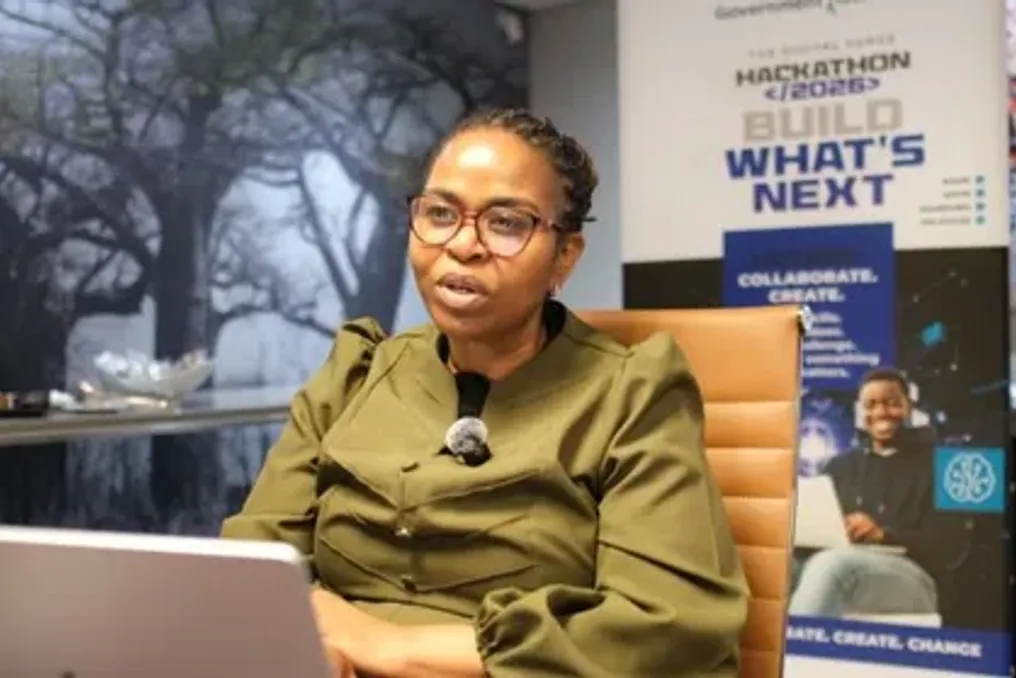
HPE South Africa CEO Ntuli clearly outlined the problem: when South Africa adopted a 'cloud-first' approach in the public sector, it accelerated digital transformation, but simultaneously strengthened a deep dependence on a small number of global suppliers. According to Ntuli, the country lost influence over pricing, terms, and ultimately, its own digital trajectory because it failed to create significant national capabilities alongside technology implementation. He argues that AI should not follow this same path.
The urgency of the discussion about sovereign AI in South Africa is amplified by what can be called a governance failure. The National AI Policy project, published by the Department of Communications and Digital Technologies, was withdrawn by Minister Solly Malatsi on April 26, 2026, after fictitious academic citations generated by AI were discovered in the document. The policy, intended to make South Africa a leader in ethical AI, was created using the very careless handling of AI it sought to regulate.
An Independent Expert Review Council, chaired by Professor Benjamin Rosman, was subsequently appointed to salvage the process. Although the irony is obvious, the consequences are tangible: while the government was dealing with the withdrawal of the document, the private sector continued operating without it. By mid-2026, analysts noted that South Africa had moved from AI pilot projects to practical use in customer service, coding, cybersecurity, fraud detection, and financial services. In the Microsoft Global AI Diffusion Report for the first quarter of 2026, the country ranked 46th out of 147 economies, surpassing all other African nations in the study. Generative AI usage reached 23.1% among the working-age population, and the market did not wait for Pretoria to develop its regulatory framework.
The argument for sovereign AI is sometimes mistakenly interpreted as protectionism—a desire to isolate global technology companies and create less sophisticated domestic alternatives under regulatory barriers. However, the true essence of the argument is different. A more accurate statement is that South Africa must own a sufficient part of the AI stack—computing power, data, models, and governance—to be able to make conscious choices, rather than being structurally dependent on decisions made elsewhere.
This distinction matters. A country using American or Chinese AI models is not necessarily less sovereign than one that creates its own. The problem arises when such usage is the only option, when there is no internal capacity for redundancy, a data governance architecture to protect citizens, or a local talent ecosystem capable of adapting or vetting deployed systems.
South Africa is not starting from scratch. The UCT computing power initiative expands access to the necessary power for genuine research. The University of Pretoria ranks first in South Africa for AI research volume. The AI Hub for Development's Compute Accelerator program helps local developers gain access to tools and expertise. Pick n Pay launched a generative AI-based shopping assistant using Google's Gemini platform. Among the most advanced users of AI in Africa's financial sector are Standard Bank, FirstRand, and Absa. These are real building blocks, not just presentations at political summits.
The situation is complicated at a fundamental level. According to ILO data, only 26% of households in South Africa own a computer. Globally, generative AI usage among the unemployed has exceeded 90%, as access to AI is becoming a way to navigate a disrupted labor market. In South Africa, for most of this group, access is via smartphone with intermittent internet access and unreliable power supply. These are not exceptional cases; they describe the majority of the country.
The IMF forecasts that AI could boost the economies of Sub-Saharan African countries by approximately 4% over the next decade, but only if there is a substantial improvement in energy supply, internet access, and digital skills in the region. In the case of South Africa, the cost of computation is directly linked to the cost of energy, and the cost of energy is tied to the ongoing structural instability of Eskom. It is impossible to build a sovereign AI economy on a grid that cannot guarantee uninterrupted operation.
The example of Siemens Energy, mentioned by Ntuli, illustrates that he is not calling for the rejection of global partnership. Working with HPE, Siemens created an AI-enabled engineering platform that gave it control over its own data, intellectual property, and critical systems by using high-performance computing to accelerate innovations in digital twins, simulations, and predictive maintenance. AI was integrated into business operations, not added as a vendor subscription. Strategic infrastructure operators in South Africa, such as Eskom and Transnet, and major metropolises could and should follow this approach.
The countries developing AI fastest are not necessarily those spending the most money. They are those building ecosystems: talent, regulation, compute access, and data governance, which makes AI an internal capability rather than an imported service. South Africa possesses university depth, data assets, and private sector dynamism to compete for this position. Nevertheless, it lacks the political coherence to unite these elements. The intellectual layer of the economy is being built right now. The decision of whether South Africa builds it or merely buys it is being made at this moment. These two decisions are not the same, and the country should not confuse them again.