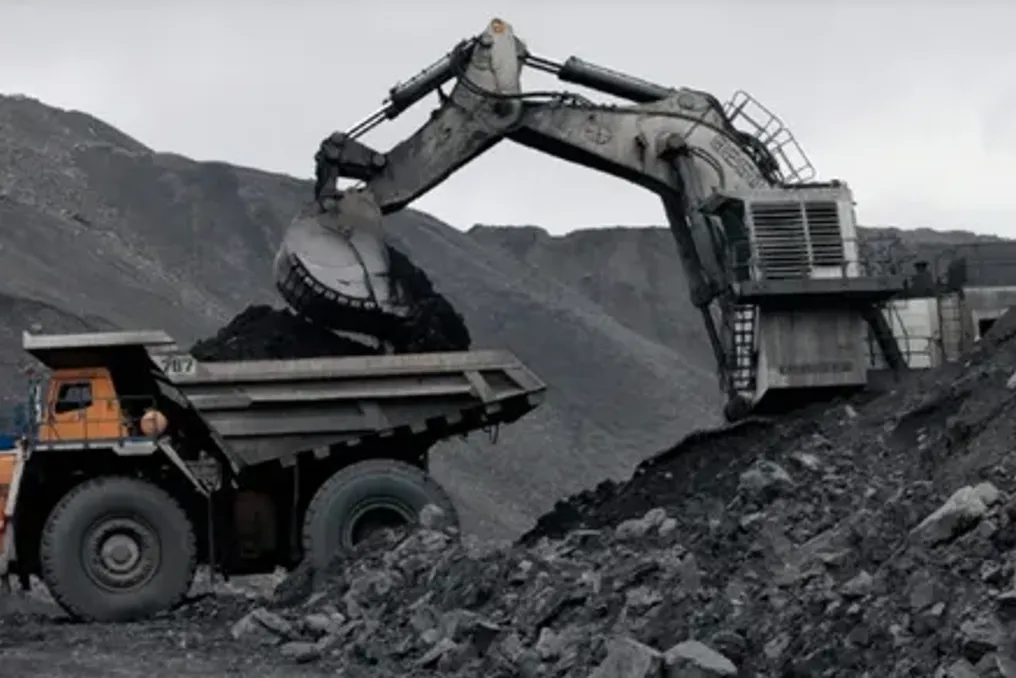
Lohum expands mineral mining to support India's battery manufacturing ambitions
Read more
IOL
iol.co.za

Lohum expands mineral mining to support India's battery manufacturing ambitions

The Indian critical minerals producer Lohum is actively searching for nickel ores in Indonesia and the Philippines. However, this activity is only part of a larger objective—India's attempt to create its own supply chain for electric vehicle batteries that is not dependent on Chinese processing.

Founder and CEO Rajat Verma has set a goal to increase Lohum's nickel production capacity tenfold, from 1,000 to 10,000 metric tons per year, within eighteen months. Verma emphasized that the expansion is not limited to mining; the company currently processes all its nickel through secondary recycling at its Gujarat plant. He noted that achieving this goal reflects a focus on supply chain scale rather than final production volume, and access to a high-quality foreign mine could further increase potential.

To finance this plan, the company is seeking to raise about 30 billion rupees (approximately 315 million US dollars) through a combination of equity and debt capital and is already in talks with investors whose names have not yet been disclosed.

What makes this story industrial rather than merely mining-related is that Lohum is building manufacturing facilities around these minerals. In the state of Uttar Pradesh, the company plans to commission a cathode active material plant with a capacity of 5,000 tons per year by March. This stage belongs to the high-value steps of the battery chain traditionally controlled by Chinese firms. Concurrently, Lohum is constructing a rare earth magnet plant with an annual capacity of 1,200 tons, addressing a different part of the chain where China holds significant global influence through control over refining, not just raw material reserves.

Furthermore, the company is exploring sources of rare earth elements across Southeast Asia to support this facility. Lohum's ambitions extend beyond nickel and magnets. At the beginning of this month, the company became the first Indian firm to export lithium ore from a foreign asset, having acquired rights to ten lithium deposits in Zimbabwe with estimated reserves of 30 to 40 million tons. The plan involves processing this ore into lithium sulfate on-site before shipping it to India to produce battery-grade lithium carbonate, thereby shifting value-added production to Indian territory instead of exporting raw materials for further processing.

The company's strategy culminates in the construction of a lithium-ion battery recycling plant in Sharjah in partnership with the UAE government, thus covering the entire cycle: from mining and refining to cell material production and disposal.

The timeline for these plans is crucial. India aims to accelerate the adoption of renewable energy and electric vehicles to sustain economic growth and keenly recognizes that its production aspirations could stall without guaranteed mineral resources. This vulnerability was starkly demonstrated by recent instability in Indonesia's nickel sector: authorities sharply cut the mining quota in Weda Bay, the world's largest nickel ore mine, and a fire at a Chinese smelter caused new questions about the safety and stability of Indonesian supplies. The rise in Shanghai nickel futures after the quota reduction underscores the close link between Southeast Asian mining and Chinese production capacity—precisely the bottleneck that Lohum, and consequently Indian industrial policy, is trying to circumvent.

Meanwhile, Beijing is tightening its grip. China introduced a two-year plan to consolidate its non-ferrous metallurgy industry, aimed at curbing domestic price wars and encouraging producers to output higher value-added products, which will likely strengthen, rather than weaken, its dominance in critical mineral processing in the near term.

For India, the conclusion is clear: owning foreign mines is less important than controlling the production stages between them. Lohum's focus on cathode materials, magnets, and refining, rather than just raw nickel and lithium, indicates a bet that the true value in the battery supply chain lies in manufacturing capabilities—at the stage where China's advantage is hardest to overcome. Whether Lohum can secure financing, finalize mine acquisition deals, and meet construction deadlines will be an early test of how quickly India's overall industrial strategy can transform mineral access into production self-sufficiency.
Similar stories

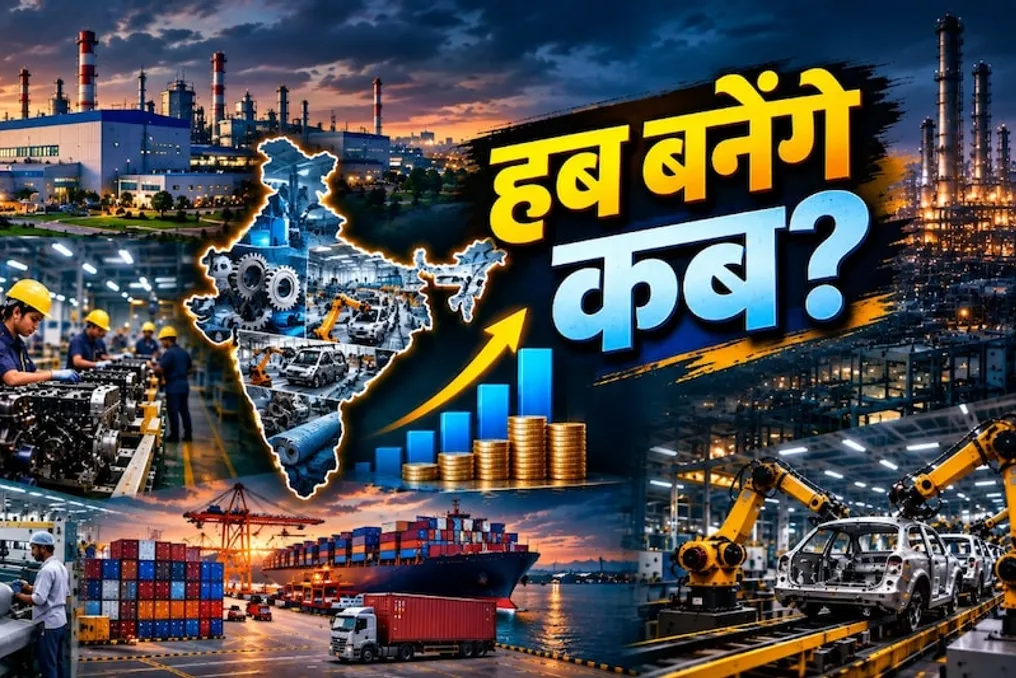
Comparison of Indian and Chinese Production Capacities: Prospects for Becoming a Global Manufacturing Hub
Read more
www.aajtak.in

Comparison of Indian and Chinese Production Capacities: Prospects for Becoming a Global Manufacturing Hub

There is an aspiration to make India a major manufacturing center. The global community is paying attention to India because the status of a manufacturing hub is critically important for strengthening any country's economy. However, the question arises: can India become the next global manufacturing hub?

When goods such as automobiles, mobile phones, and clothing begin to be manufactured in the country, import costs are significantly reduced. This leads to job creation for millions of young people, increased household income, and prevention of liquidity problems in the market. Furthermore, when a country begins to meet its needs and export products, foreign currency flows into the country. This is why the establishment of an Indian manufacturing hub is a key element of its economic stability and self-sufficiency.

India relies on production to realize its dream of transforming into a developed nation by 2047. As part of this process, India has intensified its industrial activities under the slogans 'Make in India,' 'Atmanirbhar Bharat,' and with the help of the 'PLI Scheme.' Nevertheless, the question remains open: when and how will this goal be achieved? Where does India stand in this global race, and how far behind China is it? What challenges does the country face?

Analyzing statistical data, India has achieved an initial advantage in the production race, but it is still far from the ultimate goal. India's share in the total global production volume is about 2%. Although India has already become the fifth-largest manufacturing country in the world, its scale remains limited.

On the other hand, China is rightly called the 'world's factory.' Its share in global production approaches 30%. China's annual industrial output exceeds $4.5 trillion, while India's figure is around $500 billion. Thus, China surpasses India by approximately nine times in terms of production volume.

The truth is that India cannot overtake China overnight, but changes have already begun. Global corporations are now adopting a 'China plus one' policy, meaning they aim to locate their factories in countries other than China. This presents a golden opportunity for India, especially considering the growing trade tensions between the US and China. Many American companies operating in China are viewing India as an attractive alternative.

The US also intends to break China's monopoly, but simultaneously does not want to allow India to become an 'economic superpower.' The recently passed US law, the 'Graham Sanctioning Act,' grants the right to impose high tariffs on countries purchasing Russian oil, which poses a challenge even for India. Since production is closely linked to energy, India imports over 85% of its required crude oil. Rising crude oil prices directly increase the cost of transporting goods, electricity tariffs, and raw material prices in India. This raises the cost of production in India, making it more expensive than goods from China, Vietnam, or Bangladesh.

The high cost of oil procurement depletes significant foreign exchange reserves of India. When government and company funds are spent on paying oil bills, capital for investment in infrastructure, new technologies, and research and development (R&D) becomes insufficient.

Over the last decade, India has made significant adjustments to its industrial policy. Under the 'Make in India' and 'Atmanirbhar Bharat' initiatives, production processes have been simplified, and special emphasis has been placed on 'Ease of Doing Business' to increase domestic production.

In accordance with the PLI programs, multi-billion dollar incentives have been provided for more than 14 sectors, including electronics, semiconductors, automotive, pharmaceuticals, and solar panels. As a result, India is now the second-largest mobile phone producer, and a significant portion of iPhones is assembled there.

Production in India will only grow if infrastructure is strengthened. In this regard, over the last decade, the construction of expressways, dedicated freight corridors, the PM Gati Shakti project, and new ports has helped reduce both the cost and time for transporting goods within the country. Simultaneously, India has attracted large investments in chip production, which is the foundation of future technologies.

Despite all efforts, the share of production in India's GDP has remained at 16–17% in recent years. The main reasons for this are four serious obstacles.

1. High logistics costs: The cost of transporting goods from factories to ports in India accounts for about 13–14% of GDP, whereas in China or Vietnam, this figure is maintained at 8–9%. Reducing this gap is a top priority.

2. Complex legislation and bureaucracy: Although attention has been paid to simplifying rules in recent years, at the state level, procedures for obtaining land acquisition permits, labor legislation, and environmental assessments can still take months. Active work is being done on this.

3. Skills shortage: India has a huge youth population, but modern factories and automation require different competencies.

Popular