SBI waives ATM withdrawal charges from September 28 to 30, relief in view of strike
Read more
Aaj Tak
www.aajtak.in

SBI waives ATM withdrawal charges from September 28 to 30, relief in view of strike

State Bank of India (SBI) has provided a special facility to its customers: transaction fees for ATM cash withdrawals have been waived from September 28 to September 30. This means that customers can withdraw as much money as they want, as many times as they wish, without any charges, even if their limit is reached within these three days.

The bank made this announcement to provide some relief to customers who were planning their ATM transactions during the proposed three-day nationwide bank strike.

However, SBI also clarified that all its branches will remain operational despite the proposed three-day strike. In contrast, major bank employee unions believe they will participate in the strike and urge bank employees not to come to the office on Sunday. The government has directed SBI along with all Public Sector Banks (PSBs) and Regional Rural Banks (RRBs) to remain open on Sunday, September 27.

SBI informed through a social media post on Thursday that no charges would be levied on transactions made at any bank's ATM during the bank strike running from September 28 to September 30. Additionally, the bank advised customers to complete necessary branch-related transactions before the proposed strike and to use digital and self-service banking channels wherever possible.

During the strike period, customers will not only depend on ATM services; they can also continue to use digital banking facilities. These include services like mobile banking, internet banking, and WhatsApp banking. Furthermore, customers can make payments and transfer amounts through Unified Payments Interface (UPI), Immediate Payment Service (IMPS), National Electronic Funds Transfer (NEFT), and Real Time Gross Settlement (RTGS), allowing them to conduct general banking tasks without visiting a branch.

Banking employee organizations have also expressed disagreement with the decision to declare September 27 a working day. Federation leaders of NIBW, NIBO, AIGBWO, and AIGBO met with Girish Chandra Arya, in charge of the financial sector at BMS, to discuss this matter with the Secretary of the Financial Services Department.
Similar stories

SBI changes ATM cash withdrawal rules starting October 1: fee for exceeding the limit
Read more
www.aajtak.in

SBI changes ATM cash withdrawal rules starting October 1: fee for exceeding the limit

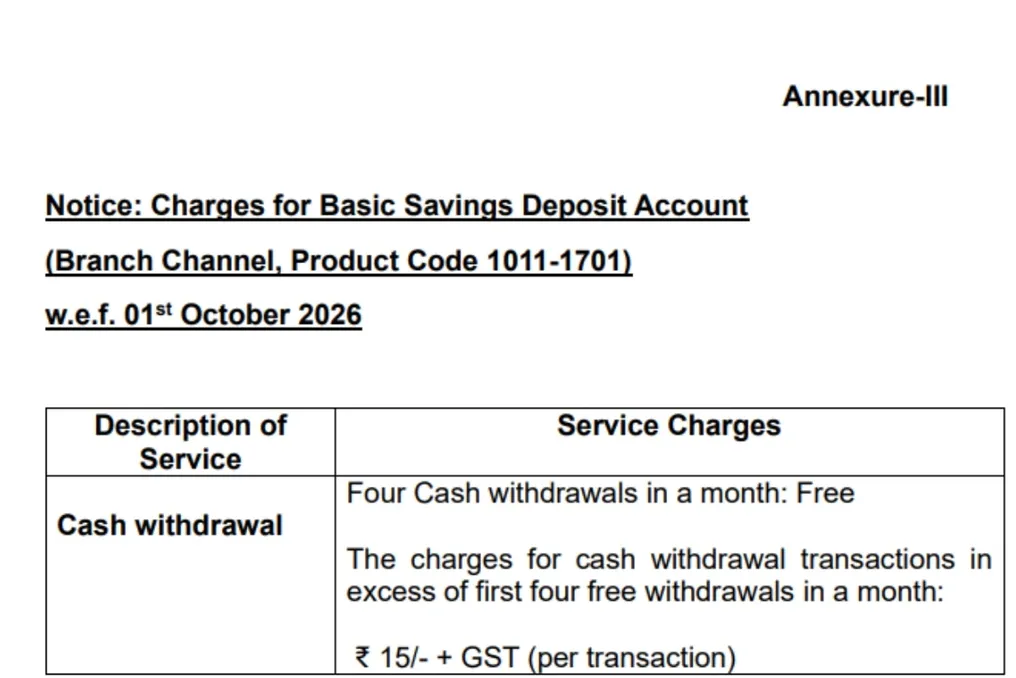
The State Bank of India (SBI) plans to introduce significant changes to its rules, which will take effect on October 1st. It may now become more expensive for SBI customers with bank accounts to withdraw cash through ATMs, although these changes will not affect all customers.

This upcoming adjustment was announced by SBI back in August. The main change concerns Basic Savings Bank Deposit (BSBD) accounts opened through bank branches.

Starting October 1st, if SBI customers withdraw money more frequently than the allowed four times per month free of charge, they will have to pay 15 rupees plus applicable GST. The bank emphasized that the option for four free monthly withdrawals will remain, but an additional fee will be charged for every subsequent withdrawal after this limit is reached.

SBI announced these changes in a public notice and provided information on the social network X. Digital transactions will remain free, and there will be no limits on the number of such operations.

Changes were also made to the mechanism of transactions through the Aadhaar Enabled Payment System (AePS). Previously, AePS transactions were considered digital operations and were not counted in the limit of four free withdrawals per month. Now, SBI is abolishing this exemption, meaning AePS operations will be subject to the new rules.

Furthermore, in August, SBI changed the interest rates for internal large deposits (Fixed Deposits) amounting to 3 crore rupees and above. The new rates came into effect on August 15th.

SBI reported a 10.23 percent year-on-year increase in net profit for the first quarter of the 2027 financial year. The bank attributes this success to a significant increase in interest income, sharp expansion of lending, and a substantial reduction in provisions for bad loans.

Net profit for the April-June quarter amounted to 21,121 crore rupees, compared to 19,160 crore rupees in the first quarter of the 2026 financial year. Operating profit increased by 9.8 percent, reaching 33,529 crore rupees, and net interest income grew by 14.9 percent to 46,992 crore rupees.

Central government bans banks from charging fees for UPI transactions up to 2000 rupees
Read more
www.aajtak.in

Central government bans banks from charging fees for UPI transactions up to 2000 rupees

The central government has issued a strict directive to banks and system providers prohibiting the charging of any fees for UPI transactions up to 2000 rupees.

According to the Ministry of Finance, this legal restriction was introduced in accordance with Section 10A of the Payment and Settlement Systems Act of 2007. This rule ensures that no direct or indirect charge will be levied on any person making or receiving payments using debit cards or UPI up to 2000 rupees.

This step has been taken to ensure the smooth functioning of the digital economy. Earlier in August, the government hinted at the possible introduction of a small Merchant Discount Rate (MDR) for certain UPI transactions by merchants exceeding the set limit. At the same time, the government assured the public that peer-to-peer payments would remain completely free.

The government emphasized that this change is part of broader efforts to ensure the sustainability, competitiveness, and support of India's growing digital economy. The Ministry of Finance firmly refuted reports claiming that external forces were behind the proposed changes, calling such statements unfounded, false, and misleading. The government clearly stated that strengthening the country's digital infrastructure remains its primary objective.

Popular