Digital sovereignty starts with digital identity: why South Africans need to protect their online presence
Read more
IOL
iol.co.za

Digital sovereignty starts with digital identity: why South Africans need to protect their online presence

Every day, South Africans leave a digital footprint, often without considering the infrastructure that supports it. They register domain names, open bank accounts, apply for online services, conduct trade, work, study, communicate, and build businesses on platforms and infrastructure that they rarely think about, but which makes these interactions possible.

Most of the infrastructure supporting digital life remains unnoticed until something goes wrong—for example, if a website becomes unavailable, a service is disrupted, or digital identification is misused. In such moments, the systems we take for granted suddenly become apparent.

Nevertheless, digital identity is often reduced merely to a website address, an email, or an online profile. However, in reality, these elements are increasingly playing a crucial role in how people, companies, and institutions shape their presence and participate in the digital economy. Consequently, protecting these elements becomes part of a broader discussion about South Africa's trust, resilience, and digital sovereignty.

Angel Celebano, Public Relations and Marketing Manager at .za Domain Name Authority (.zadna), notes: 'Digital sovereignty is not an abstract concept intended only for governments or technology specialists. It affects how safely and confidently people, companies, and institutions participate in the digital world.'

Digital sovereignty does not mean isolating South Africa from the global internet. It implies having the necessary infrastructure, capabilities, and governance mechanisms for confident participation in this global ecosystem. One of the critically important, yet largely hidden, layers supporting this participation is the Domain Name System (DNS), which translates domain names into technical IP addresses, allowing users to access websites and online services.

For most people, DNS is something they never need to think about. And this is precisely what matters, as it is part of the basic infrastructure that ensures the internet functions as a daily utility. As Celebano says: 'When everything works, few notice it. But when digital infrastructure fails, its importance becomes much clearer. The consequences can extend beyond technology, affecting business, public services, and trust in online systems.'

Celebano emphasizes that digital infrastructure is both economic and social. Its resilience is vital because a large part of our daily activities depends on the ability to reliably connect to the network. However, there is another growing threat—the misuse of digital identities, where domain management becomes important.

Scammers are capable of creating websites that mimic banks or other reputable organizations. Messages may appear to come from government agencies or familiar companies. Domain names can be used to create an impression of legitimacy, even if the people behind the site or message have no connection to the organization they supposedly represent.

For the recipient of a message or a visitor to a website, the deception technology may remain invisible. What matters is whether they believe they are dealing with a trustworthy organization. This is why the discussion about .za must concern more than just a domain extension; it must address identity, infrastructure, and governance.

The .za domain name itself does not make a website legitimate nor prevent fraud. What a regulated national namespace can provide are mechanisms to identify, report, and eliminate certain forms of domain abuse. The Internet Service Providers' Association (ISPA), the ZA Registry Consortium (ZARC), and the .za Domain Name Authority (.zadna) have defined ways to combat various types of domain fraud and abuse.

Internet users are advised to review the ISPA's public guide on domain name fraud (version 2.0), which provides practical guidance and tools for combating domain fraud based in South Africa. Celebano points out the importance of distinction: a domain name can establish identity, but trust is built on how an organization uses that identity. He adds: 'Digital trust is not created by a domain name alone. It is strengthened when there are governance mechanisms, responsible operators, and practical remedies when things go wrong.'

For businesses, protecting digital identity means looking beyond the website itself. It requires understanding how the organization is represented online, securing systems related to its digital identity, and responding quickly in case of misuse or compromise of that identity. For private individuals, some of the most useful precautions are the simplest: carefully checking website addresses, being cautious about unsolicited links, protecting login credentials, and reporting suspected fraud through appropriate channels.

The Significance of the .za Domain

The .za namespace is part of South Africa's national digital infrastructure. For an entrepreneur, a domain name can be the digital home of a business. For an established organization, it serves as the gateway through which clients, suppliers, and other stakeholders interact with it. For users, a domain name can be one of the first signals they encounter when deciding whether an online presence belongs to the organization it claims to represent.

Collectively, these digital identities also contribute to South Africa's presence in the global digital economy. Therefore, the discussion about .za goes beyond a simple domain extension; it touches upon identity, infrastructure, governance, and the ability of South Africans to create and maintain a trusted online presence.

Digital sovereignty will not be achieved by one institution, one technology, or one domain name. It is built through resilient infrastructure, effective governance, responsible organizations, and informed users working together. The stakes are becoming increasingly real: South Africa's digital future is being built daily through businesses creating online identities, the digitization of public services, and citizens' growing reliance on digital systems for work, transactions, and communication. As Celebano concludes: 'The infrastructure supporting this activity can remain largely invisible. But the identities built upon it—no. For South Africans creating or strengthening their online presence, choosing .za is one of the practical ways to establish a clear South African digital identity. However, protecting this identity is a shared responsibility.'
Similar stories

Iranian and Iraqi officials emphasized the need to strengthen technological cooperation
Read more
www.tehrantimes.com

Iranian and Iraqi officials emphasized the need to strengthen technological cooperation

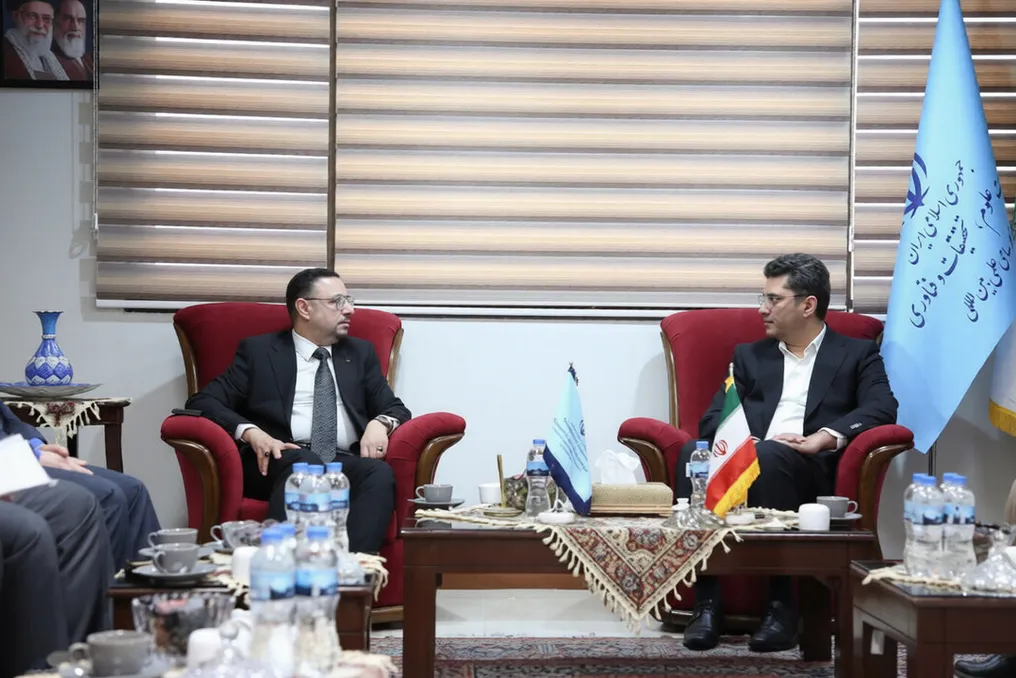
Officials from Iran and Iraq stressed the importance of activating technological interaction and implementing previously reached agreements. These representatives met in Tehran on Tuesday.

During the meeting, it was decided to conduct joint research projects and supervise master's theses dedicated to common problems of Iran and Iraq, including economic, social, cultural, agricultural, and industrial challenges, according to the IRNA agency.

Both sides agreed to actively participate in the third Iran-Iraq Scientific Week. Ehsan Kabul noted that the Iraqi university should play a significant role in this week by developing and implementing practical and synergistic programs in partnership with leading Iranian universities.

Highlighting Iran's outstanding achievements in creating infrastructure for technology and innovation ecosystems, the official stated the country's readiness to cooperate with Iraqi scientific and academic centers to create joint technological products and services.

The proposed ideas were positively received by the Iraqi official, who expressed determination for the university to expand ties with major Iranian universities and emphasized the need for the prompt fulfillment of these agreements.

Previously, on August 6, Iraqi officials, during a meeting with the Minister of Science, Research, and Technology Hossein Simai-Sarraf, called for expanding scientific and academic and technological cooperation with Iran.

The Minister of Science held a meeting in Baghdad with the Deputy Minister of Higher Education and Scientific Research of Iraq, Haider Abd-Dahd Al-Rubai, the Minister of Health of Iraq Abdul Hussein Al-Musawi, and the Acting Minister of Higher Education and Scientific Research Abdul Hussein Al-Musawi, according to IRNA's report.

During this meeting, both sides emphasized the need to accelerate the implementation of previously signed Memoranda of Understanding (MOU).

Key topics of discussion included sharing Iran's experience in higher education development to achieve quantitative and qualitative goals, meeting the needs of Iraq's large youth population, attracting talented Iraqi students, and improving research cooperation.

Simai-Sarraf also met with the leader of the Iraqi National Wisdom Movement, Sayed Ammar Al-Hakim.

Highlighting the extensive scientific and academic potential of Iran and Iraq, the sides exchanged views on strategies for advancing scientific cooperation, expanding joint research, and developing academic interaction between the higher education institutions of the two countries.

In April, Simai-Sarraf and Al-Aboudi noted the need to increase scientific and technological cooperation between the two states.

The officials also discussed ways to develop joint work in artificial intelligence (AI), utilizing the capabilities of both nations, as reported by IRNA.

During the meeting held in Tehran on April 18, Al-Aboudi announced the inclusion of the issue of opening a branch of Tehran University of Medical Sciences in Iraq on the agenda.

For his part, Simai-Sarraf expressed Iran's readiness to share its scientific, research, and educational achievements with Iraq to strengthen bilateral ties.

He reported that Iranian and Iraqi students have currently conducted a total of 350 joint research projects, which requires improvement given the available opportunities.

Referring to the upcoming Iran-Iraq Scientific Week, scheduled in Isfahan and Fars provinces, Simai-Sarraf mentioned that the event was postponed due to the war imposed by the US and Israel but will be held at the earliest opportunity.

As agreed by the two officials, AI and smart education will be one of the topics discussed during the Iran-Iraq Scientific Week. This event is expected to serve as a basis for holding a joint AI conference in the near future.

Farmers in India use artificial intelligence to receive consultations in their native language on crop and livestock health issues
Read more
thebetterindia.com

Farmers in India use artificial intelligence to receive consultations in their native language on crop and livestock health issues

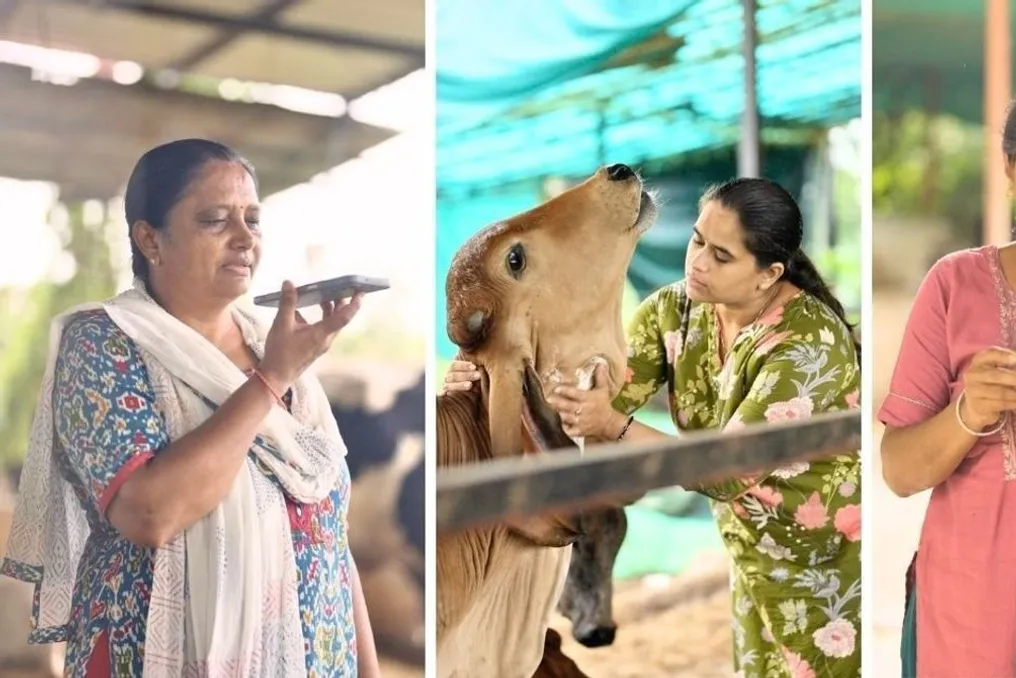
In the village of Adjarpura in Gujarat, Gayatriben noticed a problem when one of her buffaloes started headbutting a tree. In another settlement, Ishnav (Palaj), Charmiben tried to understand the reason for a cow's abnormal growth despite deworming. For farmers, such questions often require prompt answers, and now both women can turn to an artificial intelligence system and ask the question in their local language.

Across India, AI is finding new ways to support farmers by providing advice on sowing and weather, as well as assisting with livestock care and access to agricultural services. A study conducted by The Better India based on the Gates Foundation 2026 Goalkeepers Report included interviews with farmers and technology leaders, as well as an analysis of initiatives like MahaVISTAAR from Maharashtra and Sarlaben from Amul, to understand how AI adapts to the daily needs of farmers and how this can improve the accessibility of useful, personalized information locally.

Dipali Kalbhor, a small farmer and entrepreneur from Maharashtra, has gone through a long journey full of failures and new opportunities. After failing in poultry farming, she recovered her income by engaging in beekeeping, increasing the number of hives from 30 to over 1000.

Kalbhor notes to The Better India that one of the main lessons for farmers is the need for a strong team and access to the right information. She learned about MahaVISTAAR during an agricultural training and now uses it to get data on crop prices, weather forecasts, pest control, and government schemes. The fertilizer calculator proved particularly useful, helping her reduce fertilizer use by approximately 15%. Furthermore, the platform allows checking local product prices and contacting agricultural officials, which she calls a tool she uses 'at least two or three times a day.'

She also used the platform to get recommendations for growing 10,000 mulberry saplings in a nursery, information on vermicompost schemes, and contacts with government officials.

In Gujarat, Amul implemented Sarlaben—an AI-based assistant that provides dairy farmers with recommendations on livestock health, feeding, breeding, vaccination, and government programs in Gujarati. Gayatriben shares her experience: 'One of our buffaloes would not stop headbutting a tree. Previously, I had to contact the cooperative, pay 150 rupees for a vet visit, and then wait for a solution. Now I just call Sarlaben.'

Sarlaben suggested that the cause might have been itching around the animal's horns and advised cleaning the area with oil, followed by applying turmeric and oil. Gayatriben confirmed: 'And it worked!'

Minnaben faced a more serious situation when a cow was about to give birth, but no calf appeared. 'We thought we would lose her. She was about to give birth, but the calf wouldn't come out. In a panic, we called Sarlaben.' The system helped them realize the seriousness of the situation and connect with a specialist. Although the calf did not survive, the cow remained alive. SarlabenAI helped the farmer understand when specialist intervention was required.

For Charmiben, the problem is simple: animals cannot communicate pain. 'My cows are my family,' she says. 'But at home, my children can say, 'Mom, my stomach hurts.' My cows cannot tell me when something is wrong, right?' Therefore, when she is unsure, she says, 'Now I just ask Sarlaben.'

According to Ajay Seth, Head of IT at Amul, Sarlaben uses information that Amul already possesses about farmers and their livestock. He explains: 'Sarlaben identifies farmers by their mobile phone number. The system links their questions to the data that Amul already has about their animals.' He emphasizes: 'Thus, it will never be general advice; instead, it can be 'specific to your cow, backed by years of Amul's research in dairy farming.'

Language also shapes this experience. Gayatriben recalls: 'When I first spoke to Sarlaben, I thought it was a real person. Her Gujarati was better than mine. I couldn't believe I was talking to AI!' Minnaben adds: 'Previously, when the cow came into heat, we had to call the cooperative. Now Sarlaben tracks the heat cycle, shows me technicians, and helps instantly book experts.'

When one of Charmiben's cows grew abnormally despite deworming, she provided its name and identification number and received recommendations on what to feed it. 'And it worked!' she says.

The Gates Foundation 2026 Goalkeepers Report, Make This Matter: AI, Equity, and the Choice We Can’t Delay, identifies linguistic nuances, local context, and accessibility as central issues for ensuring AI equity. The report points out that over 90% of the data used to train early large language models came from English-language sources. India has 22 recognized languages, as well as hundreds of other languages and dialects.

In agriculture, misunderstanding can affect what a farmer sprays, feeds, plants, or harvests. The report argues that AI tools must work in the languages people speak and be developed in collaboration with those who rely on them. Professor Ganesh Ramakrishnan, one of the Goalkeepers 2026 Champions, a professor at IIT Bombay and lead researcher and board member of BharatGen, an Indian multilingual AI initiative, believes that AI cannot simply be created elsewhere and then translated. He asks: 'Does the model think like an Indian, or more precisely, an Assamese, or someone in a remote part of South India?' He describes a woman in a kitchen in Tamil Nadu trying to get information against the background of a whistling rice cooker, demonstrating that the technology must function within real life.

He insists: 'It is very important for us to implement innovations together with people, not just for people.' He refers to the end-user as a 'co-inventor.'

Debjani Ghosh, a Goalkeepers 2026 Champion recognized for her work on human-centered AI, envisions a scenario where farmers wake up and receive information about the weather, what it means for their crops, and whether any action is required. Ghosh advocates for India's 490 million informal workers—from street vendors to farmers—who are often overlooked in global AI discussions and risk being left behind.

'You open your phone, and you have all the information regarding the weather, rain, lack of rain, what it means for your crop, whether you should take any steps,' she says. 'It will be a voice message; you don't even have to read, you can listen and understand.'

For Ghosh, this means that technology becomes 'invisible.' 'We must make people's lives easier,' she states. 'We must make people's livelihoods easier. We must make people's lives better.'

For farmers, this promise depends on AI's ability to understand their questions, recognize their local context, and respond in the language they actually speak. As the Gates Foundation Goalkeepers Report emphasizes, timely actions to create inclusive and accessible AI can help ensure that this technology becomes a force for greater equality, and that those who benefit most are not left behind.

UNESCO Institute for Disaster Risk Reduction and Engineering Resilience Opens at Harazmi University
Read more
www.tehrantimes.com

UNESCO Institute for Disaster Risk Reduction and Engineering Resilience Opens at Harazmi University

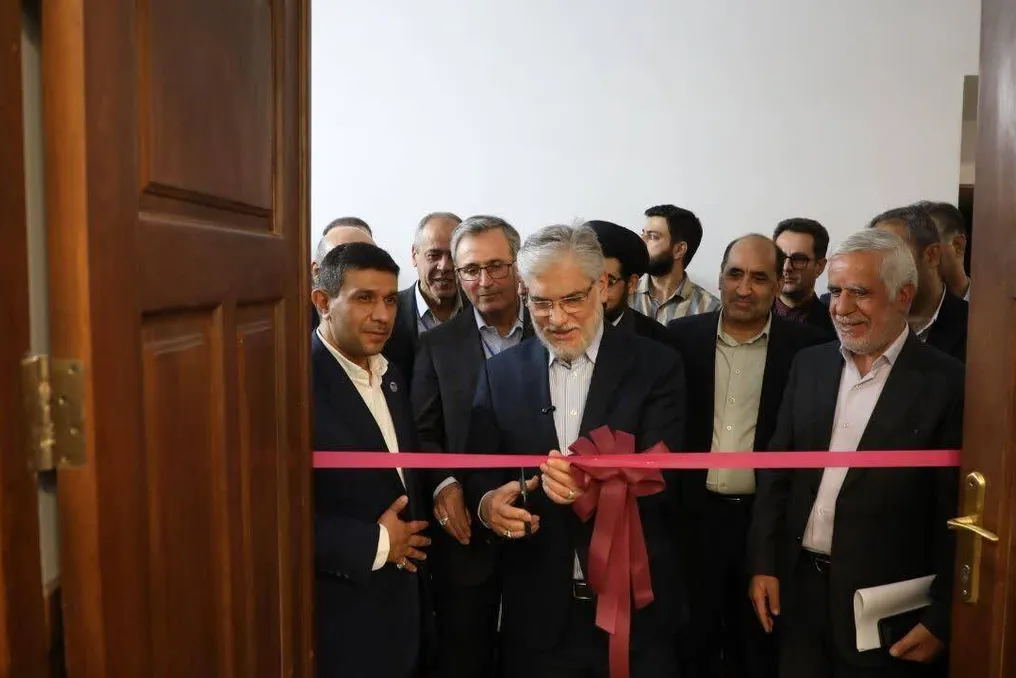
Minister of Science, Research and Technology Hossein Simai-Sarraf and Secretary-General of the Iranian National Commission for UNESCO Hassan Fartousi solemnly opened the UNESCO Institute for Disaster Risk Reduction and Engineering Resilience at Harazmi University on Tuesday.

This institute was established based on a synergistic approach that aligns with the Sendai Framework for Disaster Risk Reduction, the Sustainable Development Goals, and UNESCO's approaches to expanding education, science, technology, knowledge exchange, climate consideration, and developing resilient communities, according to msrt.ir.

According to Harazmi University, the creation of this institute is a strategic and scientific necessity given the current national and regional conditions in the country. These conditions include climate change, increasing complexity of hazards, expansion of residential settlements, as well as technological and anthropogenic risks and cascading consequences of natural disasters.

The Institute develops effective methods for assessing and mitigating risks associated with both natural hazards and existing and new school infrastructure. This contributes to improving equal access for children in vulnerable communities to safe learning environments, ensuring the continuity of educational services, and reducing loss of human life. The Institute has already formed an engineering resilience community comprising over 3000 participants from more than 100 countries, which plays a key role in knowledge exchange to support disaster risk reduction initiatives.

It is emphasized that disasters are not exclusively natural but are the result of flawed decisions and inadequate management. Funding disaster risk reduction measures today will contribute to ensuring future safety and sustainability. Although phenomena such as floods, destructive storms, droughts, wildfires, wetland drying, and earthquakes are examples of natural threats worldwide, the increased intensity of these events cannot be considered natural.

Iran is recognized as a disaster-prone country that has faced almost all types of threats: from earthquakes and floods to droughts, landslides, and dust storms. Approximately 33 out of 50 known types of natural disasters have occurred in the country. The diversity of these disasters has negatively affected the country's resilience, highlighting the urgent need for disaster risk management.

Ecological sustainability requires coordination between human development and ecological capacity. When making policy decisions and utilizing resources, ecosystem limits must be respected. However, in recent decades, some development-related activities have not corresponded to the capabilities of the environment and ecosystems. Changes in land use, excessive exploitation of water and soil resources, as well as improper management of forests and natural resources have reduced the ability of ecosystems to recover and cope with disasters, making human societies more vulnerable.

Furthermore, the consequences of natural disasters disproportionately affect low-income groups, residents of marginalized areas, and rural communities. Resilience is fundamentally a matter of social justice. Involving local communities, universities, and the private sector in decision-making processes will help develop sustainable preventive strategies.

Popular