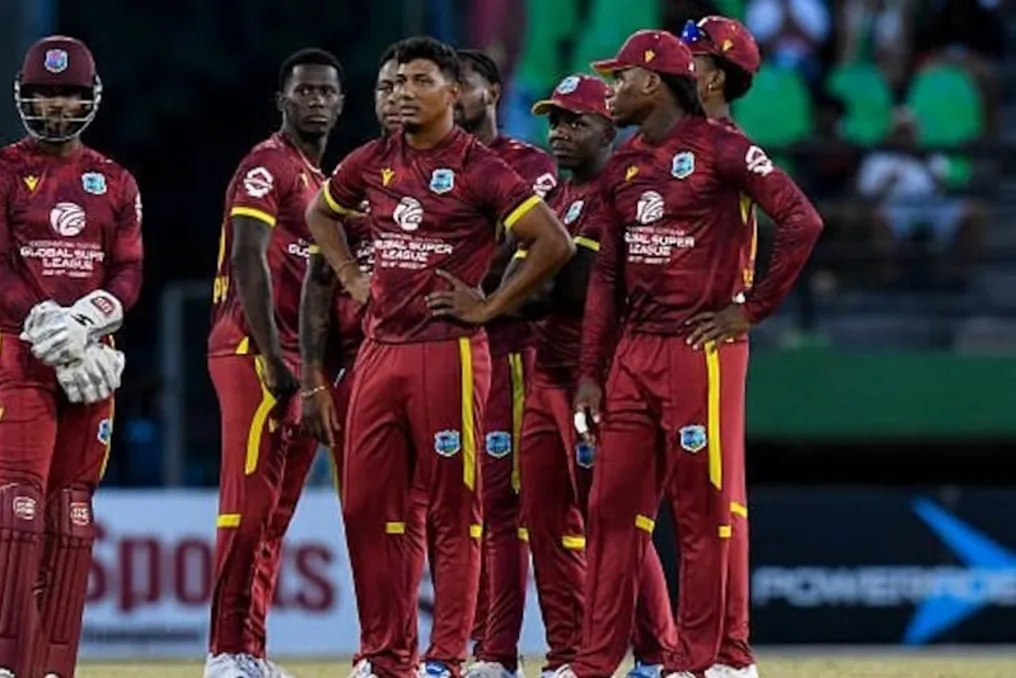
Due to financial problems, Cricket West Indies is cutting player salaries and suspending domestic tournaments
Read more
Aaj Tak
www.aajtak.in

Due to financial problems, Cricket West Indies is cutting player salaries and suspending domestic tournaments

During its tour of India, the Cricket West Indies team participated in three ODI matches and five T20Is. However, during this tour, the team faced serious difficulties. Cricket West Indies (CWI) decided to reduce the Central Contract Retainer Fees for players by 25 percent. These changes will be effective from October 2026 to September 2027.

Furthermore, the contract duration for local players has been shortened. Under the new scheme, male local players will receive a seven-month contract instead of a 12-month one, which will run from October 2026 to April 2027. The board made this decision considering its deteriorating financial situation. Cricket West Indies is currently experiencing a period of economic pressure.

In the fiscal year ending in September 2025, Cricket West Indies incurred a net loss of 28 million US dollars. The board forecasts losses of approximately 26 million dollars in the fiscal cycle up to September 2026. The severity of the financial crisis is highlighted by the fact that in July, Cricket West Indies was forced to take an emergency loan of 12.82 million dollars from the ICC (International Cricket Council).

CWI CEO Chris Deheering stated that restructuring is necessary given the current situation. He noted that this step was taken in collaboration with the players and the West Indies Players Association, and it is currently vital for achieving financial stability. To cut costs, Cricket West Indies has also postponed the Men's Super 50 and Women's T20 Blaze tournaments this year. The Super 50, which was scheduled for November, has been rescheduled.

According to the board, the current model of domestic cricket is too expensive. A significant portion of expenses, including player and staff salaries, match fees, air travel, hotel accommodation, and organizational costs, falls on Cricket West Indies. Deheering emphasized that long-term coverage of all costs for domestic competitions under the existing structure is not possible.

The absence of the Super 50 tournament is also important for West Indies' preparation for ODI matches. The team failed to qualify for the 2023 ODI World Cup and will now play qualifying matches in February-March 2027 to reach the 2027 World Cup. Cricket West Indies plans to hold baseball matches against England-A in November for this purpose, after which an ODI team training camp will take place.

Cricket West Indies has developed a separate model for preparing for the Los Angeles Olympics in 2028. Qualification tournaments for men's and women's teams will be held, but the costs for these competitions will be covered not by Cricket West Indies, but by the respective national sports councils and Olympic organizations. The structure of West Indies cricket differs from that of other countries. Various Caribbean nations within Cricket West Indies may in the future compete with their own separate teams in events such as the Pan American Games and the Olympic Games. The board announced that a call will be made for alternative tournaments qualifying 10 countries for the Olympics, and their funding will be provided by the respective national cricket associations, Olympic committees, governments, and the private sector.
Similar stories

Producers are shifting the leading role from actors and comedians to cricketers, changing the show format
Read more
www.aajtak.in

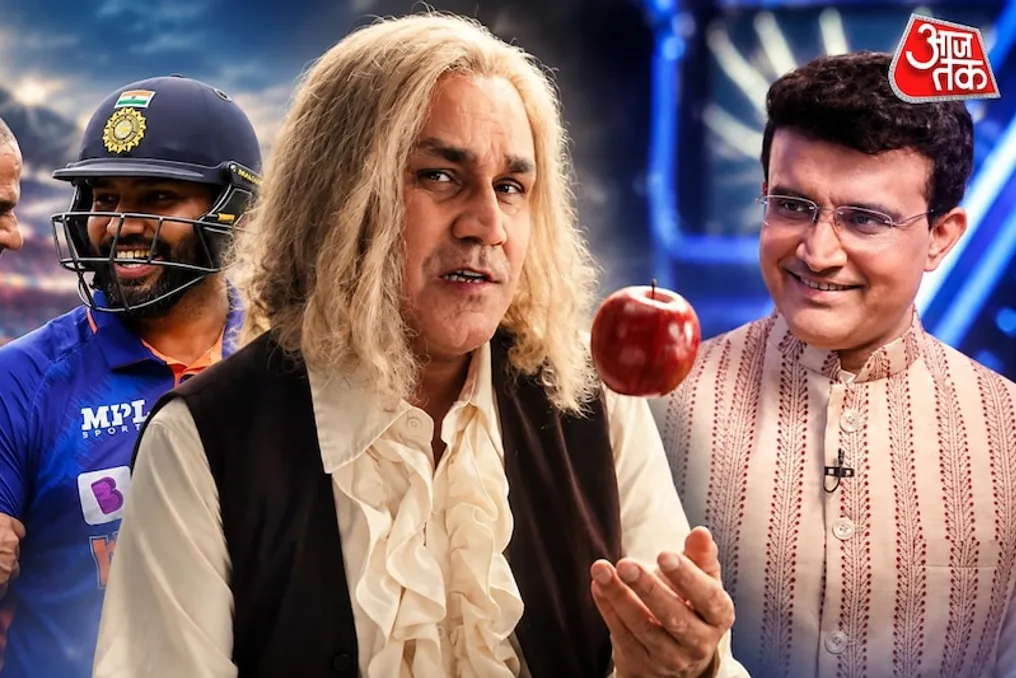
Producers are shifting the leading role from actors and comedians to cricketers, changing the show format

There was a time when major Bollywood stars avoided television appearances for fear of diminishing their star status. However, the situation has changed. Celebrities such as Amitabh Bachchan, Salman Khan, and Shah Rukh Khan have started working as hosts on the small screen. Soon, television embraced these big stars, transforming TV from a threat to their popularity into a powerful means of increasing it.

A new trend is now observed that threatens the positions of actors. Producers have made a big bet by shifting focus from actors and comedians to cricketers, assigning them hosting duties. Where previously the leadership of the show rested on the shoulders of major actors or comedians, the focus is now shifted to the cricket pitch. Many sports stars have moved to television and started hosting programs.

Famous personalities like Sourav Ganguly, Virender Sehwag, Rohit Sharma, and Shikhar Dhawan demonstrate their abilities as hosts. They, who used to hit the ball on the field, are now taking responsibility for entertaining, surprising, and amusing the audience in front of the camera.

Rohit Sharma, a former captain of India, debuted as a television host in the show 'Family Full House With Rohit Sharma Show', becoming the host. Viewers consider watching Rohit in this role a real pleasure. His characteristic is a calm and relaxed nature; if he aggressively attacked bowlers on the field, on TV he completely entertains the audience.

Virender Sehwag, known as the king of one-liners, has started a new chapter in his career by becoming the host of the mainstream reality show Rise and Fall 2. Before this, he had already participated as a host in the web series 'Viru Ke Funde'. Sehwag's fearlessness, wit, and one-liners guarantee entertainment for viewers.

After conquering the field, Sourav Ganguly, known as 'Dada', has also established his influence among the television audience. He hosted quiz and game shows 'Dadagiri Unlimited', and now hosts Big Boss Bangla. His journey shows that a cricketer can entertain people not only on the field but also in front of the camera, if they can adapt their personality for a hosting role.

Harbhajan Singh hosted the show 'Bhajji Ke Saath Punjabiyan Di Dadagiri'. Additionally, he appeared as a gang leader in Rodigs Rising Season 14. Harbhajan Singh participated as a host/promoter in the wrestling-based reality show 'Ring Ka King'. Harbhajan possesses a strong Punjabi style and an ability to fully entertain, and his comedic remarks are very vivid.

Shikhar Dhawan has always been entertainment-oriented. His 'Gabbar' persona manifests in both the television and digital space after cricket. He added a twist to the sports comedy format by appearing in the show Cricket Darbar alongside RJ Kishna. He later appeared in the show Battleground as a judge. Shikhar Dhawan's energy is his main trait.

The main reason for handing over the direction of television shows to cricketers is their huge fan base. Who would refuse to watch a cricketer whose shots caused excitement in the stadium? Turning a big star into the face of the show is the biggest advertising asset. Cricketers do not need to spend months building their identity on TV; they come with a large audience immediately after the show launches.

In India, cricket is revered as a religion. The popularity of outstanding players can be utilized in reality shows. The popularity of cricketers is not limited to youth; fans are people of all ages.

Another important reason is that everyone wants to see something new. Actors and comedians have been seen many times. However, handing over the direction of shows to cricketers presents an interesting turn. Cricketers do not often display their personality. People know about them mainly through the cricket pitch and social media. In this case, a TV hosting role is an ideal way to attract viewers.

A player on the field has their own image. But when the same player becomes a host of a reality show, viewers see their off-field personality, which sparks curiosity. A cricketer can provide viewers with substantial material by talking about old matches, conflicts, and behind-the-scenes stories from the dressing room.

Triple Series in ODI: The Rise and Fall of a Golden Era
Read more
www.aajtak.in

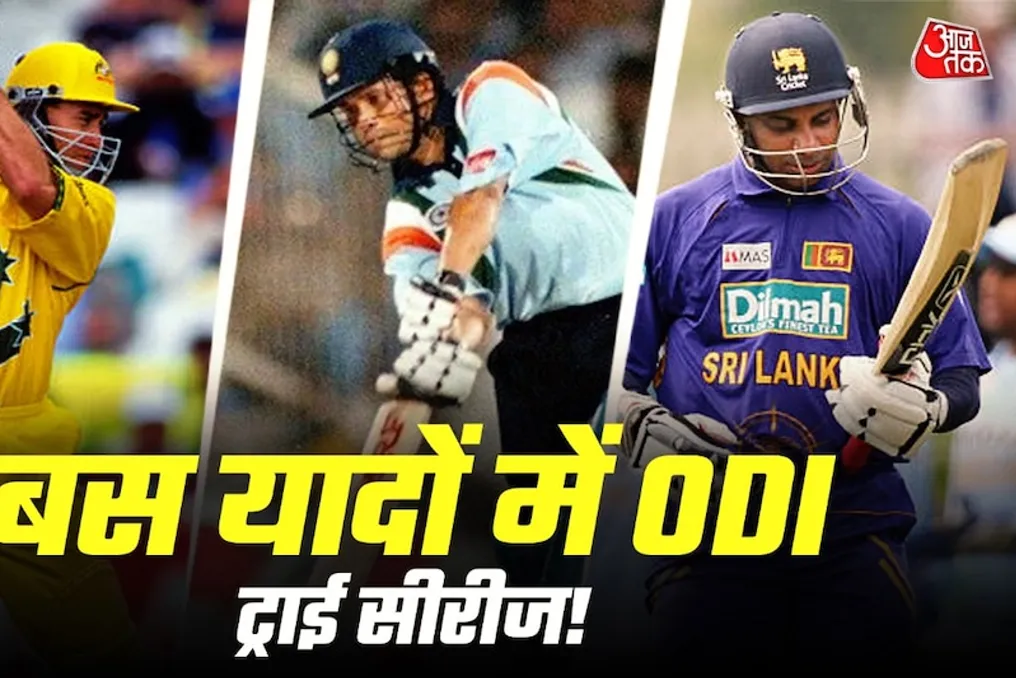
Triple Series in ODI: The Rise and Fall of a Golden Era

At one time, the ODI (One Day International) itself was synonymous with a major event. Although the World Cup is held every four years, between these tournaments, there were other significant competitions for fans, among which triple series held a special place. These tournaments involved a competition between three teams with a league stage, a leaderboard, a fight for the final, and constantly changing dynamics in every match.

The popularity of these series was so great that the excitement was not limited to the action on the field. Spectators watched which teams would reach the final, how many wins each team would need, and under what conditions the pace of the game would be decisive.

In modern realities, where Test cricket has gained the goal of a Test World Cup, and T20 cricket has captured a huge market thanks to franchise leagues, ODI is trying to find its place between them. At such a time, memories of old triple series are particularly interesting, as 50-over cricket did not need external stimuli then.

Kerry Packer is often mentioned in the history of triple series. A dispute arose between media magnate Packer and Cricket Australia regarding television rights. Following this, Packer launched World Series Cricket. To make this league successful, Packer needed the best cricketers in the world. At that time, the West Indies were the strongest team, and Packer's team attracted many of their star players.

After this, triple series were held between Australia, the West Indies, and World XI. Matches concluded in a single day. Bright uniforms and white balls were used, and the television coverage was much more modern than before. The quality of the cricket was also outstanding. The West Indies participated in four of the first six Australian seasons and were champions every time. Even after Packer and the Australian board reached an agreement, this format continued to be held within Australia's domestic cricket calendar.

When this model, popular in Australia, reached South Asia, its influence grew. In 1983, the then Chairman of the Indian Cricket Control Board (BCCI), N.K.P. Salve, began working on organizing the World Cup in India. He was joined by Nur Khan from Pakistan and Gamini Dissanayake from Sri Lanka. During this process, the Asian Cricket Council (ACC) was founded on September 19, 1983. Then, in 1984, India, Pakistan, and Sri Lanka held the first Asian Cup in Sharjah. This event marked the beginning of multinational cricket in Asia. Gradually, Sharjah transformed into not only a venue for the Asian Cup but also a major center for ODI cricket.

In the 1990s, the influence of English cricket began to spread to the Indian subcontinent, and Sharjah became the focal point of these changes. Major players from India, Pakistan, and other countries regularly played here. Celebrities attended the matches, and the popularity of the games on television steadily increased. Long before the era of franchise cricket, Sharjah turned cricket into a large-scale spectacle. By the end of 1992, 29 ODI tournaments involving three or four countries had been held. Of these, 15 took place in Australia, and nine in Sharjah. Thus, the history of triple series in ODI is mainly linked to two locations: Australia and Sharjah.

In the 1990s, international cricket from South Africa returned, and Sri Lanka also quickly became one of the strong global teams. In 1996, Sri Lanka became the World Champion. The number of strong ODI teams in international cricket increased. This directly benefited the triple series. From 1996 to 2008, full member teams held three-nation ODI tournaments in Singapore, Morocco, Netherlands, Malaysia, Ireland, Scotland, and Canada. The four-year interval between World Cups and the limited popularity of the World Cup also made these tournaments important. It was the main way to watch ODI cricket between strong teams throughout the year.

These tournaments saw not only trophies won but also events that influenced rules, tactics, and thinking in cricket. In 1979, in Sydney, the England team had to save three runs on the last ball. Captain Mike Brearley positioned almost all his fielders near the boundary. A year later, New Zealand needed to score seven runs off one ball. Greg Chappell from Australia asked his brother Trevor to throw the ball underhand. This incident caused a big controversy in cricket. In 1982-83, Lance Cairns hit six sixes at the MCG (Melbourne Cricket Ground) using a specially prepared bat. In the 1980s, Javed Miandad took advantage of the conditions at the WACA Ground in Perth and scored an unbeaten 59 against the West Indies, including 45 singles and no fours or sixes. In 1986, Gus Logie from the West Indies was named 'Player of the Match' for his fielding performance in Sharjah. This in itself was an exceptional event.

The Story of Lala Amarnath, India's First Centre Batsman Who Played Alongside His Sons for India
Read more
www.aajtak.in

The Story of Lala Amarnath, India's First Centre Batsman Who Played Alongside His Sons for India

September 11 marks an important date in the history of Indian cricket: 115 years ago, in 1911, Lala Amarnath was born, the first centre batsman for the Indian team. Amarnath became not just an athlete, but a significant figure who left a deep mark on the culture and system of Indian cricket, being involved in it as a player, bowler, captain, selector, coach, and commentator.

Lala Amarnath, born into a modest family in Lahore, demonstrated his talent in 1933-34, scoring 109 runs for the South Punjab team against MCC. Shortly after, he got the opportunity to play in India's first home Test match against England at the Jimkhana ground in Bombay. Despite India's difficult situation, Amarnath managed to counter the attacks of the English bowlers, completing a century in 117 minutes and becoming the first player to score a centre in international cricket for India, although the team ultimately lost.

In 1936, during a tour of England, Lala Amarnath was one of the most influential players in the Indian squad. However, a dispute arose with the team captain, Maharaja Kumar from Vijnagaram, known as 'Viji'. Following this incident, Amarnath was sent back to India mid-tour, which seriously affected his Test career, forcing him to step away from it for about 12 years. Nevertheless, his domestic performances continued, and in 1938-39, he scored an impressive 241 runs for the Hinduja team against The Rest.

Lala Amarnath's return was not limited to batting. In 1946, during a visit to England, he made a splash in a match at Lord's, dismissing players such as Len Hutton, Cyril Washbrook, Dennis Compton, and Wally Hammond in England's first innings. A specialty of his bowling was the ability to bring the ball inside with precise length, allowing him to play a useful role both with the bat and with the ball for the Indian side.

In 1947, Lala Amarnath was appointed captain of the first Australian touring Indian team after the departure of Vijay Merchant. The Australian team under Don Bradman was very strong, and India faced serious difficulties in five Test matches. Although his personal Test performances did not meet expectations, he performed brilliantly against regional teams, notably his innings of 228 runs against Victoria was noted by the great Australian player Neil Harvey.

In the 1952-53 season, Lala Amarnath once again led India, and this time the opponent was Pakistan. This was the first official Test series between the two countries, which India won, creating a historic moment. Nevertheless, Amarnath's relationship with Indian cricket politics remained complicated; due to disagreements with the then influential council officials, he faced problems regarding leadership and team decisions.

Throughout his career, Lala Amarnath played 24 Test matches, scoring 878 runs at an average of 24.38. In Tests, he scored 1 centre and 4 half-centuries. Regarding bowling, he took 45 wickets at an average of 32.91. In total across 186 first-class matches, he scored 10426 runs and took 463 wickets.

Although Lala Amarnath's sporting career concluded, his contribution to Indian cricket remains significant. He became a selector, and his name is particularly associated with the decision to give a chance to spinner Jaswant Patel in the Kanpur match against Australia in 1959-60. Patel secured a historic victory for India through his outstanding bowling. His family also continued the cricketing tradition: his sons Surinder Amarnath and Mohinder Amarnath represented India. Surinder also scored a centre in his debut Test match, and Mohinder played 69 Test and 85 ODI matches.

Lala Amarnath was characterized by his straightforward nature and ability to openly express his opinion. His contemporary Mushtaq Ali vividly described his personality. Given his contribution to Indian cricket, former Prime Minister Atal Bihari Vajpayee called him an 'icon'.

Popular