When the 24th tranche of the PM Kisan Yojana program is expected: two main reasons
Read more
Aaj Tak
www.aajtak.in

When the 24th tranche of the PM Kisan Yojana program is expected: two main reasons

The twenty-fourth installment of the PM Kisan Samman Nidhi Yojana (PM Kisan Yojana) is expected in 2026. Although the central government has not yet published any updates regarding this installment, it is anticipated that notification of the next payment may be released soon.

This program provides an annual payment of 6000 rupees to farmers and their families. This amount is distributed into three parts of 2000 rupees each and credited to the beneficiary's bank account via Direct Benefit Transfer (DBT).

Previously, the twenty-third installment of the PM Kisan Yojana was released on June 20, 2026, transferring over 18,880 crore rupees to the accounts of more than 9.44 crore farmers.

There are two main reasons why the installment under this program might be released in October. Firstly, payments under this scheme are made every four months. October marks the completion of the fourth month, as the last installment was released in June.

Secondly, the government often gives gifts to farmers during festivals. This time, it is also possible that the PM Kisan Yojana installment will be provided as a festive gift, such as for Dussehra or Diwali.

The payment of many farmers is suspended if their bank identification (KYC) is not updated. If your bank account information is also not updated, you should immediately visit a bank branch to complete this procedure. You can get information about your KYC status from a bank employee.

Furthermore, it is necessary to complete the KYC procedure on the official PM Kisan portal. If you have not yet done this procedure, you can complete e-KYC through the portal using OTP, biometrics, and other methods.

Farmers should also ensure that their personal details, land records, and bank account information are accurate and up-to-date. Authentication based on Aadhaar is used for beneficiary identification and fund transfer under the program. If any of these elements are missing, your installment may be blocked.

Similar stories

AI Crossover in South Africa: Access to Technology Differs from Control Over It
Read more
iol.co.za

AI Crossover in South Africa: Access to Technology Differs from Control Over It

The proposal aims to meet the growing needs of South African organizations in cybersecurity amid increasing cyber risks, accelerated adoption of artificial intelligence (AI), and the complexity of hybrid and cloud environments.

HPE South Africa CEO Ntuli clearly outlined the problem: when South Africa adopted a 'cloud-first' approach in the public sector, it accelerated digital transformation, but simultaneously strengthened a deep dependence on a small number of global suppliers. According to Ntuli, the country lost influence over pricing, terms, and ultimately, its own digital trajectory because it failed to create significant national capabilities alongside technology implementation. He argues that AI should not follow this same path.

The urgency of the discussion about sovereign AI in South Africa is amplified by what can be called a governance failure. The National AI Policy project, published by the Department of Communications and Digital Technologies, was withdrawn by Minister Solly Malatsi on April 26, 2026, after fictitious academic citations generated by AI were discovered in the document. The policy, intended to make South Africa a leader in ethical AI, was created using the very careless handling of AI it sought to regulate.

An Independent Expert Review Council, chaired by Professor Benjamin Rosman, was subsequently appointed to salvage the process. Although the irony is obvious, the consequences are tangible: while the government was dealing with the withdrawal of the document, the private sector continued operating without it. By mid-2026, analysts noted that South Africa had moved from AI pilot projects to practical use in customer service, coding, cybersecurity, fraud detection, and financial services. In the Microsoft Global AI Diffusion Report for the first quarter of 2026, the country ranked 46th out of 147 economies, surpassing all other African nations in the study. Generative AI usage reached 23.1% among the working-age population, and the market did not wait for Pretoria to develop its regulatory framework.

The argument for sovereign AI is sometimes mistakenly interpreted as protectionism—a desire to isolate global technology companies and create less sophisticated domestic alternatives under regulatory barriers. However, the true essence of the argument is different. A more accurate statement is that South Africa must own a sufficient part of the AI stack—computing power, data, models, and governance—to be able to make conscious choices, rather than being structurally dependent on decisions made elsewhere.

This distinction matters. A country using American or Chinese AI models is not necessarily less sovereign than one that creates its own. The problem arises when such usage is the only option, when there is no internal capacity for redundancy, a data governance architecture to protect citizens, or a local talent ecosystem capable of adapting or vetting deployed systems.

South Africa is not starting from scratch. The UCT computing power initiative expands access to the necessary power for genuine research. The University of Pretoria ranks first in South Africa for AI research volume. The AI Hub for Development's Compute Accelerator program helps local developers gain access to tools and expertise. Pick n Pay launched a generative AI-based shopping assistant using Google's Gemini platform. Among the most advanced users of AI in Africa's financial sector are Standard Bank, FirstRand, and Absa. These are real building blocks, not just presentations at political summits.

The situation is complicated at a fundamental level. According to ILO data, only 26% of households in South Africa own a computer. Globally, generative AI usage among the unemployed has exceeded 90%, as access to AI is becoming a way to navigate a disrupted labor market. In South Africa, for most of this group, access is via smartphone with intermittent internet access and unreliable power supply. These are not exceptional cases; they describe the majority of the country.

The IMF forecasts that AI could boost the economies of Sub-Saharan African countries by approximately 4% over the next decade, but only if there is a substantial improvement in energy supply, internet access, and digital skills in the region. In the case of South Africa, the cost of computation is directly linked to the cost of energy, and the cost of energy is tied to the ongoing structural instability of Eskom. It is impossible to build a sovereign AI economy on a grid that cannot guarantee uninterrupted operation.

The example of Siemens Energy, mentioned by Ntuli, illustrates that he is not calling for the rejection of global partnership. Working with HPE, Siemens created an AI-enabled engineering platform that gave it control over its own data, intellectual property, and critical systems by using high-performance computing to accelerate innovations in digital twins, simulations, and predictive maintenance. AI was integrated into business operations, not added as a vendor subscription. Strategic infrastructure operators in South Africa, such as Eskom and Transnet, and major metropolises could and should follow this approach.

The countries developing AI fastest are not necessarily those spending the most money. They are those building ecosystems: talent, regulation, compute access, and data governance, which makes AI an internal capability rather than an imported service. South Africa possesses university depth, data assets, and private sector dynamism to compete for this position. Nevertheless, it lacks the political coherence to unite these elements. The intellectual layer of the economy is being built right now. The decision of whether South Africa builds it or merely buys it is being made at this moment. These two decisions are not the same, and the country should not confuse them again.


Energy Minister Ramkogoppa rules out state bailouts and tariff hikes under 'Eskom 2.0' strategy
Read more
iol.co.za

Energy Minister Ramkogoppa rules out state bailouts and tariff hikes under 'Eskom 2.0' strategy

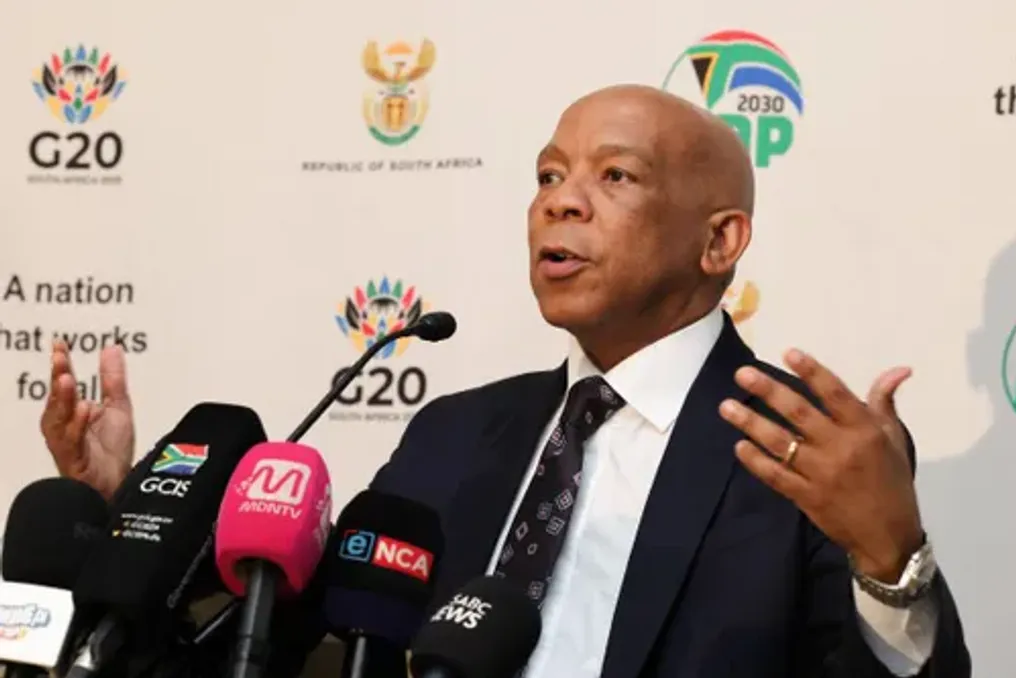
Minister of Electricity and Energy Kgosientsho Ramkogoppa presented the 'Eskom 2.0' strategy, according to which the energy company must improve its financial sustainability and eliminate inefficiencies without relying on state aid or significant tariff increases.

Ramkogoppa stated on Friday the government's expectations for 'Eskom 2.0'—a large-scale repositioning of the state-owned company following improvements in power generation and reduced power outages.

A central element of this plan is the requirement for Eskom to become financially self-sufficient while simultaneously lowering the cost of energy supply and preparing for increased competition in South Africa's liberalized electricity market.

Ramkogoppa emphasized that shareholders expect financial stability from Eskom, enabling it to meet its obligations without using further fiscal support or maintaining double-digit tariff growth as a business model. He categorically stated: 'There will be no state bailouts. There will be no double-digit increase in electricity tariffs in this country. It will not happen. And Eskom must prepare for this.'

Requirements for reducing inefficiencies at Eskom

Ramkogoppa noted that the cost of electricity remains a serious problem for businesses, households, and industrial competitiveness in South Africa. He specified that Eskom, which still accounts for the majority of generation in the country, must reduce technical losses, revenue leakage, and overall inefficiency so that consumers see relief.

The Minister called for moving from talk to action regarding electricity costs, expressing understanding of citizens' problems and giving a full guarantee of their resolution. It should be noted that Eskom reported a second consecutive annual profit for the financial year ending March 2026, citing improved operational performance and cost discipline that strengthened its financial position.

Nevertheless, Ramkogoppa warned that the future sustainable development of Eskom will depend on reducing losses and improving revenue collection, rather than the state or consumers covering its expenses. The board of directors is expected to develop a strategy aimed at combating electricity theft, inaccurate metering and billing, technical losses, and weak collections.

The Minister stipulated that Eskom must lower the cost of energy supply by improving the productivity of facilities, procurement, maintenance, project implementation, and workforce efficiency. He added that the intention to reduce electricity costs will not be realized until Eskom can solve the inefficiency problems.

Future plans include a major expansion of the national grid, which must be supported by Eskom and the South African National Transmission Company as more independent generation sources are connected. Ramkogoppa announced government plans to build 14,500 kilometers of new transmission lines, a program estimated at approximately 440 billion rand. He stressed that this program should stimulate local production and employment, rather than heavily relying on imported equipment.

The Minister also noted that Eskom must look beyond South Africa, as new private generators weaken its traditional dominance in the domestic electricity market. He welcomed increased competition, warning against the risks of complacency and inefficiency associated with monopolies, which can drag the country down.

The government wishes Eskom to utilize surplus generating capacity to increase electricity exports to South Africa while developing new domestic demand from sectors such as data centers. The new strategy must also clearly define positions on nuclear energy, gas, renewable energy, and the future coal fleet.

Ramkogoppa stated that Eskom Green should create a credible portfolio of projects, and the company itself must make artificial intelligence a central part of its operations. The Minister insisted on aggressively developing Eskom's AI capabilities, pointing out that immediate applications include reducing technical losses, improving weather and demand forecasting, and strengthening grid visibility.

The government expects Eskom's board of directors to present a unified 'Eskom 2.0' roadmap for a period of three to five years, covering the company's public mandate, commercial position, and investment program. This plan was developed after Eskom achieved 365 days of continuous operation without power outages in May 2026 and subsequently reported a second consecutive profit. However, Ramkogoppa cautioned that maintaining the supply of electricity is no longer the sole measure of success, as electricity costs could rise if the required management is not implemented.

Uzbekistan and JDB Group to accelerate infrastructure and geology projects
Read more
podrobno.uz

Uzbekistan and JDB Group to accelerate infrastructure and geology projects

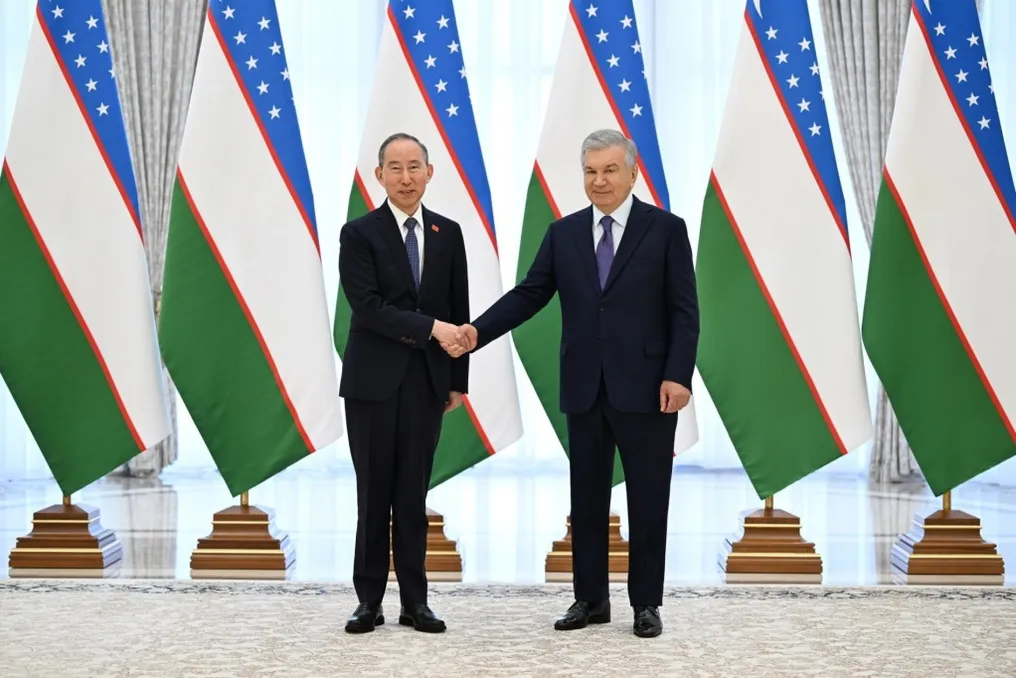
Uzbekistan and the Chinese company JDB Group intend to accelerate the implementation of both existing and new projects in the country. The main focus will be on developing urban, transport, and industrial infrastructure, as well as projects related to geology.

This was announced during a meeting held on September 25. The meeting took place between the President of Uzbekistan Shavkat Mirziyoyev, Chairman of the China Center for International Cultural Communications Long Yixuan, and the founder of JDB Group Chan Huntou.

During the negotiations, the parties also discussed prospects for deepening comprehensive strategic partnership between Uzbekistan and China, as well as strengthening cultural and humanitarian ties between the two states.

It was noted that the China Center for International Cultural Communications participates in the implementation of various projects in Uzbekistan. These joint initiatives cover the fields of infrastructure, investment, and green industry.

As a result of this meeting, a decision was made to accelerate the implementation of all current and future projects involving JDB Group.

Popular