
EPFO conducts 'Nidhi Aapke Nikat 2.0' campaign to address PF issues
Read more
Aaj Tak
www.aajtak.in

EPFO conducts 'Nidhi Aapke Nikat 2.0' campaign to address PF issues

For many employees, the EPFO account is limited to only monthly contributions to PF, and they may not know what information related to their PF account can be changed online, how to correct errors, or how to use various EPFO online services and programs. This is especially true for those who are not accustomed to technology and online processes, as even a small procedure can become a source of problems.

In such cases, the EPFO initiative called 'Nidhi Aapke Nikat 2.0' can be very useful. Employees will be able to receive information about EPFO programs, services, and processes directly from officials during the campaign, which will take place on September 28, 2026. Furthermore, if they have complaints or questions related to their PF account or any EPFO service, they can present them to the officials on site.

The Employees' Provident Fund Organisation (EPFO) announced this 'Nidhi Aapke Nikat 2.0' campaign through its social media page on X. EPFO urged members to attend the campaign on September 28 to get information about the organization's programs and benefits, as well as to understand the services and their procedures. The goal of this initiative is to bring EPFO services closer to subscribers so that they do not have to rely solely on online processes when facing minor or major difficulties.

According to an EPFO announcement (@officialepfo) dated September 23, 2026, participants are invited to attend 'Nidhi Aapke Nikat 2.0' on September 28, 2026, to learn about EPFO schemes and benefits, understand the services and processes with the participation of officials, and receive immediate grievance redressal.

During the campaign, EPFO employees will engage in direct dialogue with members. If it is unclear which procedure to follow to obtain a specific EPFO service, what documents are required, or how to use an available online function, this information can be obtained at the campaign. This will be particularly helpful for PF members who are unsure about using online processes or digital services.

A crucial part of the 'Nidhi Aapke Nikat 2.0' campaign is the prompt resolution of account holder grievances. Officials present at the campaign will carefully listen to the complaints and problems of EPF members. Thus, if there is a long-pending complaint related to EPFO or an issue with any service, it can be presented to the relevant authorities. However, it should not be assumed that all matters will be resolved immediately; further investigation may be required depending on the nature of the case and the necessary procedures.

EPFO has also provided a locator link allowing users to view information about campaigns being held in different locations. Members can visit this folder to see the locations of nearby organized campaigns.

EPFO services are continuously being digitized. From checking the PF balance to numerous other functions, everything is available online. Nevertheless, not every employee is equally confident in digital processes. Sometimes, due to lack of information or misunderstanding of the online procedure, employees cannot utilize functions that can be performed from home.

Under these circumstances, the 'Nidhi Aapke Nikat 2.0' campaign provides employees with an opportunity to speak directly with officials and explain their problems. This can be a useful opportunity for members who have questions regarding their PF account, EPFO programs, services, and related rules.

If you are an EPFO subscriber and face a problem or complaint related to your PF account, it will be helpful to bring the necessary documents and existing information regarding your issue before attending the campaign. This can facilitate explaining the situation to the official.
Similar stories

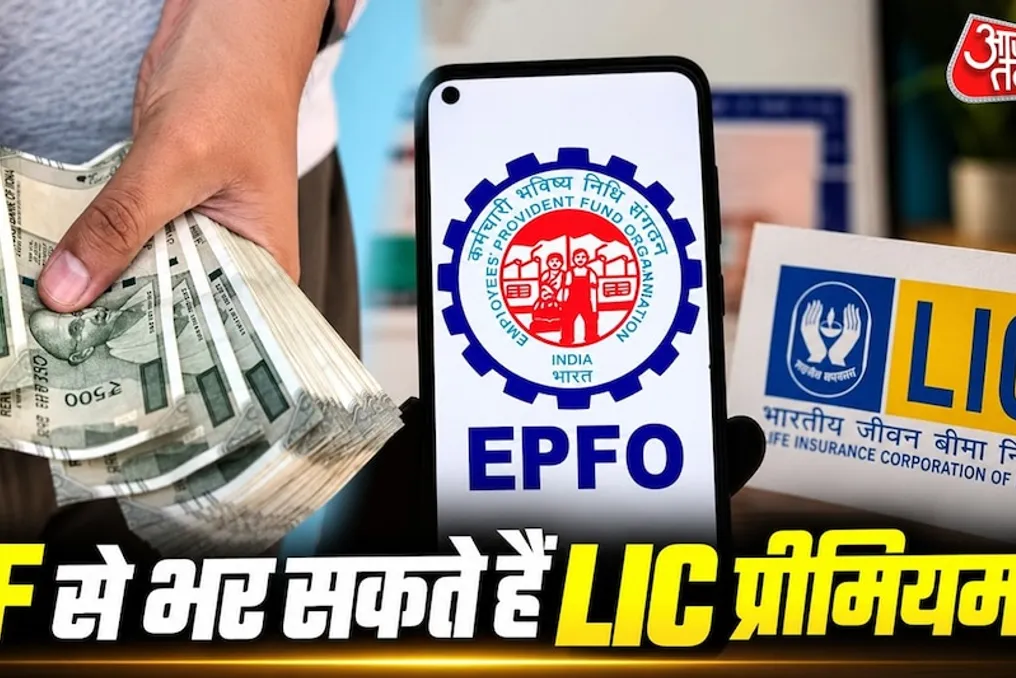
Option to Pay LIC Premium from PF Account in Case of Insufficient Funds: Rules and Procedure
Read more
www.aajtak.in

Option to Pay LIC Premium from PF Account in Case of Insufficient Funds: Rules and Procedure

When the deadline for paying the LIC premium arrives, many people face financial difficulties because their budget is exhausted, and unexpected expenses can make it difficult to gather the necessary money. In such situations, people often borrow from relatives or friends or use credit cards to maintain their policy program. However, if a person is a member of EPFO, they may have access to an option that many do not know about—the ability to pay the LIC premium using funds from their EPF account.

According to the rules of the Employees' Provident Fund Organisation (EPFO), there is a provision regarding Form 14 for paying LIC premiums. On the official EPFO website, Form 14 is listed as a document used for 'financing the LIC policy.' Under this option, the member can instruct EPFO to withdraw funds from their PF account and transfer them as the LIC premium. Form 14 provides a payment mechanism for both initial and subsequent premium payments.

There is an important condition: the EPF account must hold an amount sufficient to cover the LIC premium for at least two years. The rules of Form 14 also stipulate requirements regarding minimum membership duration and the availability of sufficient funds in the account. Thus, simply being an EPFO member is not enough; one must first ensure that the funds available in the EPF account meet this requirement.

To use this feature, an application must be submitted to EPFO through Form 14. This form requires providing all necessary information about the LIC policy and the premium itself. After the application is approved, the funds can be withdrawn from the EPF account and sent to LIC on the specified payment date. This means that provided all necessary procedures are followed, you will not have to search for money every time the premium payment is due.

Suppose the annual premium for an LIC policy is 30,000 rupees. If a person suddenly loses their job or faces a major family expense and does not have these 30,000 rupees, non-payment of the premium can negatively affect the policy status. If the concerned person meets the criteria and has an amount in their EPF account equal to two years' premium, they can use the option of paying the LIC premium from EPF via Form 14. This helps avoid the need to take additional loans during difficult times.

It is crucial to realize that EPF funds are part of retirement savings. Therefore, one cannot assume that because these funds can pay the LIC premium, it means this option should be used every time. If you have sufficient funds to pay the premium, there is usually no need to touch your EPF savings. This option should be considered primarily in situations of genuine financial deficit when it is critical to maintain the policy.

Missing a payment date does not automatically mean the entire policy is terminated. According to LIC, a grace period of at least 30 days is usually provided for annual, semi-annual, and quarterly premiums, and 15 days for monthly premiums. If payment is not made within this period, the policy may be cancelled. Subsequently, according to the policy rules, a reinstatement option may become available. LIC indicates that reinstating a cancelled policy may require paying the overdue premium, interest, and, if necessary, providing other documents. The timelines and conditions for reinstatement may vary depending on the specific plan.

The option to pay the LIC premium from EPF is not a way to withdraw funds for any general expenses. EPFO provides this function exclusively for financing LIC policies through Form 14. Consequently, if you have expenses for rent, school tuition, credit card bills, or any other expenditures, you cannot directly pay them from EPF under this service.

If you are considering this option, you must first check the status of your LIC policy and the due date. Then, you should check the amount available in your EPF account. It is also important to ensure that the condition of having funds equivalent to at least two years' LIC premium is met. Most importantly, view EPF funds as retirement savings. Therefore, the decision to use them to pay the LIC premium should only be made if it is truly necessary and if your policy terms allow this option.

Popular