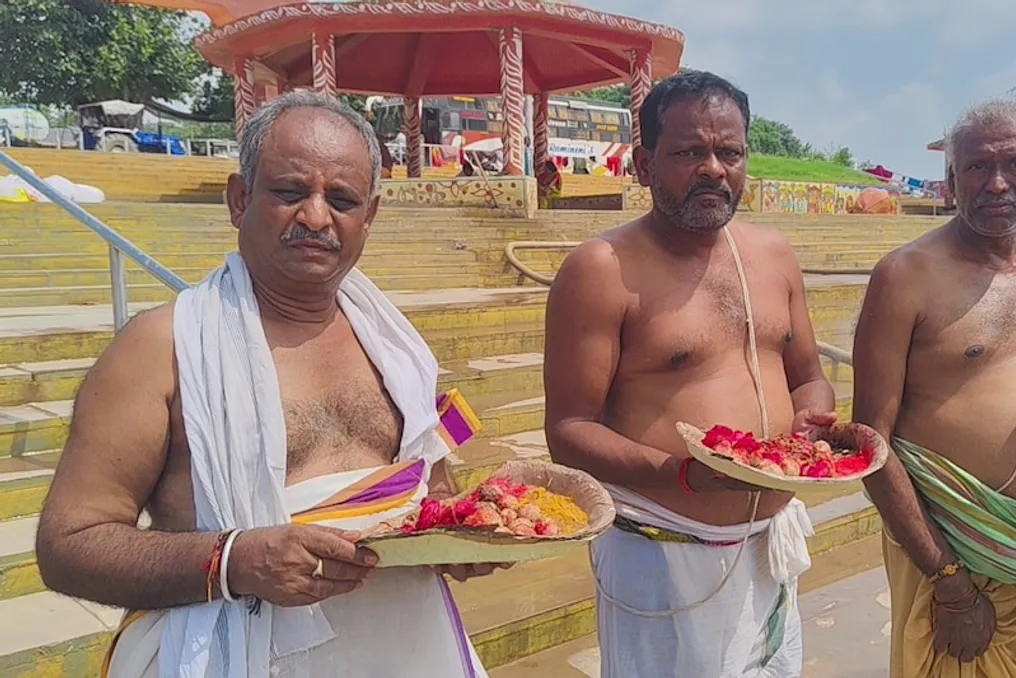
The Pitr Paksha period is a time not only for Shraddha and Tarpan traditions but also for remembering departed loved ones. People across the country honor the memory of their ancestors by lighting candles before portraits of elder relatives, performing Tarpan on the banks of the Ganges, and conducting Pindanas in sacred places.
This year, Pitr Paksha will last from September 26 to October 10. Preparations began in Prayagraj and Gaya before this period started. In Prayagraj, a stream of pilgrims has begun heading to the confluence of the Ganges, Yamuna, and the invisible Saraswati to perform Tarpan and Pindana. Meanwhile, the administration in Gaya has started strengthening security measures in view of the upcoming 15-day Pitr Paksha festival.
For those who cannot visit Prayagraj for any reason, there is now an option to perform Pindana online through the services of Tirth Purohits. This allows people who are far from home due to work, living abroad, health issues, or other commitments to honor their ancestors using modern technology.
Tirth Purohit Pradip Pandya from Prayagraj reported that an online Pindana system was organized specifically for people who cannot reach the confluence. According to the Tirth Purohits, this approach connects the ancient tradition of Pitr Paksha with modern technologies. However, they emphasize that there are various religious traditions and opinions among the Purohits regarding online rituals, so pilgrims should clarify the details with the relevant Tirth Purohit before conducting the ritual.
The confluence in Prayagraj holds immense significance in Hinduism. A large number of devotees gather here during Pitr Paksha. After bathing in the confluence, people perform Tarpan and complete the religious procedures of Pindana and Shraddha. It is believed that performing such rituals in Prayagraj brings peace to the souls of ancestors and well-being to the family. This belief attracts people from all corners of the country. The Tirth Purohits note the special importance of Prayag, Kashi, and Gaya in religious tradition, citing the belief: 'Vishnu Mukha Prayag, Vishnu Nabi Kashi and Vishnu Charan Gaya.' Due to this mystical significance, not only residents of Uttar Pradesh but also people from other regions, such as pilgrim Jai Chandra Prasad from Andhra Pradesh, come to perform religious rites for their ancestors at the confluence.
Gaya, located in Bihar, is also considered an important place for performing Pitr rituals alongside Prayagraj. The Gaya administration has focused particular attention on ensuring transport and security safety in connection with the upcoming Pitr Paksha festival. A large number of pilgrims and Pindanas are expected to arrive in the Vishnu Pad area in Gaya from within and outside the country. According to religious beliefs, performing Pindana, Tarpan, and Shraddha in Gaya helps ancestors achieve liberation. One famous religious story associated with Gaya tells of Lord Rama and King Dasharatha. According to this legend, Lord Rama arrived in Gaya with Mother Sita and performed the Pindana for King Dasharatha on the banks of the Falgu River. It is said that since there were not enough materials for the Pindana, Mother Sita created Pindas from the sand of the Falgu River to complete the religious rite.
Given the potentially huge crowd during the Pitr Paksha festival, the police and administration of Gaya have begun strengthening security measures. CCTV cameras are being installed in the festival zone and surrounding areas, monitored from a control center. According to SSP Sushil Kumar, a large number of police officers and constables will be deployed to ensure safety during the festival. The police contingent will work in three shifts. It is planned to establish 118 police camps in the festival zone, where police officers and personnel will be present around the clock. The SSP also noted that CCTV cameras will be constantly monitored from the control center, paying special attention to suspicious activity and anti-social elements to prevent any unpleasant incidents during the festival.
The administration is also preparing for the increased load on Gaya's transport system due to the arrival of a large number of pilgrims. In this regard, the SSP announced preparations for traffic regulation. It is planned to introduce a vehicle-free zone in the festival area, which should facilitate the movement of pilgrims and reduce problems related to traffic in crowds. Thus, during Pitr Paksha, pilgrims will remember their ancestors at the confluence in Prayagraj.