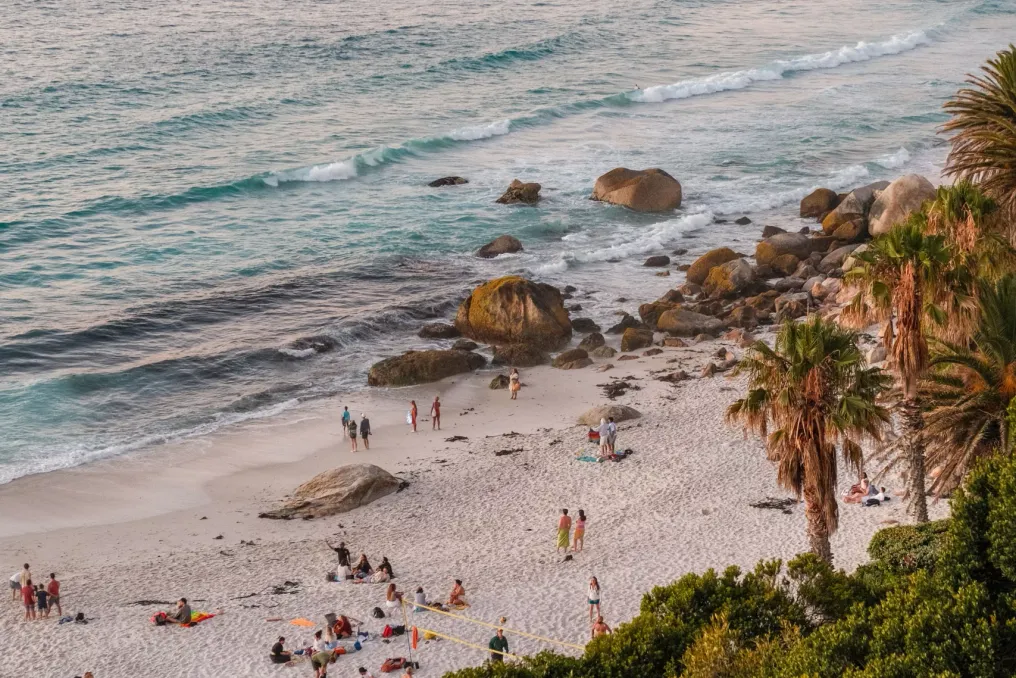
Coastal residents, fishing enthusiasts, and pedestrians walking along the shore have received an urgent recommendation to exercise increased caution over the upcoming weekend. This is due to the coincidence of a strong spring tide with the school holiday period and the long weekend for Heritage Day, reports Cape Town Etc.
The National Sea Rescue Institute (NSRI) cautions people heading to the coast about the need to plan their routes taking tides into account. The most powerful spring tides are expected from Saturday, September 26, to Tuesday, September 29.
The full moon will occur at 18:48 on Saturday, and the most significant water level fluctuations are usually observed a day or two after this. Furthermore, the spring tide follows the September 23 equinox, when such tides are often among the strongest of the year.
Spring tides occur due to the alignment of the Sun, Moon, and Earth, which enhances the gravitational pull on the ocean. Their influence can last for several days.
Andrew Ingram, NSRI Communications Manager, addressed the public: 'As families head to the coast for vacation, we ask everyone to take the tides into account this week.' He added that visitors should check the tide times in their area, swim only at lifeguard-patrolled beaches, and fishermen on rocks must wear a life jacket and carry flotation devices. In case of finding an injured person, help must be called immediately.
The spring tide will result in a more substantial difference between high and low water levels than usual. This creates additional risks for those swimming, fishing, or walking along the coast.
NSRI warns that increased currents can make underwater currents stronger, increasing danger for swimmers. Strong tidal currents can also occur near estuary mouths, harbor entrances, and narrow passages, such as near Knysna Heads.
Walking trails and routes may become dangerous or cut off during high tide, and rock fishermen may encounter waves reaching areas usually considered safe.
The Institute advises swimmers to use only lifeguard-monitored beaches and stay within the lifeguards' flags. Beachgoers should exercise extra vigilance during low tide, as this is often when underwater currents are strongest.
Additionally, NSRI recommends checking forecasts from the South African Weather Service and local tide tables before going out on the water. When planning sea trips, strong winds and changing weather conditions should be taken into account.
For those planning coastal walks, routes must be planned considering high tide times and avoiding paths that might be blocked. Rock fishermen are advised to stay at a safe distance from the water's edge, wear a life jacket, and carry a floating object that can be thrown to a person in the water; an empty five-liter plastic bottle with an attached rope will suffice for this.
Boat passengers and kayakers should wear life jackets, carry necessary safety equipment, and keep mobile phones charged in waterproof cases. NSRI also reminds the public not to consume alcohol before swimming, boating, or fishing, and to ensure that a responsible adult always supervises children near the water.
People should exercise caution near rivers, dams, and lakes, especially after rain, when water can flow fast and deep. In case of an emergency, contact the NSRI Operations Control Centre at 087 094 9774 or dial 112 from a mobile phone.