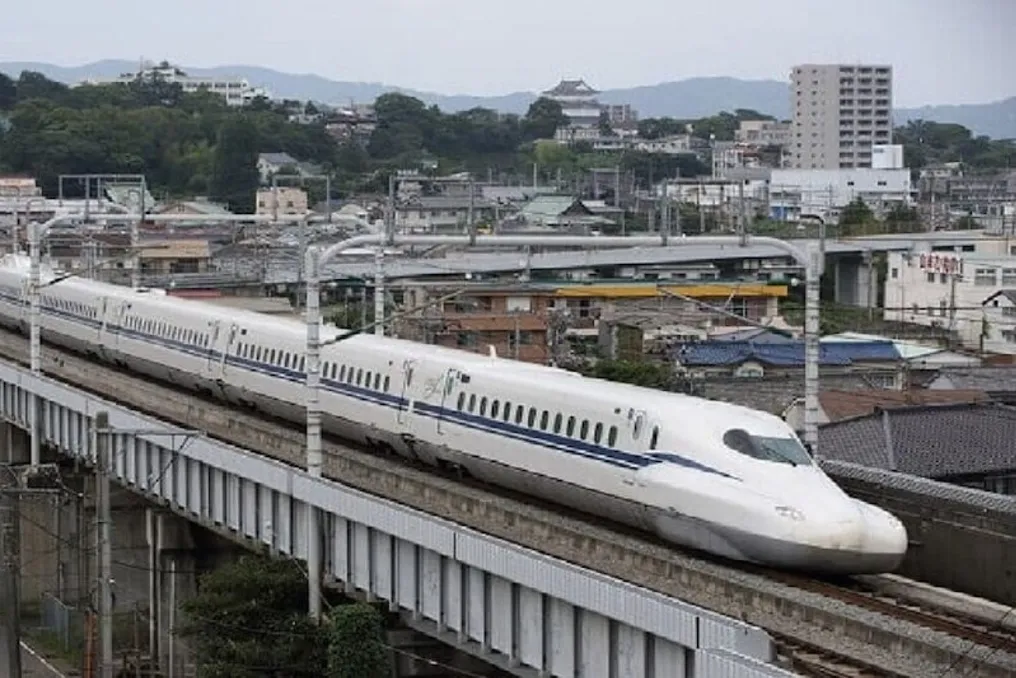
Mumbai-Ahmedabad high-speed rail construction is 62% complete, but service start dates are unknown
Read more
Aaj Tak
www.aajtak.in

Mumbai-Ahmedabad high-speed rail construction is 62% complete, but service start dates are unknown

According to information obtained through a Right to Information (RTI) request, the construction of the high-speed rail project between Mumbai and Ahmedabad reached 62.16% by the end of July 2026. This data was provided by the National High Speed Rail Corporation (NHSRCL).

When NHSRCL was asked about the estimated completion date of the project, it was stated that an assessment of the timeline is only possible after all contracts have been transferred and rolling stock supply is secured. The response to the RTI request, submitted on August 17, 2026, was provided on September 21, 2026.

For this project, 1389.49 hectares of land were acquired for the 508-kilometer corridor. This area includes 959.04 hectares in Gujarat and Dadra and North Goa, as well as 430.45 hectares in Maharashtra.

According to the RTI response, beams have been installed on 366 kilometers of viaducts, and beams for approximately 380 kilometers have already been cast. Foundation work is complete over a distance of 459.90 kilometers, and piers have been prepared along 455.10 kilometers. In all Gujarat stations, foundation and superstructure works are finished, and final finishing work is currently underway. Station construction continues in Maharashtra.

The project includes a 21-kilometer tunnel, seven kilometers of which will be underwater. NHSRCL reports that tunnel construction is being carried out using a Tunnel Boring Machine (TBM). Part of the tunnel built using the innovative Austrian tunneling method amounts to 4.88 kilometers. Of the eight mountain tunnels, four have been fully bored.

As per the RTI response, 32.28% of the work is complete at Sabarmati station, and 17.23% at Thane station. As of August 27, 2026, slabs for the railway track, including CAM injections, have been laid over 97 kilometers of the route.

The integral coach factory in Chennai has awarded BEML a contract for the design, construction, and commissioning of two high-speed trains for this corridor. NHSRCL confirmed that production of the first train has already begun. The corporation also noted that the Mumbai-Ahmedabad line is currently the only approved high-speed rail project under construction.
Similar stories

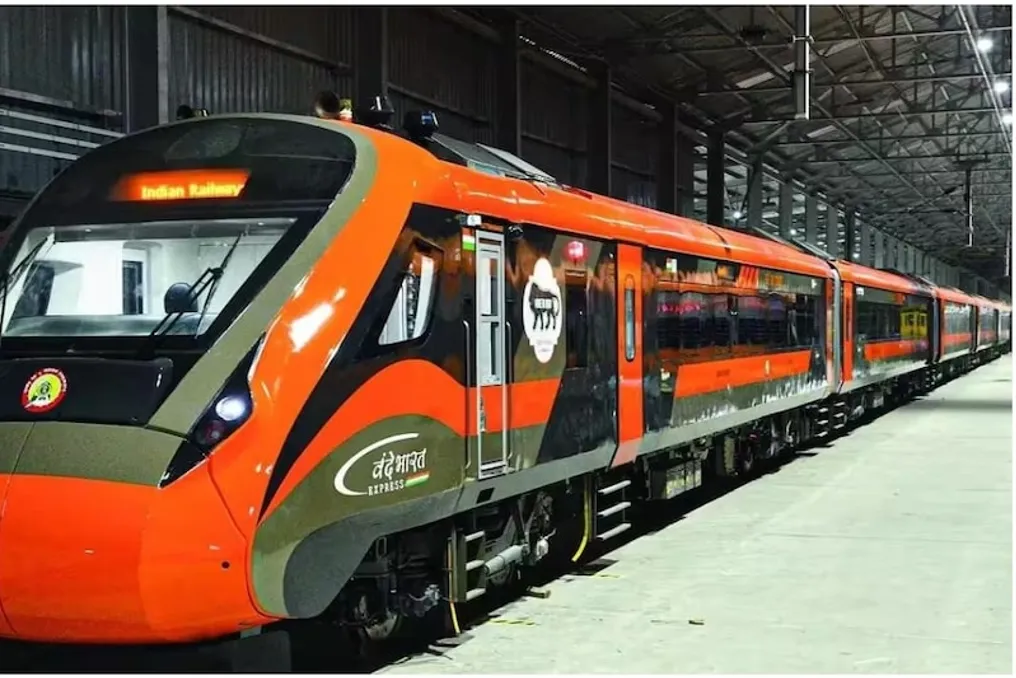
Two companies assume responsibility for maintaining 80 Vande Bharat sleeper coaches for 35 years
Read more
www.aajtak.in

Two companies assume responsibility for maintaining 80 Vande Bharat sleeper coaches for 35 years

It is planned that the responsibility for the technical maintenance of 80 Vande Bharat sleeper coaches will be carried out over 35 years. This major railway initiative goes beyond simple manufacturing. The responsibility for the long-term maintenance of these sets will be entrusted to a joint venture between Titagarh Rail Systems Limited (TRSL) and Bharat Heavy Electricals Limited (BHEL).

Previously, in April 2023, Titagarh Rail Systems and BHEL signed a contract worth approximately 24,000 crore rupees for the construction of 80 Vande Bharat sleeper coaches. Now, a corresponding structure is being developed to ensure the maintenance of these trains for 35 years, cementing the service system alongside production.

According to regulatory filings, BHEL and Titagarh Rail Systems will each hold a 50% stake in the proposed joint venture. Both companies will contribute equally to the share capital. This joint venture will be registered as a private company with an initial paid-up share capital of 50 thousand rupees and a registered office in Delhi.

Both companies are guaranteed equal representation on the joint venture's board of directors. BHEL will appoint two directors, and Titagarh Rail Systems will also appoint two directors. This agreement ensures equal participation of both companies in management and decision-making within the joint venture.

The main task of the proposed company will be to advance the planned activities in partnership between BHEL and Titagarh Rail Systems. It is through this structure that the responsibilities for maintaining the 80 Vande Bharat sleeper coaches will be assumed. According to regulatory documentation, the joint venture will utilize the technical potential and experience of both companies.

The focus will be on maintaining the operational readiness, safety, and reliability of the sets. This system is being created considering the projected 35-year lifespan of these trains, thus forming the institutional basis for long-term maintenance after construction completion.

Indian Railways is preparing to significantly expand the series of Vande Bharat sleeper coaches. According to the current plan, a total of 260 Vande Bharat sleeper coaches should be prepared. This will increase the network of fast and modern trains for long-distance night travel.

Under the existing plan, 260 Vande Bharat sleeper coaches will be manufactured by various companies and production units. India Earth Movers Limited (BEML) will be tasked with manufacturing the first 10 sets, consisting of 16 coaches each. Chennai Integral Coach Factory (ICF) will produce 50 sets. The 24-coach sets from ICF will also include a restaurant coach, for which production drawings have already been prepared. According to officials, RVNL and the Russian company Transmashholding (TMH) will manufacture 120 sets through the joint venture Kinet Railway Solutions. All these sets will be built in Latur, and each train will consist of 16 coaches. RVNL has reported that production has begun. At the 23rd annual general meeting, Chairman Salim Ahmed noted that the prototype manufacturing deadline was changed: it was originally planned for June 2026 but has now been extended to March 31, 2027.

India's first high-speed railway: Tunnel and station construction in the Vapi-Surat section
Read more
www.aajtak.in

India's first high-speed railway: Tunnel and station construction in the Vapi-Surat section

Preparations for the launch of India's first high-speed railway are actively continuing, and work on the railway stations being built for this project is progressing at a high speed. The Ministry of Railways and the Railway Minister regularly publish updates on this topic on social media platforms such as Twitter (now X).

The Ministry of Railways shared a video demonstrating the progress of work at the railway station and on the track itself in the Vapi-Surat section. This video quickly went viral. The video clearly shows that to ensure high train speeds on this high-speed route, work is underway to lay tunnels through mountains, install the railway track over a river, and carry out electrification work at a military level. Furthermore, the railways showed preliminary footage of the multi-story station for the high-speed train.

Construction of the Vapi-Surat section is proceeding very rapidly. The Railway Minister indicated that the first high-speed railway may begin operating on tracks possibly as early as August 15 of next year. This will be the country's first high-speed train to operate on the 508-kilometer Mumbai-Ahmedabad high-speed rail corridor. Of this corridor, 348 kilometers pass through Gujarat, and the Vapi-Surat section shown by the Ministry of Railways accounts for about 100 kilometers.

Although the entire 508-kilometer Mumbai-Ahmedabad corridor includes a certain number of stops, 12 stops were planned for this segment. The first high-speed train station is located in Sabarmati, and the last one is in Mumbai. In addition to Sabarmati and Mumbai (BKC), the list includes towns such as Thane, Virar, Boisar, Vapi, Bilimora, Surat, Bharuch, Vadodara, Anand, and Ahmedabad.

When the high-speed train reaches its full operational speed, it will travel at 320 kilometers per hour. However, between Ahmedabad and Mumbai, the average speed of the high-speed train is expected to be around 300 kilometers per hour next year. Previously, the journey between Mumbai and Ahmedabad on the fastest trains took approximately 6 hours. After the high-speed train launches, this time will be reduced to just 2 hours. This will not only save valuable passenger time but also boost trade activity between the two states.

Popular