Meta unveils gadget in the form of pocket watch to access its AI agent Muse
Read more
TechCentral
techcentral.co.za

Meta unveils gadget in the form of pocket watch to access its AI agent Muse

During Meta's annual event, where Mark Zuckerberg repeatedly criticized Apple, he used an approach similar to Steve Jobs' tactics for an unexpected presentation: a pocket watch-sized device that allows integrating the viral AI agent Muse into the real world.

This gadget, named Muse Charm, demonstrates a broader shift within the social media company, which has long sought to create its own platform to reduce dependence on Apple and Google operating systems. Users can activate the gadget to gain direct access to Muse, bypassing AI applications on smartphones.

After the company previously promoted the metaverse—an immersive digital world that prompted it to change its name in 2021—as the next computing platform, Zuckerberg now believes that 'personal superintelligence' is a more significant and immediate breakthrough after its previous expensive bet failed.

At the Meta Connect conference, Zuckerberg stated: 'It's actually quite obvious that personal superintelligence will not only come first; it will be much bigger and more important.' He added that the company has shifted its focus to developing the best devices for personal superintelligence and announced that Muse will soon be available in Meta's smart glasses lineup.

These statements came after Muse experienced genuine success in a few days, gathering millions of downloads. Some analysts believe this could be the biggest app launch in the US since ChatGPT appeared in November 2022, which kicked off the AI boom. Investors reacted to Muse's potential to automate tasks, ranging from booking flights to filing tax returns, leading to a rise in shares of partners like Shopify and a decrease in the value of companies that investors believe may suffer from these changes, including the online travel agency Booking and the software creator TurboTax Intuit.

Appeal to Young Consumers

Analysts suggest that Muse Charm may resonate with the younger generation during the resurgence of interest in digital cameras, feature phones, and MP3 players. Gen Z consumers, aged approximately 14 to 29, view AI assistants more as companions or brainstorming partners rather than just search tools. Many interact with technology through voice notes, short videos, and AI-based chatbots, unlike older users who often prefer PCs and smartphone apps.

Linda Sui, founder of the research firm Smart Analytics Global, noted: 'Muse Charm could find support among Gen Z and young consumers. The combination of AI, fashion, and personalization might appeal to young users, especially if the device is accessible and easy to use.'

The device features a screen of about 5 cm, controllable by the thumb, and has a customizable Muse character at its center. A built-in 5G modem provides access to Muse even without Wi-Fi, although calls cannot be made on it. IDC Director Jitesh Ubrani commented: 'They attract people who may not want to wear glasses or do not trust glasses.'

Ubrani also mentioned that some people might recall Tamagotchi, which could evoke similar feelings, referencing the colorful virtual pets that became a cultural phenomenon in the late 1990s. He speculated that the device could run a small language model locally, allowing AI to be used on such a compact body.

Whether Muse can maintain its momentum, and whether the gadget can enhance this appeal, remains open for the coming months. Similar devices have had limited success. Rabbit R1, a portable generative AI device from startup Rabbit Inc with a screen and button, had a high-profile launch in early 2024 but failed due to excessive promises regarding AI features and unreliable experience. Sui warned: 'I would be cautious about its mass potential. If Muse Charm cannot offer unique features that smartphones, watches, headphones, or smart glasses cannot easily replace, it will likely remain a device that is nice to have for early adopters, rather than becoming a mass-market product.'
Similar stories

Meta Unveils Four New AI Devices to Reduce Smartphone Dependency
Read more
www.aajtak.in

Meta Unveils Four New AI Devices to Reduce Smartphone Dependency

Mark Zuckerberg and Meta have recently placed significant emphasis on artificial intelligence (AI). Therefore, the strong focus on AI at the company's Connect 2026 event was not a surprise. At this meeting, the company presented not only AI concepts but also a range of entirely new devices.

Zuckerberg demonstrated the Ray-Ban Meta Gen 3 with camera-free functionality, new virtual reality (VR Glasses), and the company's first dedicated AI hardware device—the Muse Charm. According to the company, these gadgets are aimed at integrating AI into daily life.

Ray-Ban Meta Audio

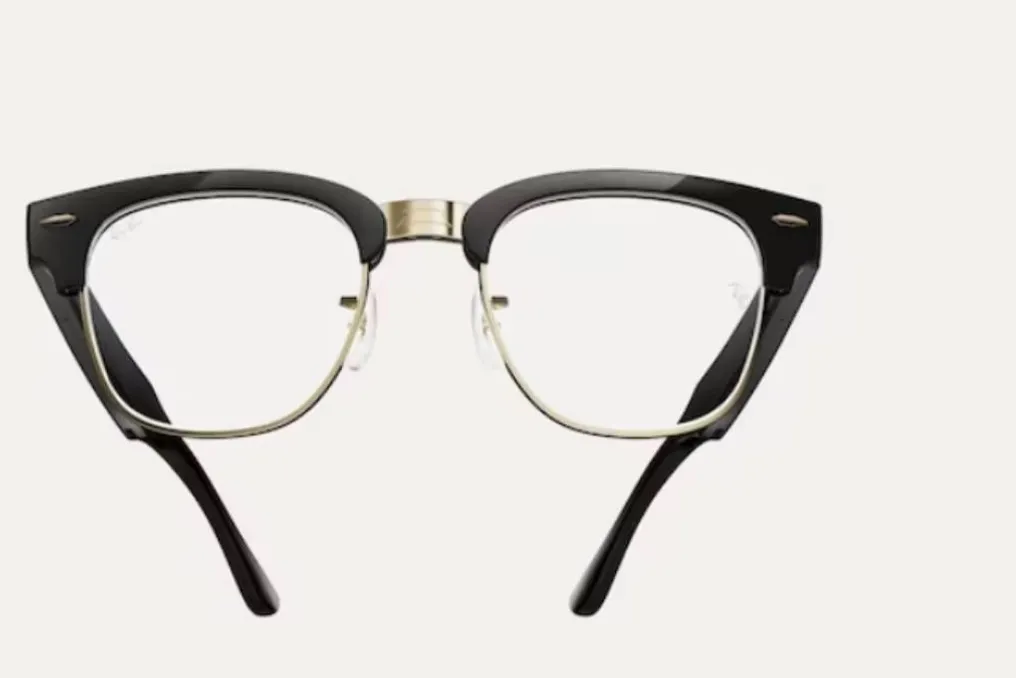
The first device introduced was the new Ray-Ban Meta Audio smart glasses, designed for users who need smart glasses but without a camera function. These glasses do not allow for taking photos or videos because they lack a camera. Instead, they are equipped with speakers and microphones, enabling music listening, making calls, live translation, and interacting with Meta's AI.

The absence of a camera is also due to privacy concerns. The presence of a camera in smart glasses raised questions about recording the data of surrounding people. With the absence of a camera in the new glasses, concerns about video recording are eliminated.

These glasses weigh only 43 grams and can operate for up to 12 hours on a single charge. The total battery life with the charging case reaches 48 hours. The starting price is $349, and shipping will begin on October 13.

Ray-Ban Meta (Gen 3)

For those who require AI glasses with a camera, Meta has released an updated version—the Ray-Ban Meta (Gen 3). This model features a 12-megapixel camera capable of recording video in 3K Ultra HD resolution. It is also equipped with a set of six microphones that helps reduce background noise by over 90 percent.

The battery in Gen 3 has been improved compared to the previous generation and now provides up to 9 hours of operation. The model is available in Aviator, Zena, and Wayfarer styles. The starting price is $449, and it will support Meta's new Muse AI.

Meta VR Glasses

Meta presented not only AI glasses but also new virtual reality glasses (Meta VR Glasses). A distinguishing feature of these glasses is their design, which resembles regular spectacles instead of a bulky VR headset. They weigh about 100 grams and are equipped with a 5K resolution microOLED display. To function, they must be connected to a small computing puck, which contains the data processing system and battery.

With these glasses, users will be able to watch movies on a large virtual screen, play games, and work on multiple virtual screens simultaneously. The company claims that control can be managed through hand gestures and eye movements. The price of these glasses is set at $1,299.99, with a launch planned for Spring 2027.

Muse AI with Key

Next, we look at Meta's most compact device—the Muse Charm. This is a small AI gadget that can be worn as a keychain. It includes a microphone, speaker, small display, and fingerprint sensor. Thus, communicating with the AI no longer requires taking out your phone every time and opening an application.

Meta's Muse AI goes beyond simply answering questions; the company positions it as a personal AI agent capable of assisting the user with daily tasks. Meta's plans are clear: instead of embedding AI within the phone, the company aims to distribute it through glasses, small devices, and other household items. The combination of camera-less glasses, Gen 3 glasses with a camera, and the new VR experience makes observing how much the need to take out a phone for AI usage will decrease in the future a very intriguing prospect.

Popular