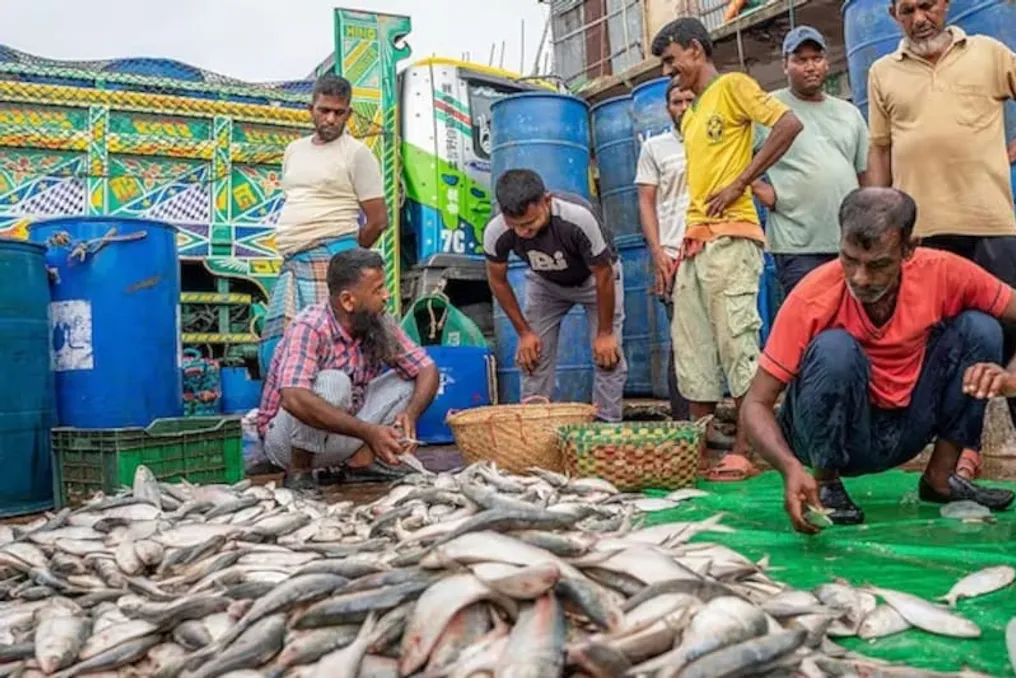
Bangladesh suddenly suspends Hilsa imports from India, revoking 103 permits
Read more
Aaj Tak
www.aajtak.in

Bangladesh suddenly suspends Hilsa imports from India, revoking 103 permits

Bangladesh has unexpectedly halted the import of Hilsa fish from India, and its fisheries department has canceled 103 No Objection Certificates (NOCs) issued for the import of Indian Hilsa. This decision was made on September 22, after which the arrival of Hilsa through the Benapole port terminal in Bangladesh stopped.

This move has been a serious blow to traders who had already purchased the fish in India and were preparing to ship it to Bangladesh. They now face the problem of selling the fish at a lower price directly in India, as well as the risk of incurring losses from transportation costs and other import expenses.

According to Bangladeshi data, about 535 tons of Hilsa were imported from India this year. Furthermore, 1739.50 tons of Hilsa were permitted to be imported from India for the current fiscal year. The sudden cancellation of NOCs led to a complete halt of all other imports.

The main source of Hilsa from India is reported to be in the state of Gujarat, specifically from the Bharuch district. This fish arrives in Bangladesh via the Benapole port, where it is sold in local markets.

The Bangladeshi Fisheries Department has not officially stated a clear reason for the import ban. However, people involved in trade in the country have put forward several possible explanations. Among them are suspicions that Indian Hilsa might be sold as local or Padma Hilsa.

The possibility of money laundering and under-invoicing was also mentioned. Another suspected reason is the desire to stimulate local Hilsa production. It is important to note that the government has not officially confirmed any of these assumptions.

It is known that Padma Hilsa is highly valued in Bangladesh, considered to be more tender and flavorful. Hilsa from Gujarat has a different taste due to a higher amount of roe. Due to its lower cost, it is also used for other commercial purposes.

The import of Hilsa from India helped meet local demand in Bangladesh, as Hilsa production in the country has been declining in recent years, making the supply of Indian fish vital for traders.

After Bangladesh restricted the import of Hilsa from India, attention is now also focused on batches of Padma Hilsa arriving from Bangladesh to India. Limited quantities of Hilsa were sent from Bangladesh to India annually before the Durga Puja festival. However, no announcement regarding such shipments has been made at the moment.

In 2012, Bangladesh imposed an export ban on Hilsa. After that, the fish began being sent to India in limited quantities around Durga Puja. In 2025, about 1200 tons of Hilsa were permitted to be sent to India, but according to reports, only a small portion reached India.

Currently, traders are concerned about Bangladesh's decision to stop importing Hilsa from India. Many importers state that they purchased the fish after receiving permits, and the sudden halt could lead to financial losses. The Government of Bangladesh has not yet disclosed detailed reasons for this decision.
Similar stories

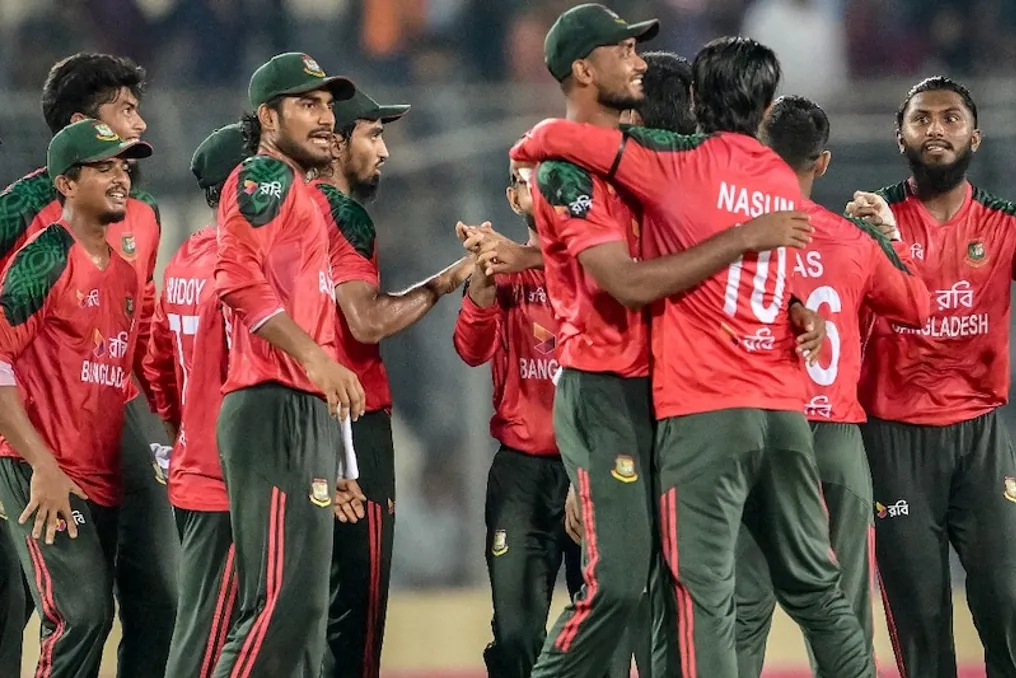
Investigation shows former sports advisor Asif Nazrul made the decision to exclude Bangladesh from T20 World Cup
Read more
www.aajtak.in

Investigation shows former sports advisor Asif Nazrul made the decision to exclude Bangladesh from T20 World Cup

The discussion surrounding Bangladesh's exclusion from the 2026 T20 World Cup has reached a new stage following the publication of an investigative commission's report. The Bangladeshi government commission identified former sports consultant for the interim government, Asif Nazrul, as primarily responsible for the decision to exclude the team from the tournament, which is scheduled to take place in India.

The three-member investigative committee presented its 22-page report on Tuesday. It states that at the time, the Bangladesh Cricket Board (BCB) lacked independent strategic leadership, effective crisis diplomacy, and long-term planning. Political tensions, the ICC's refusal to change match venues, and government interference were cited as factors that heavily influenced the decision.

According to a report based on Cricinfo materials, committee member Baristar Faisal Dashtgir stated at a press conference that, based on available information, media reports, and discussions with stakeholders, the commission concluded that the young sports advisor Asif Nazrul was responsible for Bangladesh not qualifying for the World Cup. The commission asserts that the official decision to exclude the team due to security concerns was not made at the highest levels of government or the BCB; instead, Asif Nazrul allegedly instructed the team not to travel to India.

During the investigation, interviews were conducted with Bangladesh T20I captain Litton Das, Test team captain Najmul Hossain Shanto, coach Mohammad Salakhuddin, BCB chairman Tamim Iqbal, and other board officials. The report mentions statements from Shanto and Litton, who reported that the players advocated for participation in the World Cup in India. Shanto described Asif Nazrul as the 'sole decision-maker' on this matter, while Litton characterized the government's decision as unilateral. The commission also emphasized that the greatest damage from this decision was suffered by the fans and the athletes themselves, and clearly stated that Bangladesh should have participated in the World Cup.

The entire conflict originated with the IPL. Bangladesh fast bowler Mustafizur Rahman was acquired by Kolkata Knight Riders at auction but was subsequently excluded from the IPL by order of the BCCI. This led to a deadlock between Bangladesh and the ICC regarding the T20 World Cup matches. Bangladesh demanded that its games be moved from India to co-host Sri Lanka, but the ICC refused. Ultimately, after Bangladesh decided not to come to India, the majority of the ICC board excluded it from the tournament, replacing the team from Scotland.

Interestingly, just a few hours after the investigative commission's report was released, Asif Nazrul himself stated that the decision not to go to the T20 World Cup in India was largely his own. In a Facebook post, he wrote that as the Minister of Sports, he made the decision not to go to India. He also questioned why the investigation into this matter had taken so long and why the report was published now. Defending his decision, Asif Nazrul cited the safety of players, journalists, and fans, as well as the dignity of the country. Thus, he accepted responsibility for the decision that the commission's report named as responsible, although his explanations for the reasons differ from the commission's findings.

The investigative report does not only address the decisions of the government or Asif Nazrul. The commission also criticized the work of the BCB during that period. According to the report, the board lacked independent strategic leadership, the ability to conduct diplomatic negotiations in crises, and long-term planning. The BCB's inability to negotiate was cited as a factor of 'high impact' in this matter, while political tensions between India and Bangladesh, the ICC's refusal to change venues, and government interference were rated as having 'very high impact.'

Popular