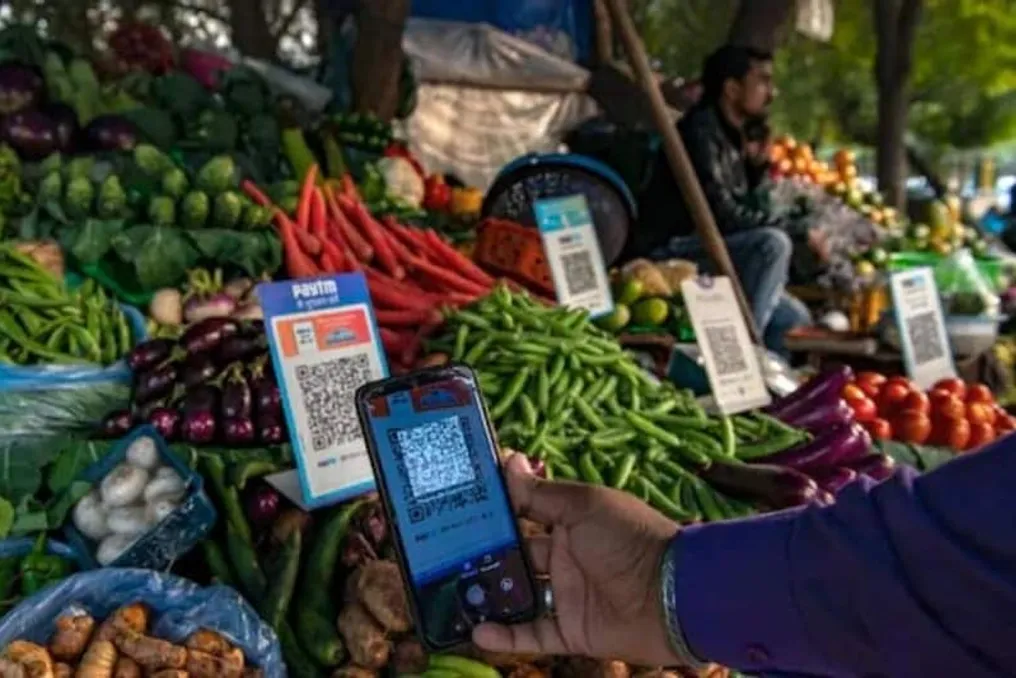
Delhi traders plan protest against new MDR for UPI payments on October 2
Read more
Aaj Tak
www.aajtak.in

Delhi traders plan protest against new MDR for UPI payments on October 2

Trade representatives in Delhi are preparing to hold a 'No UPI Day' action on October 2. This initiative is aimed against the introduction of a discount rate for sellers (MDR) for UPI payments exceeding 2000 rupees, which is set to come into effect on October 15.

The traders' organization, the 'Chamber of Trade and Industry' (CTI), has called on all sellers and entrepreneurs in Delhi and across the country to join this protest. On the day of the action, traders intend to cover their UPI QR codes, scanners, and sound boxes with black cloth, insisting on receiving payment exclusively in cash.

The protest is related to the new MDR, which will be effective from October 15, 2026, for transactions exceeding 2000 rupees. CTI has appealed to Finance Minister Nirmala Sitharaman, demanding the cancellation of this decision.

According to CTI, the introduction of the new MDR will increase traders' expenses. For example, for a payment of 3000 rupees, the seller will have to pay about 12 rupees. Similarly, for a transaction of 50,000 rupees, this amount could reach approximately 200 rupees, with an upper limit of 300 rupees set for large sums.

CTI General Secretary Gurmit Arora and Ramesh Ahuja emphasized that the organization is not against digital payments, but the additional cost could create serious difficulties for retail sellers and distributors operating on small margins.

According to CTI Vice President Rahul Adlakhi and Secretary Kunjah Nakra, this decision could affect around 60 million traders, entrepreneurs, and shop owners across the country. CTI asserts that the increased costs due to the implementation of MDR will raise the financial burden on traders.

CTI Chairman Brijnesh Goel expressed concern that this could lead to an increase in cash transactions and a 50 percent decrease in UPI payments. It should be noted that this is only a speculation made by CTI and not an official assessment.

Citing government data, CTI reported that in the fiscal year 2025-26, UPI processed approximately 24,162 billion transactions, with a total value of approximately 314 trillion rupees. UPI accounted for about 84 percent of the country's total digital transaction volume. Furthermore, the total value of payments from individuals to sellers (P2M) reached about 198 trillion rupees. CTI notes that although transactions exceeding 2000 rupees constituted only 4 percent of the total number, their aggregate value reached 131 trillion rupees, meaning that over 66 percent of the total value of UPI payments to sellers was attributed to transactions exceeding 2000 rupees.

Finance Minister Nirmala Sitharaman stated that the government has not introduced MDR for UPI. She clarified that this levy is collected by NPCI from banks and payment companies as a service charge, and these funds will not go into the state treasury. The Minister also explained that the MDR for UPI payments exceeding 2000 rupees will be paid by the seller or trader themselves, not the customer. Additionally, she mentioned that MDR is also paid by sellers for certain credit and debit card operations.

Similar stories

Business Associations Plan UPI Boycott Day on October 2 in Protest Against New MDR Fee
Read more
business-standard.com

Business Associations Plan UPI Boycott Day on October 2 in Protest Against New MDR Fee

Some business associations have decided to hold a day of boycott of UPI (Unified Payments Interface) on October 2. This step is aimed at protesting the decision by the National Payments Corporation of India (NPCI) to introduce a Merchant Discount Rate (MDR) of 0.4 percent on payments to sellers via UPI exceeding ₹2000, starting from October 15.

Organizations confirming participation in the action include the Maharashtra Chamber of Commerce and Industry, the Food Federation of Consumer Distributors of India, the All India Union of Edible Oil Traders, the Federation of Jewelers and Gold Holders of India, the Association of Mobile Retailers of India, and the Federation of Retail Traders Welfare Associations. They plan to participate on October 2.

Ravindra Mangave, President of MCCIA, stated at a press conference in Mumbai that MCCIA has about 500 affiliated associations. He reported that they discussed the issue with all trade associations in India and unanimously decided to support the UPI boycott day not only in Maharashtra but also in other states. He added that representatives of organizations such as the Federation of Retail Traders Welfare Associations, the Food Federation of Consumer Distributors of India, the Association of Mobile Retailers of India, the Federation of Jewelers and Precious Metals of India, and the All India Union of Edible Oil Traders will join MCCIA and about 500 Maharashtra associations for this day. These associations intend to meet with the Prime Minister and voice their demands, while at the central level, present them to the Finance Minister.

MDR is a commission that a seller pays for accepting digital payments. UPI transactions between individuals are not subject to a fee. However, UPI transactions from an individual to a seller exceeding ₹2000 will be subject to a 0.4 percent fee starting October 15, capped at ₹300.

Payments to small sellers classified as P2PM will remain free from MDR. Such sellers include small traders receiving up to ₹1 lakh per month through UPI, which is particularly beneficial for businesses in rural and semi-urban areas. In August, UPI processed 15.51 billion person-to-merchant transactions totaling ₹8.95 trillion, with payments over ₹2000 accounting for about 67 percent of this amount.

Last week, senior officials from the Ministry of Petroleum and Natural Gas met with the All India Petroleum Traders Association to discuss the dealers' demand for exemption from MDR on UPI transactions. Tuhin Kanta Pandey, Chairman of the Securities and Exchange Board of India (SEBI), stated that the regulator would consider brokers' concerns regarding the new MDR for large fund transfers via UPI. The MDR rate for capital market transactions is set at 0.02 percent, with a limit of ₹300 for payments to mutual funds, brokers, dealers, and investment advisors.

Dayarishil Patil, national president of AICPDF, noted: 'Why should only traders bear the additional cost of digital payments? Retailers and distributors operate on very low margins and already contribute significantly to the growth of digital commerce. Introducing MDR on UPI transactions will only add another expense item to their business. Digital payments should reduce friction, not penalize the trader.'

Shankar Thakkar, national president of the All India Union of Edible Oil Traders, stated strong opposition among traders across the country to the government's proposed order introducing a 0.4 percent MDR charge on UPI transactions exceeding ₹2000 from October 15.

Various trade organizations across the country have decided to protest on Gandhi Day, October 2, following the example of Mahatma Gandhi: they plan to cover UPI scanners, QR codes, sound boxes, and other related devices with black cloth as a sign of protest. Thakkar warned that if the government does not take appropriate action on this matter, a strategy for further actions will be determined in the coming days, and protests will intensify.

He explained that the constantly growing use of UPI payments has made the entire retail payment chain more transparent. A customer makes a UPI payment to a seller, the seller makes a digital payment to the wholesaler when purchasing goods, and the wholesaler, in turn, makes an online payment to the manufacturer or supplier. This has reduced the circulation of cash and created an account of every transaction. Thakkar questioned: 'Is the cost of increasing system transparency being borne by small retailers? Introducing MDR for traders operating on low margins will effectively mean not promoting Digital India, but economically punishing honest businesses for conducting registered and transparent transactions.'

Introduction of UPI Commission: Rules and Conditions That Will Not Affect Ordinary Users
Read more
www.aajtak.in

Introduction of UPI Commission: Rules and Conditions That Will Not Affect Ordinary Users

UPI has become an integral part of the daily lives of many people, assisting in purchases ranging from milk and vegetables to online shopping. Consequently, questions have arisen regarding the impact of the upcoming introduction of commissions on UPI. The government has decided to implement a Merchant Discount Rate (MDR) on UPI, which will come into effect on October 15, 2026.

The Department of Financial Services (DFS) of the Government of India and the National Payments Corporation of India (NPCI) have released a new MDR structure for payments made via UPI. The primary concern among the public is the potential increase in costs when conducting digital payments.

For ordinary users who use UPI to purchase daily necessities such as groceries, milk, vegetables, rations, taxis, or make online purchases, UPI will remain completely free, as before. Peer-to-Peer (P2P) transfers between friends or relatives remain absolutely free, regardless of the amount, whether it is 100 rupees or 100 thousand rupees.

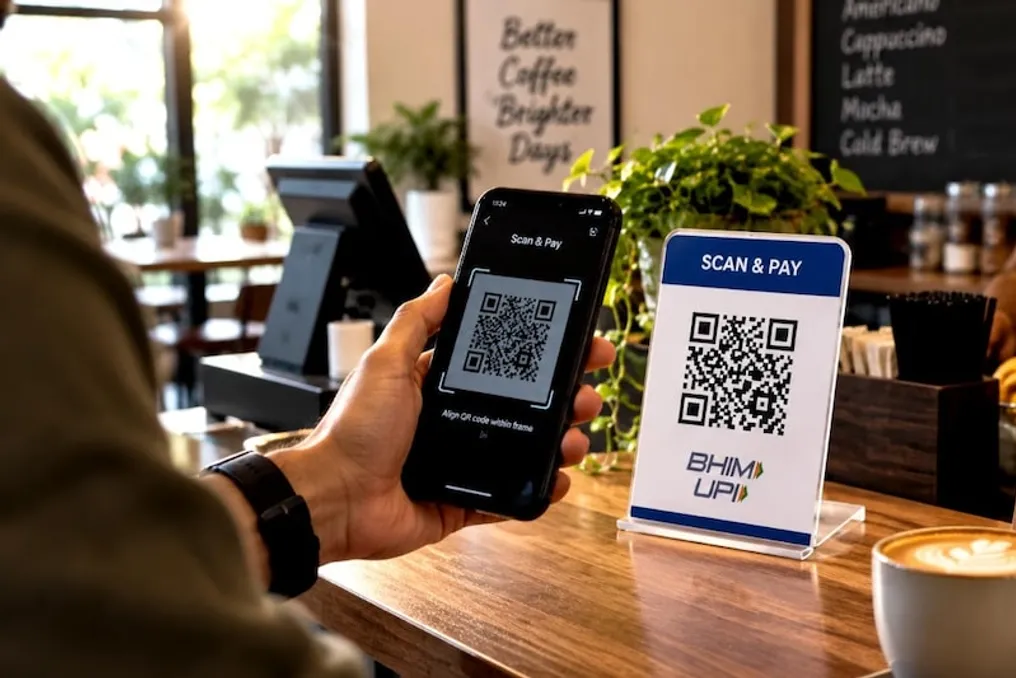
When paying in a store or on an online platform using a QR code scan or UPI ID, the customer will not be charged any additional fees. The government has given a clear directive that payment applications, such as Google Pay, PhonePe, Paytm, or BHIM, must not levy any hidden or paid charges on users for the platform.

MDR (Merchant Discount Rate) refers to a commission or fee that the merchant pays to banks and payment service providers (such as PhonePe, Paytm, Google Pay) for accepting digital payments. Previously, since January 2020, the MDR for UPI was completely zeroed out to stimulate digital payments. Now, however, the new rules stipulate its reintroduction.

For transactions up to 2000 rupees at any store or with a vendor, the MDR will be zero, meaning no charges for either the customer or the merchant. If the payment in a large store or mall exceeds 2000 rupees, the merchant will be charged an MDR of 0.4%. For example, for a transaction of 3000 rupees, the seller will pay approximately 12 rupees, and for a transaction of 5000 rupees, it will be 20 rupees.

A maximum MDR limit has been set for large enterprises: for payments of 75,000 rupees and above, the maximum charge is capped at 300 rupees, irrespective of whether the transaction is 100 thousand or 500 thousand rupees.

Small entrepreneurs, such as vegetable vendors, tea stall owners, small grocery stores, and taxi drivers, actively use QR codes. They have been provided with significant support. Small traders and sellers whose total volume of digital payments via QR code per month does not exceed 100,000 rupees have been assigned the P2PM category. For these sellers, the MDR will be completely zero (0%) for all transactions, even if they exceed 2000 rupees.

According to data, 96% or more of all merchant transactions via UPI in India are transactions of 2000 rupees or less. The government believes that over 95% of small and medium enterprises will remain outside the scope of this MDR charge.

For essential services such as train tickets, fuel stations, insurance, and telecommunications, a fixed MDR of 5 rupees has been established instead of a percentage charge. This means that if a user makes a payment via UPI exceeding 2000 rupees (for example, fueling a car for 2500 rupees or paying an insurance policy of 50,000 rupees), the merchant will only bear a fixed charge of 5 rupees. This specific rate stabilizes costs without passing on indirect burdens to consumers.

The government argues that the system processing billions of UPI transactions monthly requires enormous infrastructure. Round-the-clock server maintenance, protection against cyberattacks, and fraud prevention are costly processes. Banks and fintech companies have long demanded compensation for these expenses. These minor charges will strengthen the banking and fintech industry.

Five percent of the total collected MDR volume will be directed to a special development fund. This fund will be used to strengthen the network and infrastructure of digital payments in small towns and rural areas across the country. Although the government will not directly receive income from the introduction of the UPI commission, all revenue will be distributed among the digital payment ecosystem (banks, payment applications, and NPCI). Estimates from global brokerage firms Jefferies and Bernstein suggest that the introduction of MDR for large transactions will generate an annual revenue of approximately 500 billion rupees for the payments industry.

Popular