Daren Sammy revealed West Indies' plan before matches against India to overcome 24-year slump
Read more
Aaj Tak
www.aajtak.in

Daren Sammy revealed West Indies' plan before matches against India to overcome 24-year slump

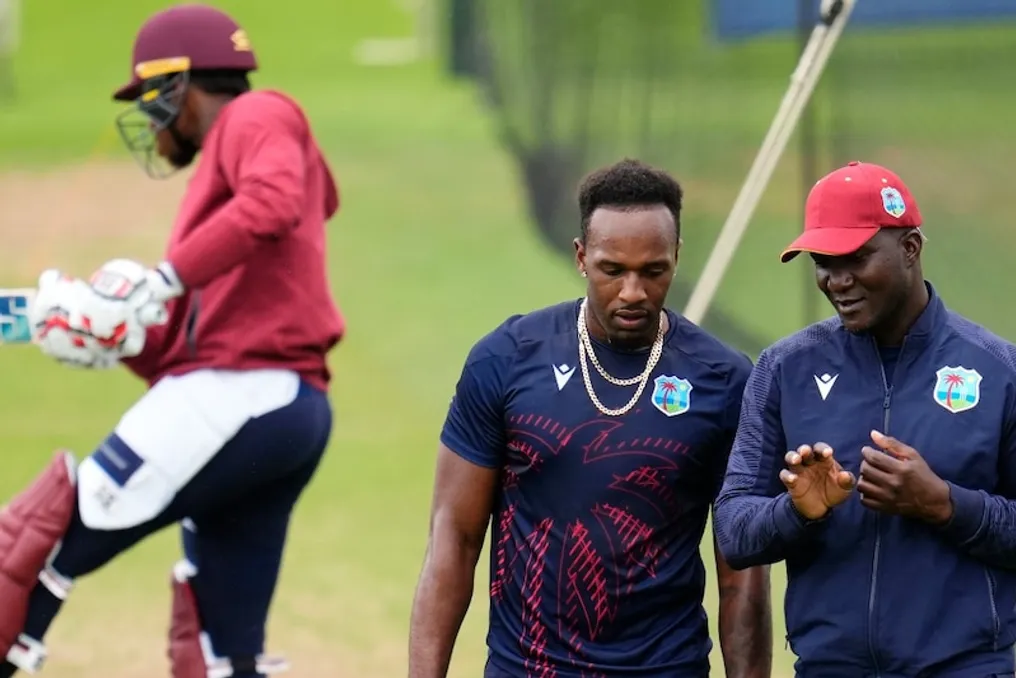
For the West Indies, the upcoming three-match series in one-day format against India is not just another bilateral tournament. The head coach of the team, Daren Sammy, views this visit as a serious test for the squad ahead of the One Day World Cup qualifiers next year. Furthermore, the team aims to end the 24-year period without victories in bilateral series in India.

The first match of the series is scheduled for Sunday, the 27th, and will take place in Thiruvananthapuram. Before the game, Sammy emphasized that playing in India will give the team an opportunity to assess its standing in the ODI format. The West Indies have not won any bilateral series in India for the past twenty-four years. Sammy noted that the team has a great chance to demonstrate itself and defeat India.

The West Indies could not directly qualify for the top-8 teams in the 2027 ODI World Cup, as only they and South Africa guarantee themselves a spot. Currently, the West Indies are ranked tenth. Even a confident victory over India does not guarantee them a change in their current position. Consequently, the team will have to fight for a spot in the tournament through qualifiers for the third consecutive time.

In Sammy's opinion, to succeed in a major international tournament, especially in the baseball format, it is crucial to win against India. He believes that a loss to the Indian team on home soil will give the West Indies an idea of how competitive they can be on the world stage. Sammy named the February qualifier as the team's main priority, and the series against India will serve as an opportunity for continuous improvement and squad preparation, which will help secure a spot in the qualification, perhaps via South Africa.

Sammy also sees positive trends in the team's development. He stated that success is no longer dependent on one or two players, but various athletes contribute to victories. Although he admitted that the West Indies did not receive an automatic invitation, the team has significantly improved its situation compared to the previous period. Previously, the team lagged by 19-20 points, and now it is only six points away from automatic qualification, which, according to Sammy, indicates progress.

Key contributors to the team include Shy Hope, as well as Amir Jangu, who scored one hundred runs, and Sherfen Radford, whose performance was noted. Sammy mentioned that the team was looking for this form in the 2024-25 season. Alzari Joseph also returned to good bowling form, helping recently win the CPL Antig title. This is why Sammy plans to give every player a chance in the three matches against India.

The coach also highly praised the performance of 19-year-old left-arm spinner Vitil Lodge. He debuted in an ODI against New Zealand in July and took eight wickets in five matches. Sammy called Vitil a discovery for the West Indies. According to him, the decision to debut against New Zealand was part of a pre-planned strategy. Sammy had long expressed the need for a wrist spinner in the squad, and Vitil influenced the bowling unit immediately after his appearance. Nevertheless, Sammy understands that Vitil still has a long way to go in his development. The team will continue to work on his development, providing him with special training alongside matches. During the tour, he interacted well with Nikita Miller and Ravi Rampal. Sammy noted that Vitil was promoted slightly faster than planned, but his results are currently pleasing the team.

First ODI: September 27, 2026, in Thiruvananthapuram.
Second ODI: September 30, 2026, in Guwahati.
Third ODI: October 3, 2026, in Chandigarh.
First T20: October 6, 2026, in Lucknow.
Second T20: October 9, 2026, in Ranchi.
Third T20: October 11, 2026, in Indore.
Fourth T20: October 14, 2026, in Hyderabad.
Fifth T20: October 17, 2026, in Bangalore.
Similar stories

Test match between India and Australia in Chennai in 1986 ended in a draw after dramatic final moments
Read more
www.aajtak.in

Test match between India and Australia in Chennai in 1986 ended in a draw after dramatic final moments

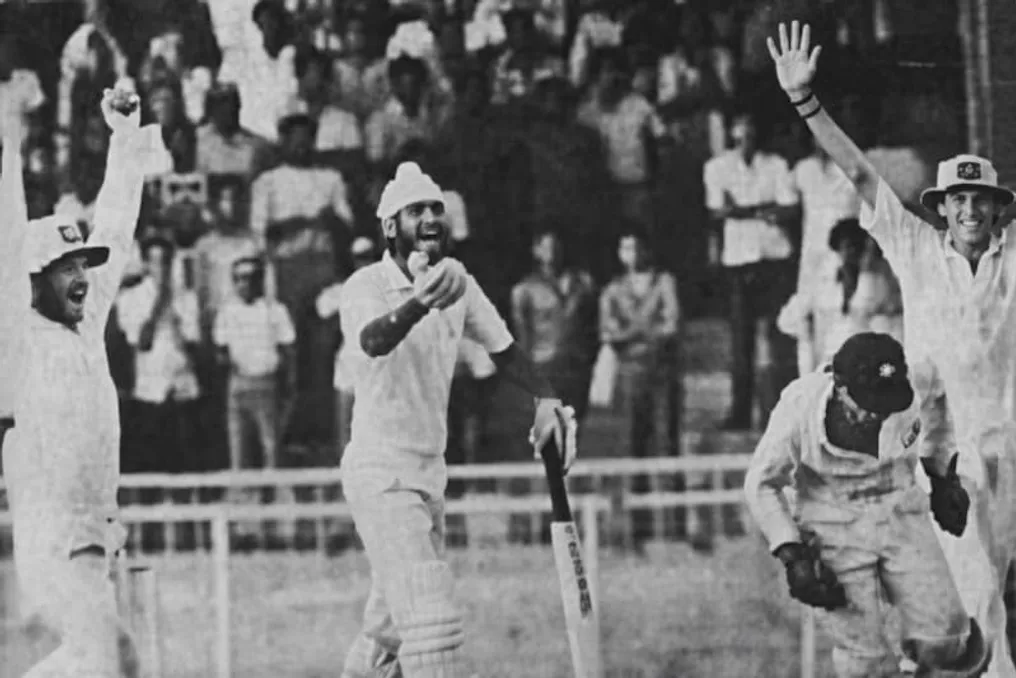
There are matches in cricket whose tension lasts until the very last ball. One such moment occurred 40 years ago, on September 22, 1986, when the second Test match of the series between India and Australia, held in Chennai (then Madras), ended in a draw, and the drama of the final days is still vivid in the memories of cricket fans.

Australia took the initiative first by winning the toss and secured a substantial victory in the first innings, scoring 574/7 runs. Among the Australian players, David Boon stood out with 122 runs, Dean Jones with 210 runs, and Allan Border with 106 runs. In response, the Indian team managed to score only 397 runs in the first innings. The best player for India in this innings was Kapil Dev, who scored 119 runs. Additionally, Mohammad Azharuddin (50 runs) and Krishnamachari Srikkanth (53 runs) reached half-centuries.

In the second innings, Australian captain Allan Border declared the innings closed, adding another 170 runs, setting a target of 348 runs for India. India needed to reach this target in 87 overs.

Initially, the Indian team pursued the target confidently. At tea, India's score was 190 runs for the loss of two batsmen. After that, the team approached victory. India lost 6 batsmen at a score of 330 runs, and only 18 runs were needed for victory.

At that moment, it seemed that India would easily win. However, Australian bowler Ray Bright drastically changed the course of the match. In the next over, Bright dismissed two batsmen, and suddenly the possibility of all possible outcomes arose: victory, defeat, a draw, or a tie.

After this, Shivlal Yadav helped India get closer to victory by hitting a powerful six off Greg Matthews' bowling. But Bright got him out. India's score reached 344/9. Only 4 runs remained, and there were 8 overs left.

Ravi Shastri and Maninder Singh were on the field. Maninder Singh was the last batsman in India's batting order. He faced Bright's over, and the right to bat passed to Ravi Shastri in the final over.

India needed 4 runs to win. Ravi Shastri scored 2 runs off the second delivery of the final over. Then, on the third delivery, he scored one run and passed the strike to Maninder Singh. With this single run, the possibility of India losing disappeared, but 3 more runs were still needed for victory. Greg Matthews was bowling, and Maninder Singh was on strike. Matthews had three deliveries to finish the match.

Matthews dismissed Maninder Singh. Matthews got him out LBW on the penultimate delivery of the match. India's hope of victory faded, and the match ended in a draw. In the second innings, the Indian team showed better play, with Sunil Gavaskar scoring the most runs—90.

Players from both teams were awarded 'Player of the Match' awards. Kapil Dev received this award for scoring 119 runs for India, while Dean Jones from the Australian team received it for his double century in the match.

Thus, in the history of Test cricket, a match was recorded where the scores of both teams were absolutely equal. This thrilling finale in Chennai is still considered one of the most memorable moments in cricket.

Triple Series in ODI: The Rise and Fall of a Golden Era
Read more
www.aajtak.in

Triple Series in ODI: The Rise and Fall of a Golden Era

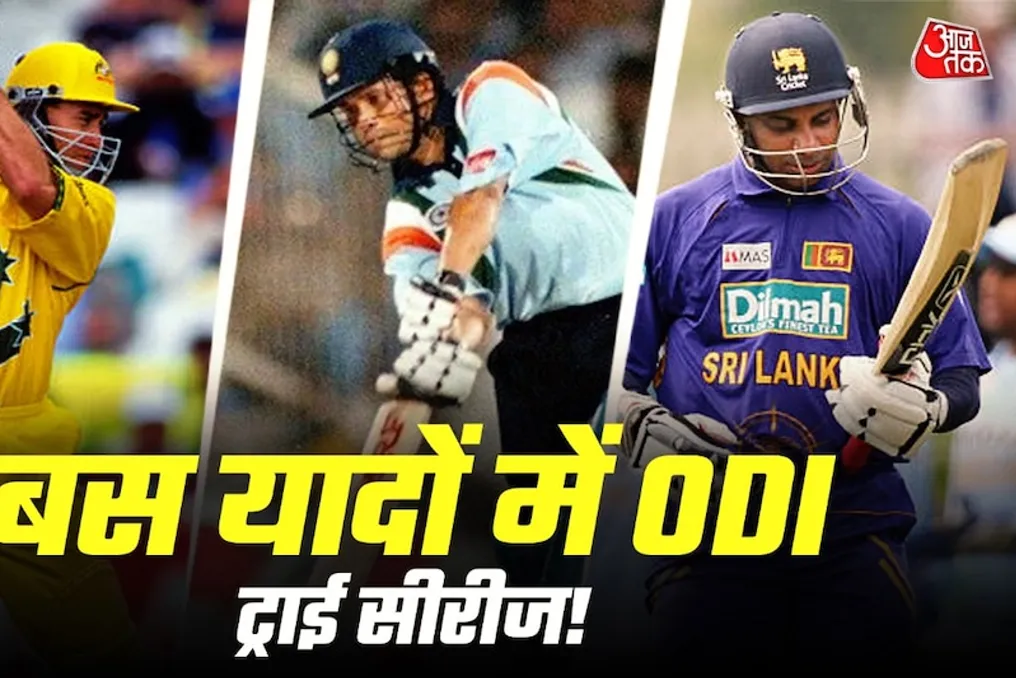
At one time, the ODI (One Day International) itself was synonymous with a major event. Although the World Cup is held every four years, between these tournaments, there were other significant competitions for fans, among which triple series held a special place. These tournaments involved a competition between three teams with a league stage, a leaderboard, a fight for the final, and constantly changing dynamics in every match.

The popularity of these series was so great that the excitement was not limited to the action on the field. Spectators watched which teams would reach the final, how many wins each team would need, and under what conditions the pace of the game would be decisive.

In modern realities, where Test cricket has gained the goal of a Test World Cup, and T20 cricket has captured a huge market thanks to franchise leagues, ODI is trying to find its place between them. At such a time, memories of old triple series are particularly interesting, as 50-over cricket did not need external stimuli then.

Kerry Packer is often mentioned in the history of triple series. A dispute arose between media magnate Packer and Cricket Australia regarding television rights. Following this, Packer launched World Series Cricket. To make this league successful, Packer needed the best cricketers in the world. At that time, the West Indies were the strongest team, and Packer's team attracted many of their star players.

After this, triple series were held between Australia, the West Indies, and World XI. Matches concluded in a single day. Bright uniforms and white balls were used, and the television coverage was much more modern than before. The quality of the cricket was also outstanding. The West Indies participated in four of the first six Australian seasons and were champions every time. Even after Packer and the Australian board reached an agreement, this format continued to be held within Australia's domestic cricket calendar.

When this model, popular in Australia, reached South Asia, its influence grew. In 1983, the then Chairman of the Indian Cricket Control Board (BCCI), N.K.P. Salve, began working on organizing the World Cup in India. He was joined by Nur Khan from Pakistan and Gamini Dissanayake from Sri Lanka. During this process, the Asian Cricket Council (ACC) was founded on September 19, 1983. Then, in 1984, India, Pakistan, and Sri Lanka held the first Asian Cup in Sharjah. This event marked the beginning of multinational cricket in Asia. Gradually, Sharjah transformed into not only a venue for the Asian Cup but also a major center for ODI cricket.

In the 1990s, the influence of English cricket began to spread to the Indian subcontinent, and Sharjah became the focal point of these changes. Major players from India, Pakistan, and other countries regularly played here. Celebrities attended the matches, and the popularity of the games on television steadily increased. Long before the era of franchise cricket, Sharjah turned cricket into a large-scale spectacle. By the end of 1992, 29 ODI tournaments involving three or four countries had been held. Of these, 15 took place in Australia, and nine in Sharjah. Thus, the history of triple series in ODI is mainly linked to two locations: Australia and Sharjah.

In the 1990s, international cricket from South Africa returned, and Sri Lanka also quickly became one of the strong global teams. In 1996, Sri Lanka became the World Champion. The number of strong ODI teams in international cricket increased. This directly benefited the triple series. From 1996 to 2008, full member teams held three-nation ODI tournaments in Singapore, Morocco, Netherlands, Malaysia, Ireland, Scotland, and Canada. The four-year interval between World Cups and the limited popularity of the World Cup also made these tournaments important. It was the main way to watch ODI cricket between strong teams throughout the year.

These tournaments saw not only trophies won but also events that influenced rules, tactics, and thinking in cricket. In 1979, in Sydney, the England team had to save three runs on the last ball. Captain Mike Brearley positioned almost all his fielders near the boundary. A year later, New Zealand needed to score seven runs off one ball. Greg Chappell from Australia asked his brother Trevor to throw the ball underhand. This incident caused a big controversy in cricket. In 1982-83, Lance Cairns hit six sixes at the MCG (Melbourne Cricket Ground) using a specially prepared bat. In the 1980s, Javed Miandad took advantage of the conditions at the WACA Ground in Perth and scored an unbeaten 59 against the West Indies, including 45 singles and no fours or sixes. In 1986, Gus Logie from the West Indies was named 'Player of the Match' for his fielding performance in Sharjah. This in itself was an exceptional event.

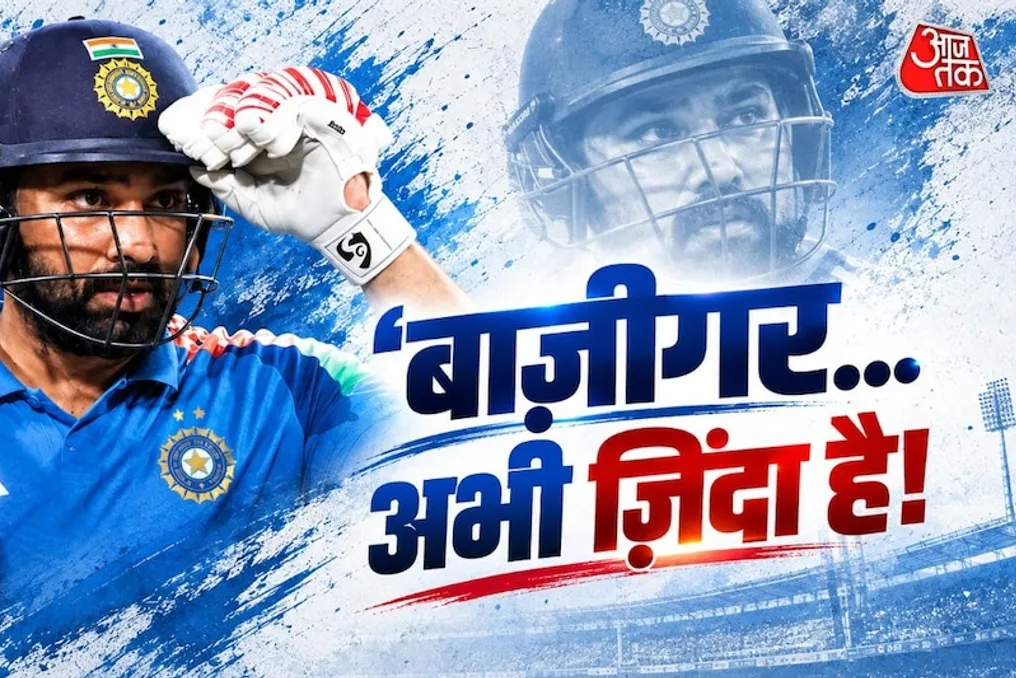
Discussions about Rohit Sharma's future changed before the 2027 World Cup after the Lord's innings
Read more
www.aajtak.in

Discussions about Rohit Sharma's future changed before the 2027 World Cup after the Lord's innings

A few months ago, the question of whether this was the final stage of Rohit Sharma's international career hung over every ODI match. However, the situation has changed. Although the 2027 World Cup is still far off, Shubman Gill is leading the Indian squad, and young players are constantly vying for a spot in the starting lineup as openers.

Despite this, it has become harder to ignore Rohit. When the Indian team for the three-match ODI series against the West Indies was announced, Rohit Sharma's name appeared on the list again. Alongside him were options such as Yashasvi Jaiswal and Ritwick Ghosh. Thus, this selection is not a decision to block one player's path, but part of the process of forming the team for 2027.

But the real turning point in this story is not the presence of Rohit's name in the squad. The main story is how the path from question to answer regarding Rohit Sharma changed in two months.

After Shubman Gill was entrusted with the captaincy in ODIs, Rohit's role completely transformed. Now, the entire team was not built around him; he was just a batsman, and his place depended on his performance, like all other players.

This change was particularly significant because Rohit now plays only ODIs for India. After retiring from Tests and T20 Internationals, he has limited chances left to prove his form. In such circumstances, a poor run of form becomes not just a poor run, but part of the debate about the squad.

In Australia, Rohit demonstrated that the story was not over, scoring 73 and then an unbeaten 121 runs. However, in the subsequent 11 matches, he scored 57, 14, 75, 26, 24, 11, 16, 48, 79, 11, and 26 runs.

Among these were innings of 75 and 79, but there was no single big, decisive innings that could outweigh all other discussions.

Then came the series against England. In Birmingham, he scored 11 runs, and in Cardiff, 26 runs off 47 balls. The questions became even sharper: should Rohit even be considered until 2027? Is it time to promote young openers?

England posted a substantial total of 387 runs. To chase this target, India needed an innings that could take control of the match. Rohit did exactly that...

He scored 138 runs off just 110 balls, including 17 fours and 5 sixes. Although India ultimately lost the match by 27 runs, Rohit won another match that day—the debate about his future.

This innings was important not because Rohit scored another hundred, but because it happened at a time when there were the most questions about his future. The 39-year-old batsman showed that despite his age and recent form statistics, his bat still has the ability to deliver an ODI innings capable of changing the course of a match.

It was at this point that the question changed. The initial question was: how much longer does Rohit need to play? Now the question is: if Rohit continues to deliver such innings, how can he be dropped?

This does not mean that Rohit's ticket to the 2027 World Cup is guaranteed. It would be hasty to assume so. India has several options at the top. Yashasvi Jaiswal could be part of the long-term plan. Ritwick Ghosh is also present in the ODI squad. Shubman Gill has already become the captain and central batsman of the team. The BCCI included these options in the ODI against the West Indies.

This means that Rohit should not occupy a spot based on privilege. He must score runs, stay in form, and constantly prove his worth. However, 138 runs at Lord's were enough to make the door for Rohit look open again.

The real test begins now. The series against the West Indies starts on September 27, and all three matches will be held in India. Following this, ODI series against New Zealand in November, Sri Lanka in December, and Zimbabwe in January 2027 are scheduled. This gives India many opportunities to test its ODI squad before the 2027 World Cup. For Rohit, this is also a real test.

One big innings changed the debate, but did not end it. 138 runs at Lord's did not secure him a place in the 2027 team, but they complicated the task for selectors—Rohit Sharma cannot be ruled out of the future picture from the start.

In cricket, the greatest strength of great players often lies not only in their statistics. It is the ability to play such an innings when the whole world starts considering you an old character in history, forcing them to rewrite that history.

Rohit Sharma did something similar at Lord's. His ticket to the 2027 World Cup is not yet in anyone's hands, but he proved one thing: when planning India's path, his name cannot be ignored.

Popular