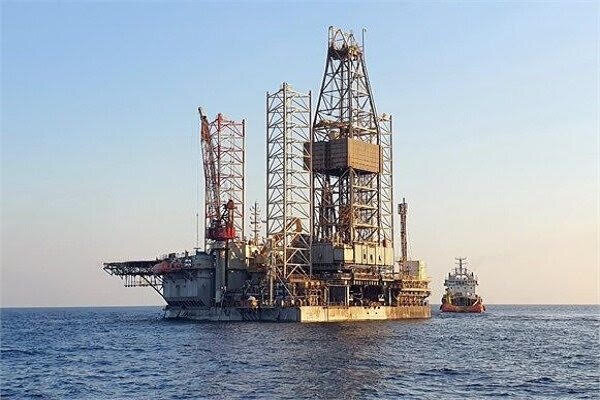
The CEO of Pars Oil and Gas Company announced the addition of three new drilling rigs to the country's national drilling equipment park. This step is viewed as an important investment aimed at developing drilling capacities and accelerating development projects.
According to information provided by Mehr News Agency, Turaj Deghani analyzed the production indicators of Pars Oil and Gas Company during a meeting with the CEO and members of the Board of Directors of the National Iranian Oil Company. He noted that stable production of rich gas from the joint South Pars field has increased by 30 million cubic meters over the past two years. This growth resulted from development work and the completion of activities under the Phase 11 development plan, as well as work on supplementing and completing 35-month projects.
Pars Oil and Gas Company also reported that in the same period, thanks to the created capacities and the continuous efforts of all divisions, the daily gas production in South Pars reached 730 million cubic meters. This indicates the continuity of operational activity and development to maintain and increase production volumes from this joint field.
The CEO of Pars Oil and Gas Company also reported a significant expansion of the drilling rig fleet within the company's projects, noting that the number of active rigs has increased from four to eleven. Deghani emphasized that with the support of the Minister of Petroleum and the National Iranian Oil Company, three new rigs were added to the national drilling equipment park. These actions are considered a significant investment in developing drilling capabilities and accelerating project implementation in the Persian Gulf, as well as maintaining gas production from the South Pars field.
He attributed the achieved results to the joint efforts of Pars Oil and Gas Company employees, as well as the support of the Ministry of Petroleum and the National Iranian Oil Company. Deghani stated that these successes are the result of synergy and the tireless work of colleagues in various operational, project, and administrative departments.
Deghani specified that Pars Oil and Gas Company is responsible for a substantial part of the oil and gas industry's tasks in the gas production sector. He added that over the past two years, parallel to implementing development and production programs, the company faced difficulties caused by war and regional tensions. After the damage to the Phase 14 refinery of South Pars during the 12-day war, as well as four other refineries during the Ramadan War, Pars Oil and Gas Company was tasked with reconstructing three processing complexes of the South Pars field. In recent months, the company's main focus and execution capabilities have been concentrated on advancing these restoration works.
Emphasizing that all tasks related to debris clearing and reconstruction are high-risk activities, he reported that weekly meetings are held at the refineries for precise risk management, and the reconstruction process is carried out under constant monitoring of safety requirements and technical standards.
The CEO of Pars Oil and Gas Company concluded that despite numerous challenges in recent months, thanks to the support of senior leadership in the oil and gas industry and the efforts of the company's managers, experts, and employees, the organization has been able to seriously fulfill its tasks. Achievements in production, development, drilling, and reconstruction are the result of the determination and labor of employees who diligently perform their duties in difficult conditions and continue to work on maintaining production, developing the South Pars joint field, and fulfilling their assigned tasks in the oil and gas industry.