Hiro Arquitectos' Casa Berna project highlights brick masonry exhibition
Read more
ArchDaily Brasil
archdaily.com.br

Hiro Arquitectos' Casa Berna project highlights brick masonry exhibition

Casa Berna, a project developed by Hiro Arquitectos, reverses the common practice in Peruvian construction, where brick masonry rarely remains visible, usually being plastered and hidden under the final finish.

In this project, the brick walls are left exposed and receive a layer of lime that illuminates the surface without disguising it. Thus, details such as the pattern, the joint between the bricks, and any imperfections in the laying remain clearly visible on the entrance wall, the facade facing the garden, and the living room.

This choice represents a fundamental construction decision that establishes the distinctive character of the entire project.

Similar stories

Younger generation in India seeks good quality clothing, not just cheap and fashionable
Read more
www.aajtak.in

Younger generation in India seeks good quality clothing, not just cheap and fashionable

For the modern Gen Z and young consumers, fashion is no longer limited to following new trends. When buying clothes, price is no longer the only important factor; quality, design, and brand are also crucial. In other words, it is not enough for clothing to be merely cheap and trendy; it must offer adequate value for the money spent.

According to the Deloitte India report published on January 28, 2026, titled 'Weaving a New India Identity: The Rise of Fast Fashion and Affordable Premium,' the fashion market in India is undergoing such changes. People prefer to spend money on items that offer them better quality and value, rather than purchasing large quantities of clothing.

These changes are also reflected in brand preferences. The report indicates that about 40% of people have tried new fashion brands in the last year. Social media, recommendations from others, and fair pricing encourage people to try new labels. Young and urban consumers, in particular, strive to explore new fashion, but they are also careful about how well the product matches their budget.

Simply put, people are starting to spend money not only on the cheapest clothes but also on more expensive and higher-quality ones. Clothing in the price range of 3500 to 7000 rupees is called 'affordable premium fashion,' and this segment is expected to grow at an average annual rate of about 25%. Furthermore, a higher growth—over 45% annually—is forecasted for the more expensive premium clothing market. This means that in fashion, people place greater importance on brand, quality, and style alongside price. Simply put, they are willing to pay a little more for better quality and design, rather than for very cheap clothing.

However, this does not mean that people are spending money on expensive things thoughtlessly. According to the report, premium purchases are often made during sales, holidays, or on the occasion of a special event. Thus, there is a desire for high-end fashion, but purchases remain considered.

When choosing clothes, attention is now paid not only to the garment itself and its cost. About 30% of buyers note that the atmosphere and overall in-store experience influence their purchasing decision. A good ambiance, competent advice, and a positive interaction experience with the brand can affect the buyer. Consequently, in fashion, it is no longer just about what is bought, but also where and how it is acquired.

Overall, the changes in the Indian fashion market are evident. Consumers are focused not on increasing purchase volume, but on achieving better quality, fair price, and high value. It is this mindset that contributes to the development of affordable premium fashion.

Durban City Hall to receive R8 million for audio equipment upgrade
Read more
iol.co.za

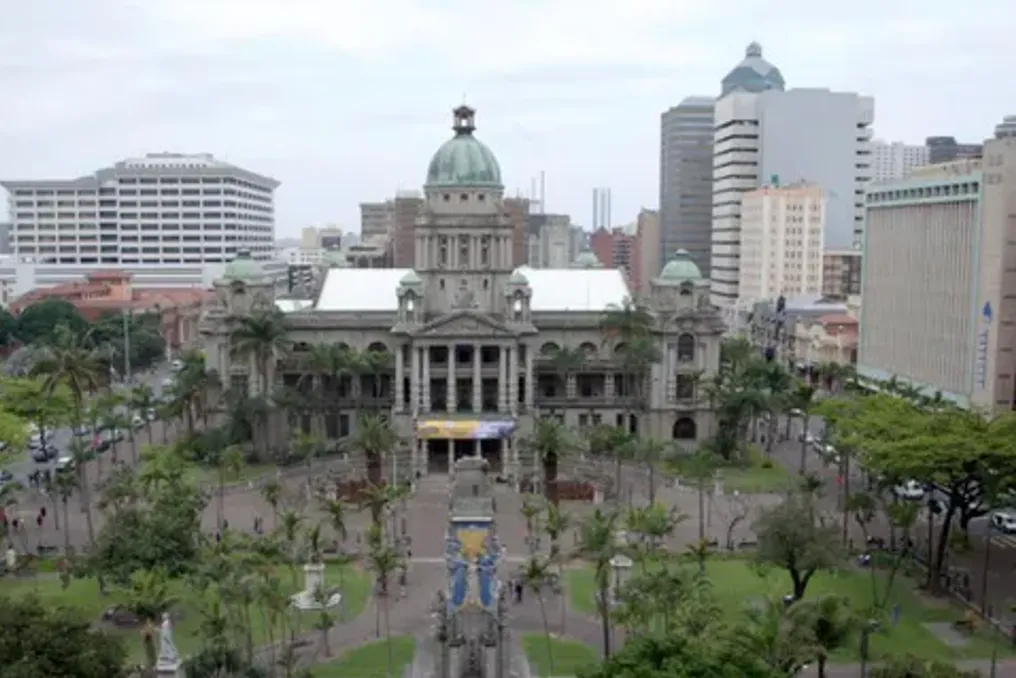
Durban City Hall to receive R8 million for audio equipment upgrade

R8 million will be allocated to update the audio equipment in the eThekwini municipal City Hall, with these funds being reallocated from other projects. A report presented to the executive committee recently required the reallocation of funds from other areas to implement this audio project.

The report indicated that an additional R8 million is needed to complete the modernization of the sound and audiovisual system. It was emphasized that this funding is exclusively for audio equipment and is not related to the broader reconstruction works currently underway. This recommendation was approved by the executive committee.

The City Hall has been under renovation for several years, during which millions of rand have been spent. City council members noted the importance of addressing the sound system issues, as they often have to use rented equipment during meetings due to poor sound quality.

It was previously reported that the total cost of the City Hall reconstruction in Durban for the eThekwini municipality is estimated at R29.8 million, with the extensive repair scheduled for completion by June 2028. This 115-year-old building required repairs after parts of the ceiling collapsed in the main hall and other parts of the building, as well as damage caused by the 2022 storm. Renovation work began in March 2024.

The project has faced delays, which the municipality attributed to the low quality of the contractor's work, leading to the termination of the contract with the original contractor in March 2026. The city is under pressure to complete the reconstruction. The eThekwini Municipality has already spent R15 million over three years on renting the Durban International Convention Centre (ICC).

The report presented to the executive committee stated that the additional R8 million was reallocated from other services for the City Hall reconstruction needs. The report specified: 'Authority was requested to reallocate funds from the Director of Executive Council Support capital budget for 2026–27. This money will solve the problems with the council hall reconstruction and the audiovisual and sound system project.' It also added that the proposed funding would come from savings identified in the Kloof facility upgrade project, as current funds are sufficient to meet obligations for that project.

The report further noted: 'Regarding the circumstances that led to the funding deficit, the funds initially allocated for the council hall audiovisual and sound system project were used during the 2025–26 financial year to cover the funding deficit for other completed projects, leading to the current deficit.'

IFP council member Mdu Nkosi stated that the City Hall is important because it is a historic building and the council headquarters. He stressed that the reconstruction must be completed to avoid rental costs at the ICC. Nkosi noted that the portfolio committee had pointed out the faulty operation of the sound system. He added that with the renovation and improvement, the City Hall will be able to host committee meetings and other events. He also mentioned that discussions in the Exco meeting room were hampered by the sound system, and the city often had to rely on rented equipment, and the building needed large screens for presentations.

Nkosi stated: 'The City Hall is important, and I want the reconstruction to be finished. We need large screens for presentations. When committees hold meetings in the hall, it looks bad if the sound is poor. We need the City Hall in good condition, with clear sound.'

DA council member Tabani Mthethwa expressed serious concern about the funds spent on the City Hall reconstruction. He stated: 'While we appreciate that the City Hall is a city asset, we are not convinced that value for money has been achieved since the project started more than five years ago. Due to the unavailability of the City Hall, the municipality has incurred hundreds of millions of rand by holding council meetings outside the City Hall. Thus, the municipality has suffered more than threefold the costs. Expecting even more money to be poured into this project now is an insult to already suffering taxpayers, so we will not vote for additional funding.'

The eThekwini Municipality confirmed that the project funding had been approved.

The Importance of Preserving Family Stories in the Age of Artificial Intelligence
Read more
iol.co.za

The Importance of Preserving Family Stories in the Age of Artificial Intelligence

Amidst the growing influence of artificial intelligence, preserving personal histories gains particular significance. Shika Budhu notes that the art of storytelling is deeply rooted in Indian culture, including Hindu traditions, where stories were passed down through generations via mythology, sacred texts, performing arts, and oral tradition.

The author shares her personal experience when her grandfather, Girdar Ramnat, decided to record his life story at the age of 80. These recordings prompt the author to question the purpose of documenting life experiences. Reading his works, the author discovers accounts of a loving grandfather, a skilled farmer, and one of the smartest people she knew before fourteen years old.

The records reveal that her grandfather wrote plays, poems, and stories, both real and fictional. Working as a teacher and principal, he staged school productions, observing people and transforming life experiences into narratives. The author found echoes of her own creative inclinations in his work, which she believes is one of the beautiful aspects of intergenerational storytelling—the ability to know oneself by looking back.

Family stories are not just amusing anecdotes shared over dinner; they are fragments of history. They reveal a family's origins, the values it held dear, the difficulties it overcame, moments of joy, and how the family coped with a constantly changing world.

The author recalls growing up among creative people, including an uncle who was a legendary comedian in Durban. His jokes continue to live in people's memories, much like the stories written by her grandfather serve as a time capsule reflecting a lived life. Other family members enrich daily life with music, art, poetry, and cuisine, turning the ordinary into something extraordinary.

Although storytelling is deeply connected to Indian culture, it is not exclusive to it. Studying literature, theater, or history makes it clear that every culture is built on stories. People crave them because they themselves are stories. Therefore, preserving our stories is especially important during Heritage Month. Heritage is not just a memory of ancestors' origins, but also an understanding of the path that led us to who we are today in this place and time.

The history of South Asian Indians cannot be reduced to a single narrative. It is a rich tapestry of migration, hardship, resilience, adaptation, religion, food, language, music, humor, family, and community, as well as the exceptional ability to create a home in a changing landscape. However, these stories exist not only in archives and textbooks; they live in the tales of grandparents, in the cherished memories of cousins, in family recipes kept only in someone's memory, and in stories of arrival, departure, survival, success, failure, and love.

If no one records these stories, they will disappear. By telling them, we are not necessarily dictating what future generations should think; we are providing them with material for reflection. This is why the author and her husband launched the #WriteON project, helping people preserve their stories even if they don't know where to start. Sometimes this means transforming years of oral memories into a written family chronicle.

This process evokes deep emotion because the value of a story lies not in whether it becomes a bestseller; often its most important audience is a grandchild many years later who suddenly understands something about the person who lived before them. We exist because of the past, and to nourish the present, we must remember the nature from which we came.

At the same time, while encouraging people to share their stories, it is important to remember that what we read shapes the stories we will tell. The author recently studied the works of local South African writers such as Felicity Twindhurst, Arvashni Siripat, Shahika Murut, Nava Naidu, and others. Their diverse perspectives demonstrate that there is not a lack of material, but rather a vast amount awaiting its time.

During Heritage Month, it is recommended to document something: open a notebook, start a document, record a grandmother's conversation, ask your father about his first job. It is important to cherish our stories. We need to learn the origin of a family recipe, write about the house where we grew up, about the songs we remember, about the family's arguments and laughter. A story does not have to be perfect; it just needs to exist. Modern desi history concerns not only our past, but also our present and what we leave behind for coming generations.


Popular