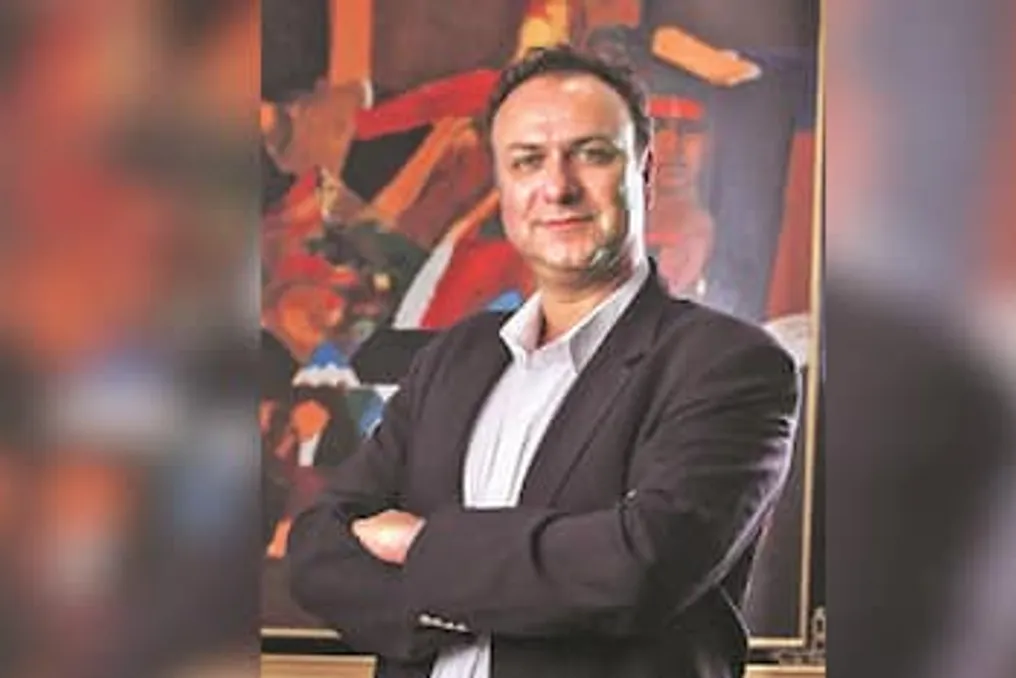
The Shapoorji Pallonji Group, which is the second-largest shareholder in Tata Sons with an 18 percent stake, has firmly supported the listing of the conglomerate's holding company, which operates in salt production and software.
This statement followed two days after Noel Tata, Chairman of Tata Trusts, opposed the listing proposal at the Tata Sons board meeting on September 17. Shapoorji Pallonji Chairman, Mistry, published a detailed statement explaining why going public is the right path for the company.
Mistry stated that the goal of this process is not to achieve the victory of any single party, but to create a stronger Tata institution, enhance philanthropy, increase accountability, deepen partnership, and ultimately provide greater assistance to India. His position contrasts with that of Tata Trusts, the largest shareholder in Tata Sons, which holds 66 percent of the shares.
Noel Tata is connected to the Shapoorji Group through his daughter's marriage to the late Pallonji Mistry and the sister of the current Chairman of Shapoorji Pallonji Mistry and the late Cyrus Mistry.
At the board meeting on Thursday, Noel Tata presented the Shapoorji Group's proposal for a monetization worth 25,000 crore rupees through a partial sale of its stake in Tata Sons via an over-the-counter channel.
However, on Friday, Mistry noted that he accepts the decision of the Reserve Bank of India (RBI) with deep respect and humility. He welcomes this decision, believing it marks a turning point not only for Tata Sons but also for the principles of transparency, accountability, fairness, and responsible institutional building that should guide nationally significant enterprises.
Noel Tata insisted on further interaction between Tata Sons and the RBI to maintain private status, arguing that the regulator's directive of September 11, 2026, did not mandate a listing. He had previously stated, 'As I understand it, it does not say that listing is the only option. There remains significant space, and the board of directors must occupy that space, not yield it.'
Nevertheless, Mistry later emphasized that the RBI provided complete clarity. Tata Sons was classified as a top-tier NBFC under the RBI's Regulatory Framework for Scale, and the prescribed path of listing followed this regulatory architecture. Since the RBI rejected the application for exemption and directed Tata Sons toward necessary compliance in the shortest possible time, the way forward became clear. He expressed gratitude to the RBI and the government for the clarity of purpose and discipline shown in adhering to uniform standards for all institutions, regardless of their size or status.
He also expressed admiration for the leadership of Prime Minister Narendra Modi, especially his commitment to strengthening institutions and ensuring the ability to perform duties with clarity, authority, and purpose.
Mistry reiterated that the public listing of Tata Sons is not merely a financial or regulatory issue. 'It is a social and moral imperative. It is about strengthening transparency and public accountability in one of India's most significant business institutions, while preserving and advancing the exceptional philanthropic purpose underlying the Tata legacy.'
He added that this 'landmark decision should not be viewed as a victory of one interested party over another. It should be seen as an opportunity to unite people and institutions.'
In Mistry's view, the listing of Tata Sons can become a bridge: 'a bridge between shareholders and Tata Trusts, between private heritage and public accountability, between generations of management, and between India's great past and the exceptional future that awaits.'
Pointing out that the relationship between the Shapoorji Pallonji and Tata groups spans over a century, he expressed hope not only for resolving the current phase but also for forming a broader partnership, more active interaction, and deeper relations with Tata Sons and Tata Trusts in the coming years, always maintaining mutual respect and prioritizing national interests above all else.
Analysts note that Mistry's statement will be closely watched amid the listing battle, as well as the Tata leadership contest, where veto votes may be cast regarding the reappointment of N Chandrasekaran as Chairman of Tata Sons for a third term.
According to Mistry, Jamshedji Tata's fundamental philosophy serves as the moral foundation for this moment. He quoted Jamshedji, who said: 'in a free enterprise, the community is not just another stakeholder in business, but in fact the very purpose of its existence.'
He continued that Jamshedji Tata's life demonstrated that entrepreneurship and nation-building do not necessarily have to be separate pursuits; the enterprise itself can serve as a tool for national progress. 'It is this philosophy that must guide the next chapter of Tata Sons. The question before us should not be limited to who owns what or how the corporate structure is maintained. The bigger question is how one of India's greatest industrial institutions can become even stronger, more transparent, more accountable, and more capable of serving the nation.'
The Tata Group and the Shapoorji Pallonji Group have decades of close business ties. In 2012, the group's son, Cyrus Mistry, was appointed Chairman of Tata Sons. Later, in 2016, he was removed from the post after a board struggle led by then-Tata Trusts Chairman Ratan Tata.
Ten years after that incident, the Shapoorji Group Chairman stated on Friday: 'I believe that a transparent and publicly accountable Tata Sons can strengthen the entire ecosystem. It can expand participation, improve governance, ensure greater visibility of value, protect the legitimate interests of investors, and create a foundation for a more robust and fair dividend policy.'
He also added that Tata Sons as a listed company can strengthen Tata Trusts' ability to fulfill its philanthropic obligations across generations. 'A stronger Tata Sons, operating transparently and responsibly, can help make this ambition possible through sustainable business growth and a continuous flow of value to philanthropy.'