Residents of new, more distant areas of Dubai have long faced the problem of long commutes across the city, affecting daily needs such as trips to school, work, or short excursions to the city center.
Now, many Dubai residents believe that the implementation of the Fourth Corridor can solve this issue. For instance, 17-year-old student Damien Dexter Goveas, who has lived in Damac Hills 2 for almost five years, noted that connectivity with the rest of the UAE and central Dubai presents significant difficulties. He reported that getting anywhere in the city takes a minimum of 45 minutes from his home but believes the Fourth Corridor will make trips into the city and to school significantly easier and faster.
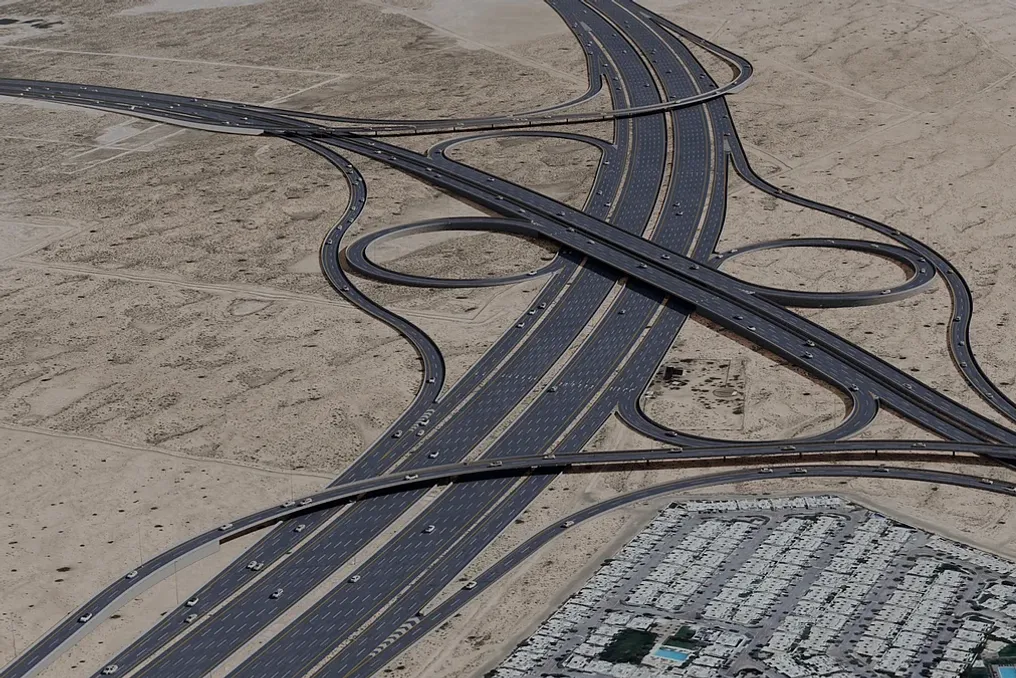
Last week, Sheikh Hamdan bin Mohammed bin Rashid Al Maktoum, Crown Prince of Dubai, approved the implementation of this 80-kilometer project in the emirate. This new arterial route will be the fourth major road connecting the emirates, alongside Sheikh Zayed Road, Sheikh Mohammed bin Zayed Road, and Emirates Road.
Muhammad, a Dubai resident who purchased property in The Valley, was initially skeptical about the project, fearing it was too far from central Dubai. However, his confidence was strengthened by the existing Dubai–Al Ain road and the Dubai 2040 plan. Now, after the confirmation of the Fourth Corridor, he feels his investment is paying off. He added that adding an extra lane between Emirates Rd and Lehbab Rd will make journeys even smoother.
The corridor will also provide fast access to Al Maktoum Airport, Abu Dhabi, Sharjah, and the northern emirates. Muhammad emphasized that this will eliminate the need to connect to existing highways when traveling to other emirates. He is also confident that his property value will increase, as improved transport accessibility will be an advantage rather than a drawback for future developments in the area.
This project will also help his family. His daughter, who is currently taking A-level exams, is considering universities in Academic City, Sharjah, and Abu Dhabi. Muhammad noted that travel time and connectivity were one of their concerns, and the new project should ensure faster movement regardless of where she enrolls.
Construction will proceed in two phases. The first phase covers approximately 30 km from Al Shanouf Road in Sharjah to the Dubai–Al Ain road, costing about 3.5 billion dirhams. The second phase will add another 50 km to Al Faya Road in Abu Dhabi. The highway will feature 12 lanes, 72 bridges, 17 tunnels, and 45 drainage culverts. It will be capable of handling up to 24,000 vehicles per hour and will be directly connected to Al Maktoum International Airport and Etihad Rail.
Joseph Salem, Partner and Head of Transport and Hospitality Practice at Arthur D. Little Middle East, believes this project aligns with the concept of forward-thinking infrastructure planning required by the region. He stated that by integrating road, air, and rail connectivity into a single corridor, Dubai is once again demonstrating an approach to transport as an integrated system, rather than a series of isolated fixes.
He also noted that combining a 60 percent reduction in travel time with real multimodal connections shows that Dubai is 'building potential that matches its long-term demographic and economic ambitions, rather than just reacting to today's transport pressure.' For Damien, the new highway offers hope for the development of a good public transport system. He mentioned that there are currently few accessible public transport options for city travel and hopes that after the corridor is completed, RTA will begin implementing faster and more convenient direct bus routes. He also suggested that introducing good feeder bus routes from nearby metro stations and Etihad Rail stations would be a big step forward.