Uzbekistan implements regenerative agriculture methods within the FOLUR project
Read more
UzDaily
uzdaily.uz

Uzbekistan implements regenerative agriculture methods within the FOLUR project

In various regions of Uzbekistan, practices such as reduced tillage, more efficient use of water and fertilizers, crop diversification, restoration of degraded lands, and the application of digital monitoring tools are being implemented under the FOLUR–Uzbekistan project.

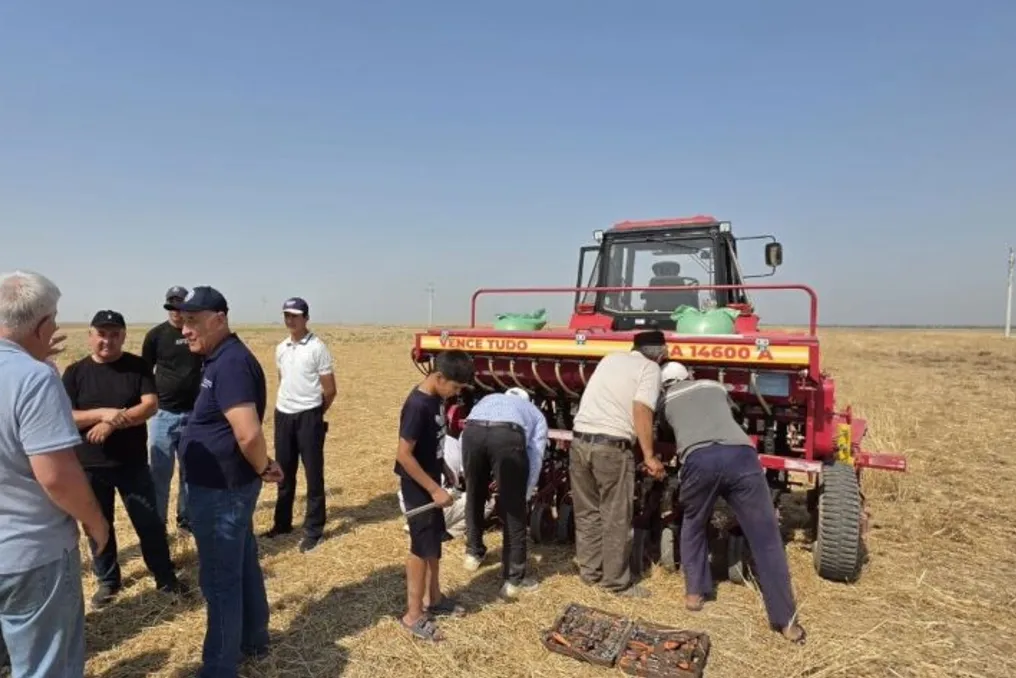
A correspondent from UzDaily, as part of a group of media representatives, visited the demonstration sites of the FOLUR–Uzbekistan project. Participants in the press tour were able to see the practical application of water and resource-saving technologies, as well as projects aimed at preserving biodiversity and restoring ecosystems.

The main practical achievements of the project were presented during the press tour. One of the key sites was the Baraka Baltimor farm in the Yangibazar district, located in the Khorezm region. On this 30-hectare site, traditional cotton cultivation methods are being compared with reduced tillage systems.

The 'Program on Nutrition Systems, Land Use, and Land Restoration Impact in Uzbekistan' (FOLUR–Uzbekistan) is financed by the Global Environment Facility (GEF) and is implemented in collaboration with the National Committee of the Republic of Uzbekistan for Ecology and Climate Change, the Ministry of Agriculture of Uzbekistan, and the Food and Agriculture Organization of the United Nations (FAO).

At the demonstration site, specialists are studying the possibility of achieving stable yields while simultaneously reducing the number of agrotechnical operations and consumption of production resources. When using traditional technology, cultivation is performed twice, whereas the experimental approach eliminates this operation entirely. The number of loosening and sieving operations has been reduced from three to one, and the number of irrigations—from five to three.

The use of phosphate fertilizers has also significantly changed: under the traditional method, 300 kg of ammonium phosphate is applied per hectare, while 100 kg is used on the reduced tillage plot. According to current calculations, the new method allows saving about 35 liters of fuel and 200 kg of ammonium phosphate per hectare, while production costs decrease to 4.07 million soms. The application rates of nitric acid, ammonium sulfate, and potassium chloride remain unchanged; the number of slurry applications has also decreased from five to three.

Similar stories

Conservation agriculture and No-Till technology are being implemented in Kashkadarya region as part of the FOLUR-Uzbekistan project
Read more
nuz.uz

Conservation agriculture and No-Till technology are being implemented in Kashkadarya region as part of the FOLUR-Uzbekistan project

Measures are being carried out in the Kashkadarya region to develop conservation agriculture and strengthen the potential of specialists, as well as to practically implement resource-saving methods within the framework of the 'Food Systems Impact Program, Land Use and Restoration in Uzbekistan' (FOLUR-Uzbekistan).

A trainer training program was held at the Southern Research Institute of Agriculture in the city of Karshi. Twenty scientific employees and agricultural specialists participated in it. This training is part of the result of FOLUR project 2.1, which aims to promote sustainable and resource-saving approaches to agricultural production, as well as to improve the qualifications of farmers, specialists, and local institutions.

Participants in the seminar received practical information on the basic principles of conservation agriculture. These principles include no-tillage sowing (No-Till), retaining crop residues on the field surface, crop rotation practices, and methods for conserving and efficiently using soil moisture.

During discussions and presentations, various methods of interacting with farmers, ways to transform theoretical knowledge into actionable recommendations, and the application of field data and scientific results in educational activities were discussed.

The trained trainers will take on the task of transferring accumulated knowledge and experience to farmers, contributing to the formation of farmer field schools. This approach will allow for the gradual increase in the use of sustainable agricultural practices according to the 'from trainer to farmer, from farmer to practice' scheme.

Another event under the project took place at the 'Jovli Bobo Oghli Bahtiyor' farm in the Savsan village of the Kamash district. There, farmers, agronomists, mechanizers, researchers, and project staff familiarized themselves with the process of sowing wheat using No-Till technology.

A demonstration was conducted on a 40-hectare field, during which 'Nushkent' variety wheat was sown using a special No-Till seeder. Wheat was previously grown on this same territory. Before the start of the new planting cycle, the field was not plowed, and straw and other residues from the previous harvest remained on the surface. Seeds were introduced directly through this protective layer.

Project specialists demonstrated how the No-Till seeder is prepared, calibrated, and operated. Special attention was paid to details such as sowing depth, row spacing, and ensuring uniform seed distribution. In addition, participants discussed practical aspects of implementing this technology in the specific soil and climatic conditions of the region.

The No-Till technology minimizes mechanical impact on the soil. Retaining crop residues on the surface helps retain moisture, reduces the risk of wind and water erosion, and creates a favorable environment for soil biological activity. Furthermore, reducing the number of land preparation operations can lead to lower costs for fuel, labor, and time required for field preparation.

The condition of the 40-hectare demonstration plot will be monitored throughout the entire growing season. Monitoring will include assessing germination and crop development, soil moisture retention, the effect of crop residues, resource use, and final grain yield. The collected data will allow for determining the effectiveness of No-Till technology in local conditions and outlining prospects for its application in other suitable areas.

The 'Program for Assessing Impacts on Food Systems, Land Use and Restoration in Uzbekistan (FOLUR)' project aims to develop sustainable agricultural production, comprehensive land resource management, restoration of degraded landscapes, and the introduction of resource-saving farming methods.

The implementation of this project is carried out with the participation of the National Committee of the Republic of Uzbekistan on Ecology and Climate Change, the Ministry of Agriculture of the Republic of Uzbekistan, and the Food and Agriculture Organization of the United Nations (FAO), with financial support from the Global Environment Facility (GEF).

Uzbekistan is reforming the system for training medical and pharmaceutical personnel
Read more
uzdaily.uz

Uzbekistan is reforming the system for training medical and pharmaceutical personnel

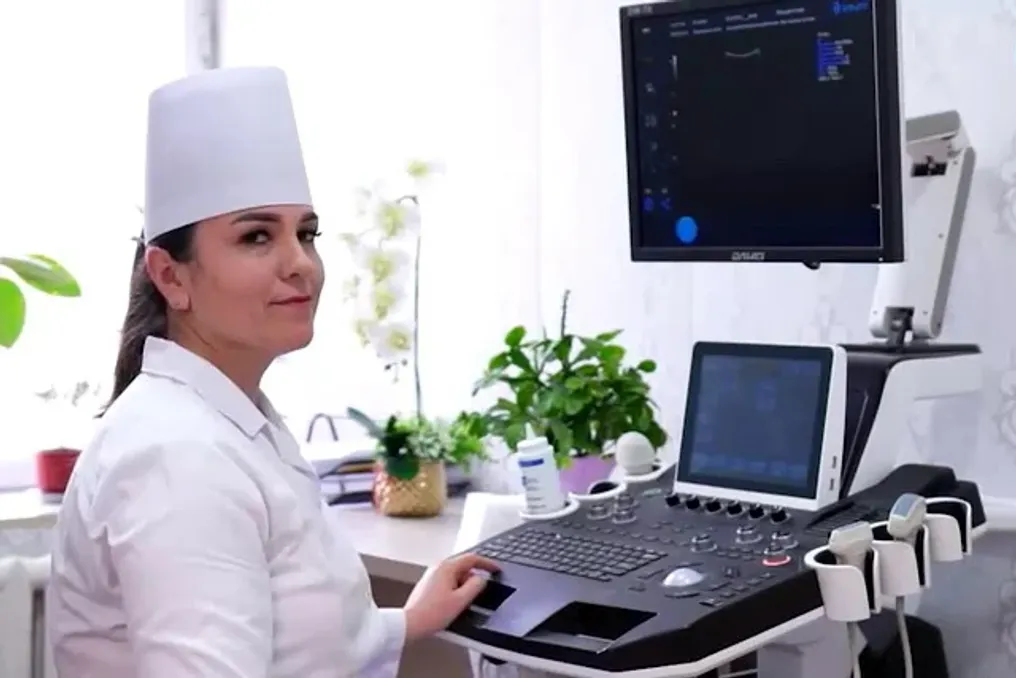
Uzbekistan intends to conduct a fundamental reform of the education system for medical and pharmaceutical workers. These changes are enshrined in Presidential Decree No. UP-191 dated September 10, 2026, which addresses measures for a radical improvement of the personnel training system in medicine and pharmacy.

Starting from the 2027/2028 academic year, the Ministry of Health will approve state admission standards for bachelor's programs in medical education across all specialties. The Scientific Research Center for Population Health Analysis will become the main body responsible for assessing current and projected demand for medical and pharmaceutical specialists.

Admission standards will be determined based on the needs of regions, medical institutions, and the shortage of personnel in relevant fields.

Changes in Educational Programs

From the 2027/2028 academic year, a six-year 'General Medicine' program will be introduced based on the Bachelor's degree in 'Medicine' in a '5+1' format. The final year of study will be entirely dedicated to practical training. Students already enrolled in the 'Medicine' program will continue their studies according to adapted curricula and programs.

Graduates of the 'General Medicine' program will receive the qualification of a general practitioner, allowing them to work as family doctors according to established procedures. Furthermore, a full year of practical training will be introduced in all bachelor's medical programs. For dental students, dental clinics will be assigned to medical universities.

Programs for training specialized physicians will be gradually implemented, featuring various durations of residency based on clinical residency, aligning with international standards. Training will take place in state medical educational institutions and medical institutes, funded by state grants.

Starting from the 2026/2027 academic year, residency in 'Family Medicine' will begin, graduates of which will receive the specialty of family doctor. From the 2027/2028 academic year, the training of specialized physicians will fully transition to the residency format.

Admission to clinical residency will cease, and funds freed up by reducing admission quotas for master's programs in narrow medical specialties under the general state order will be redirected to residency training.

Residents admitted through state grants will receive a monthly allowance from the State Budget equal to 2.15 times the minimum wage. Graduates will receive diplomas corresponding to the state standard and Level 7 of the International Standard Classification of Education and the National Qualifications Framework.

Restrictions and New Opportunities in Education

Starting from the 2027/2028 academic year, primary and additional specialization in narrow medical fields will be conducted exclusively through residency. Concurrently, admission quotas for master's programs will be reduced to 20% of the previous level, and the training of specialized physicians through master's programs will be discontinued.

Nevertheless, admission to master's programs will be permitted for individuals with higher education who do not hold a specialized degree but possess education in related fields. Master's programs will focus on training scientific, pedagogical, and managerial personnel, while for individuals without a specialized degree, they will be limited to training research staff.

Non-state medical and educational organizations will be able to provide residency services at their own expense, taking into account the need for specialized personnel.

Family medicine residents will undergo training and practical preparation in family clinics designated by the Ministry of Health to medical universities. Medical services in these clinics will be provided by both teaching staff and residents.

Knowledge Requirements and New Directions

The decree also establishes new requirements for training and knowledge assessment. Starting from the 2027/2028 academic year, the minimum admission threshold for bachelor's programs in medicine and pharmacy will be 60% of the maximum entrance exam score, including targeted enrollment.

Beginning from the 2026/2027 academic year, the minimum passing score for every academic module in bachelor's, master's, and residency programs, as well as for state exams, will be 70% for medical specialties and 60% for mid-level medical personnel specialties.

Additional specialization in narrow medical fields through short-term courses and retraining programs will be abolished, and admission to primary targeted specialization courses (internship) will cease.

From the 2027/2028 academic year, the specialty 'Medical Support' will be introduced based on the professional specialty 'Nursing,' and the bachelor's program 'Higher Nursing' will be replaced by the bachelor's direction 'Higher Medical Support.' Women will receive the qualification of a nurse, and men will receive the qualification of a male nurse.

State admission quotas for the bachelor's program 'Higher Medical Support' will increase by at least 20% annually until the 2030/2031 academic year.

Starting from the 2027/2028 academic year, admission to two-year programs for training mid-level medical personnel will also cease.

Joint educational programs with foreign universities are planned for the bachelor's program 'Higher Medical Support.' A master's program will be launched to train scientific and pedagogical personnel in the specialty 'Medical Support.'

Financial Benefits and Specialist Registration

Starting January 1, 2027, medical, pharmaceutical, and teaching staff will begin receiving monthly bonuses to their basic tariff rates or official salaries. Nurses and male nurses with a bachelor's degree will receive a bonus equivalent to one minimum wage, and master's students will receive a bonus equivalent to two minimum wages. Family doctors who have completed residency in family medicine, as well as teachers who have graduated from a master's program in this field, will receive a bonus equivalent to four minimum wages.

A separate Presidential Decree No. UP-192 dated September 10, 2026, introduces a state registration system for medical and pharmaceutical workers. This system will be implemented in stages, starting July 1, 2027. Registration will apply to specialists in fields included in the nomenclature of medical and pharmaceutical activities.

The Ministry of Health will determine the list of specialties for which registration requires a special exam or will be conducted without one, based on the level of influence of the workers on patients.

For this purpose, a Unified Electronic Register of Medical and Pharmaceutical Specialists will be created. It will ensure state registration, monitoring of professional activity, and free access to relevant information.

Until 2030, registration will be voluntary and valid for five years, based either on the results of a special exam or automatically upon assignment of qualifications categories.

Starting from 2030, the right to practice medicine and pharmacy will only be granted to registered specialists for a period of five years. Working without state registration will be prohibited, and the practice of assigning qualifications categories to medical and pharmaceutical workers will be abolished.

Categories awarded before 2030 will remain valid until the expiration of the established term. Corresponding bonuses and rights associated with the position will also be maintained for the relevant period.

Current specialists who require a special exam can obtain temporary registration for one year if they fail to pass the exam, provided they pass it within this period and continue their professional activity.

Specialists who have not worked continuously in their specialty for three years or more after registration can return to professional practice after successfully completing advanced training courses and re-registering with the state.

Medical and pharmaceutical workers with at least 20 years of experience in the relevant specialty and holding an academic degree will be registered without undergoing a special exam.

Uzbekistan and UC Davis to Expand Cooperation in Horticulture
Read more
uzdaily.uz

Uzbekistan and UC Davis to Expand Cooperation in Horticulture

Uzbekistan and the University of California, Davis (UC Davis) plan to deepen practical interaction in the fields of viticulture and pistachio cultivation.

Discussions on this cooperation took place during a working trip of an Uzbek delegation to the United States. The parties met to focus on testing promising planting material adapted to Uzbekistan's conditions, its subsequent propagation in the country, and the development of scientific and practical partnerships.

Pistachio Cooperation Details

Specifically, regarding pistachio cultivation, the possibility of introducing the UCB-1 rootstock was discussed, which is considered promising for local conditions. Participants examined the potential of importing seed material into Uzbekistan for testing, followed by establishing an internal seed breeding system based on parent lines.

Viticulture Issues

Viticulture was another topic of discussion. Participants considered the option of importing and testing modern grape rootstocks developed for various soil and climatic conditions. These materials possess resistance to drought, salinity, nematodes, and diseases.

Furthermore, the parties discussed the possibility of direct propagation of promising material in Uzbekistan before applying it in agriculture. The prospect of testing next-generation rootstocks from the UCD GRN series, created by UC Davis scientists, in different regions of the country was also considered.

At the conclusion of the meeting, an agreement was reached to continue practical cooperation. This will include the import of promising planting material into Uzbekistan, its testing under local conditions, and subsequent propagation.

Popular