The global dialogue on artificial intelligence is undergoing radical changes. The initial hype surrounding the size and capabilities of foundational models is giving way to a more pragmatic focus—implementing solutions in real business settings.
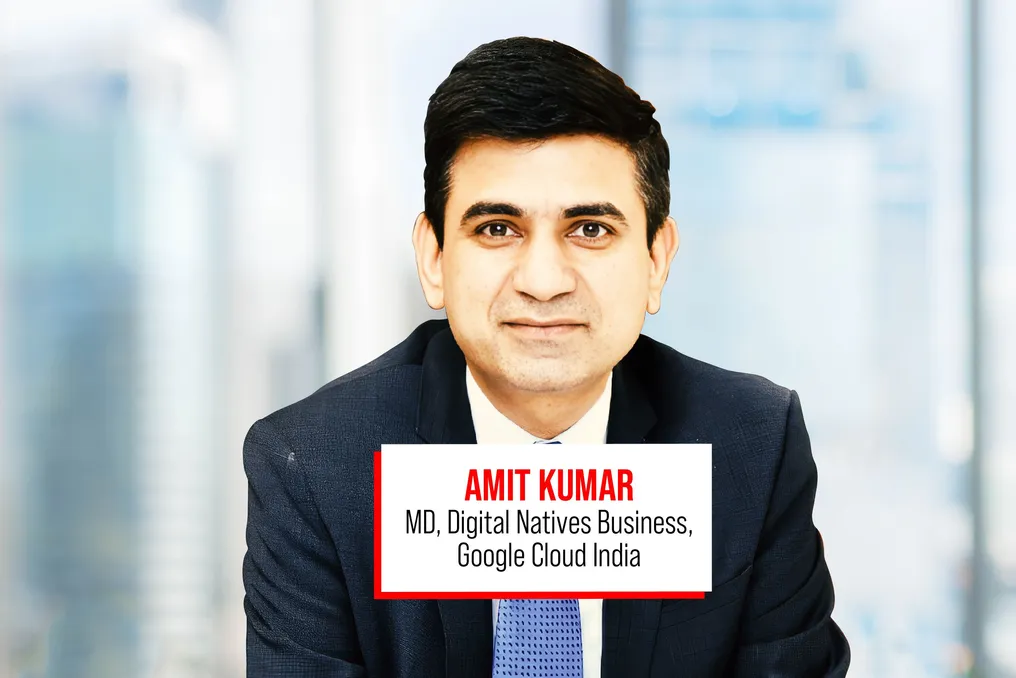
Amit Kumar, Managing Director for Digital Natives Business at Google Cloud India, notes that the discussion has shifted from debates about the model itself to discussing its value. He emphasizes that the model itself does not generate value, but it is an integral part of architectural discussions.
This transformation affects not only enterprise software but is fundamentally changing the talent landscape. As AI tools democratize software development, traditional barriers to innovation are disappearing.
Kumar asserts: 'Engineering is no longer about a degree. It is a mindset.' He points out that curiosity and practical experience are beginning to supersede formal programming degrees as primary drivers of technological influence.
Kumar collaborates with digital companies and startups, helping them leverage Google's cloud services and AI technologies to grow their businesses. During a media tour of Google in Bengaluru, he spoke about how India has become a high-speed hub for global innovation, and how enterprises and startups are mastering the next frontier of AI.
AI Application Across Various Industries
Decision-makers in manufacturing, banking, healthcare, public administration, e-commerce, and fintech have long moved beyond initial testing. Now, senior executives are asking questions about scaling these solutions at the enterprise level and achieving tangible Return on Investment (ROI). However, to extract real value from agentic platforms, they cannot be viewed merely as an additional IT layer. It requires a fundamental redesign of internal workflows and a rethinking of performance measurement methods.
An agentic workflow demands a complete architectural overhaul: defining the agent's access to information, the volume of context retained, the systems it integrates with, and the boundaries of its operation. Simultaneously, organizations face deployment challenges; they want employees to use AI, but they must also ensure that security is not compromised and data does not leak.
True value is achieved by embedding AI directly into the customer journey and core operational processes. Examples include Indian digital leaders: e-commerce players like Meesho and Flipkart are improving customer search, refining contact centers, and implementing virtual try-ons and catalog extensions. MakeMyTrip integrates multimodality into travel search, while media platforms like Pocket FM use AI to create video and storytelling. Banks, NBFCs, and manufacturing companies use AI to boost employee productivity while establishing proper governance systems.
Kumar notes that India is not slowing down, but rather making a leap. He stresses that solving problems in India, given all its inherent complexity, provides a distinct advantage. The scale here is entirely different, and the linguistic context is extremely dynamic due to the unique blend of vernacular languages and purchasing habits across the country.
Because of this complexity, Indian digital companies are solving global problems right from India. Whether it concerns workforce productivity in banks, government agencies, and manufacturing, or cutting-edge consumer interfaces, there is a measured yet rapid movement. Leaders are not adopting AI simply because others are; we have not reached that stage yet. Most CXOs have personally tested these tools and understand the deep architectural requirements related to cybersecurity, governance, and data residency. India is creating solutions for global clients, and adoption is just gaining momentum.
Google's Philosophy and Hybrid Approaches
At the core of Google's philosophy are the concepts of optionality and explainability. Optionality means providing choice: using standard industry hardware like NVIDIA GPUs, or Google's proprietary Tensor Processing Units (TPUs), as well as choosing between Google's first-party models or open-source models from other leading labs.
Sovereignty relates to ensuring that certain regulated data remains within the country, but a single rigid solution does not fit all scenarios. Google offers Google Distributed Cloud as an isolated solution (completely separated from external networks, including the internet), created on the client's premises under their control without network connectivity. This solution is actively used by government, defense, judicial, and intelligence agencies. Nevertheless, placing everything entirely on local servers can limit innovation and reduce user benefits.
Therefore, the company believes the best approach is hybrid. For instance, a bank might keep sensitive core workflows locally while simultaneously using public cloud infrastructure for broader customer interaction. The company sees itself as an enabler, closely collaborating with Indian partners, startups, and regulators to build sovereign solutions on its platform while adhering to strict security measures and responsible AI principles.
The Need for Practical Experience in the Age of AI
Architectures are being actively discussed for risk and dependency management. Depending on the sensitivity of the issue, a 'human-in-the-loop' requirement may be necessary, where AI-generated decisions are verified by a human before final approval, or a 'maker-checker' model. Cybersecurity, governance, and data access must be rethought from scratch for agentic workflows.
On a personal level, AI has ceased to be just a theoretical discussion. The depth and speed of progress are so intense that one cannot assess AI merely by reviewing slides, reading reports, or watching a dashboard. To understand what is required, one must build a demo oneself. The author shares experience from a four-day training period during which he built demonstrations himself.
The richness of human-like interaction is striking. During a sales demonstration for insurance, the founder suddenly tested the Gemini bot with an unusual query: 'Would you like to eat a brick omelet with me?' The bot did not interrupt the thought process and smoothly replied: 'Sir, enjoy your omelet, allow me to offer you the next step.'
Practical involvement distinguishes those who truly understand AI from those who merely observe it. AI democratizes engineering because writing software no longer requires a traditional programming degree or an engineering education. With tools like Antigravity, anyone can automate a complex mortgage application workflow simply by providing physical process inputs and writing simple prompts.
For undergraduate students entering the job market, formal degrees will matter less than their mindset. The author's advice is to focus on core human qualities: curiosity, creativity, and the ability to handle change and uncertainty. Above all, one must work with technology practically. It is not enough to just listen to what others say; one must build things oneself. AI provides access to all world universities, making self-directed work the most critical factor for success.