
Everforth ECS wins $148 million contract to modernize SUNet
Read more
Ventureburn
ventureburn.com

Everforth ECS wins $148 million contract to modernize SUNet

Everforth ECS has secured a three-year contract worth up to $148 million to expand support for the Secure Unclassified Network (SUNet). This contract is a sole-source agreement that allows for unlimited supply and delivery, extending Everforth ECS's collaboration with the Chief Digital and AI Office (CDAO).

For over ten years, the company has supported SUNet and will continue to manage the existing operational environment. Furthermore, it will facilitate the transition of mission functionalities to the future SUNet architecture.

This award is accompanied by a separate selection under Commercial Solutions Open, which will focus on researching and prototyping capabilities for secure AI research via SUNet 2.0. These awards expand Everforth ECS's role in both current operations and modernization efforts.

SUNet 2.0 is designed to provide a secure digital environment for Department of War organizations. It will also support government partners working on new technologies. This platform enables rapid development and testing of artificial intelligence and machine learning capabilities.

The system will provide a controlled environment for technology validation before deployment. Everforth ECS was chosen to prototype SUNet 2.0 for the Deputy Minister of War Research and Development Office. The work also aligns with CDAO's modernization priorities.

The company plans to explore modern hybrid cloud capabilities within this program. Efforts also include zero-trust security controls and modern data management. These technologies can reduce user connection times.

Everforth ECS will support SUNet throughout its lifecycle. This includes maintaining the existing environment for current mission users. Simultaneously, the company will develop SUNet 2.0 as a secure sandbox to support experiments with new AI and machine learning capabilities.

Donny Scott stated that these awards mark a new chapter in the company's SUNet mission. He emphasized the combination of operational knowledge with cloud technology and cybersecurity capabilities. The company intends to apply automation and AI in the modernization program.

Experience working with existing users is expected to form the basis for designing future capabilities. Brian Orsi, CDAO Account Lead at Everforth ECS, noted that years of supporting SUNet have provided insight into user challenges. This experience will guide modernization efforts.

Everforth ECS aims to provide mission partners with a faster and more secure way to test new technologies. The company also seeks to simplify the process of integrating and deploying new capabilities.

Everforth ECS is a segment of Everforth, Inc., a federal government company. Its parent company trades on the New York Stock Exchange under the ticker EFOR. Its broader technology portfolio includes AI and data, cloud and infrastructure, application development, and cybersecurity. The company also provides enterprise solutions and expertise. Work on SUNet allows Everforth ECS to apply these capabilities to a long-term federal program. The contract ensures continuity while the next generation is being developed.

For government users, modernization efforts are focused on secure collaboration and faster technology testing. The program is also designed to support future data and AI requirements. This dual focus allows operations to be maintained while new infrastructure is developed. This approach facilitates a gradual transition to SUNet 2.0, meaning the three-year contract extends over more than a decade of operational support, placing Everforth ECS at the center of the program's next phase of development.

Similar stories

Uzbekistan and Xinjiang strengthen business cooperation
Read more
uzdaily.uz

Uzbekistan and Xinjiang strengthen business cooperation

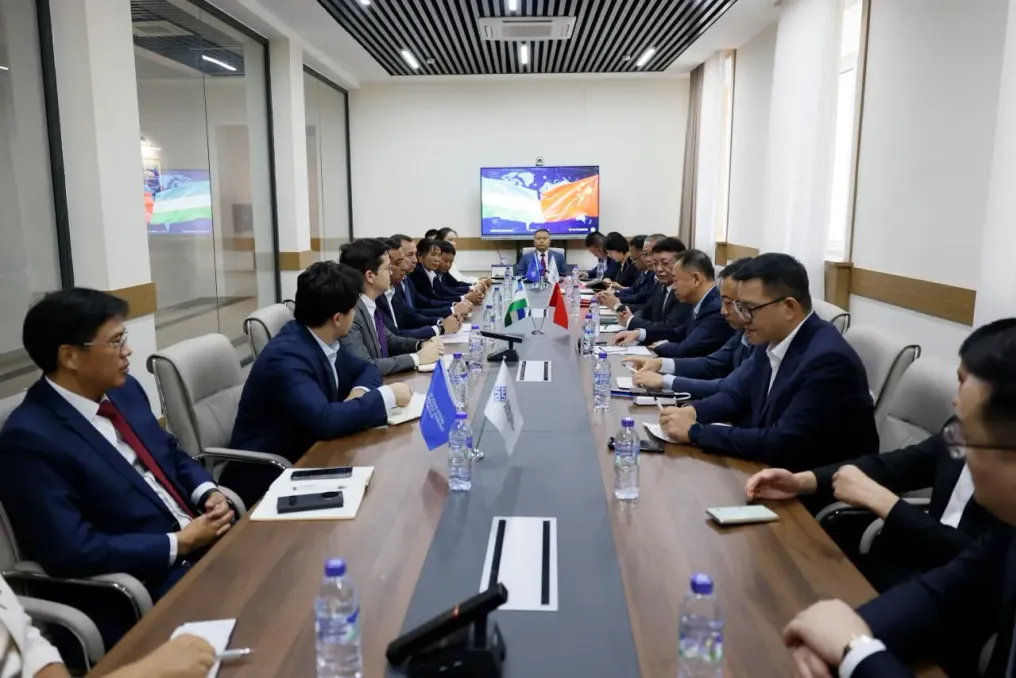
The Chamber of Commerce and Industry of Uzbekistan held a meeting with a delegation from the Chamber of Commerce and Industry of the Xinjiang Autonomous Region in China. The delegation was headed by Vice President Chen Yulin. The parties discussed opportunities to expand trade, economic, and investment interaction.

Participants in the negotiations included Sherzod Ibragimov, Deputy Chairman of the Chamber of Commerce and Industry of Uzbekistan, and Jamil Maksudi, Advisor to the Chairman. The Chinese group included leaders of major enterprises and organizations from Xinjiang operating in the fields of decorative production, construction, aluminum production, cotton trade, and agricultural technologies.

The participants discussed the need to strengthen bilateral and interregional ties, as well as prospects for joint initiatives in the textile industry, building materials, agriculture and livestock farming, healthcare, and logistics. Special attention was paid to the possible signing of a memorandum of understanding between the Chamber of Commerce and Industry of Uzbekistan and the Chamber of Commerce and Industry of Xinjiang.

It is expected that this document will help expand business contacts, promote direct interaction between entrepreneurs, and advance new joint projects. As part of the visit, the Chinese delegation, at the invitation of the Council of Ministers of the Republic of Karakalpakstan, will participate in the International Investment Forum in Nukus. Representatives from Xinjiang also plan to visit several large production enterprises in the region.

At the conclusion of the meeting, both sides expressed readiness to develop mutually beneficial cooperation and enrich it with new practical initiatives.

Forecast suggests Chinese automakers could capture up to 10% of the US market by 2038
Read more
www.aajtak.in

Forecast suggests Chinese automakers could capture up to 10% of the US market by 2038

Previously, consumers worldwide favored European cars. Then, Tesla electric vehicles gained popularity, but now the era of Chinese automobiles is arriving. Chinese cars are becoming increasingly sought after in various markets. Nevertheless, strict regulations are in place in several countries regarding Chinese companies, which hinders their entry into these markets.

The situation is similar for the American market. According to reports, if barriers for Chinese companies in the US market are removed, Chinese automakers could capture about ten percent of the market by 2038. This information is presented in a forecast from Bloomberg, based on estimates from the research firm Mobility Global.

Mobility Global presented various scenarios regarding the success of Chinese companies in the American market. In one such scenario, the firm suggested that Chinese automakers could sell 1.7 million vehicles annually in the US market, accounting for 11 percent of the total sales volume in the country.

Peter Nagel, Deputy Director of Vehicle Forecasting at Mobility Global, presented this report. This scenario assumes that Chinese vehicles manufactured in North America will gain access to the US market, while high tariffs on cars imported from China will not have a positive effect.

Nagel notes that there is a low or moderate probability that restrictions on these North American-made vehicles will be lifted within ten years. Therefore, realizing this forecast would require significant policy changes. The growth of Chinese companies is driven by their affordability.

Peter also explained that compact and mid-size crossovers from Chinese companies cost the same as an average used car in the US market. If these Chinese cars become available at the same price point, demand for new cars in the US will increase.

The report posits that in such a case, companies like BYD, Geely Auto, and SAIC Motor could begin exporting vehicles from factories in Mexico by 2029. Furthermore, by 2030, these companies could start production in American plants, provided that annual sales of their popular models exceed 40,000 units. This forecast comes against the backdrop of the start of a new round of high-level negotiations between the US and China.

Popular