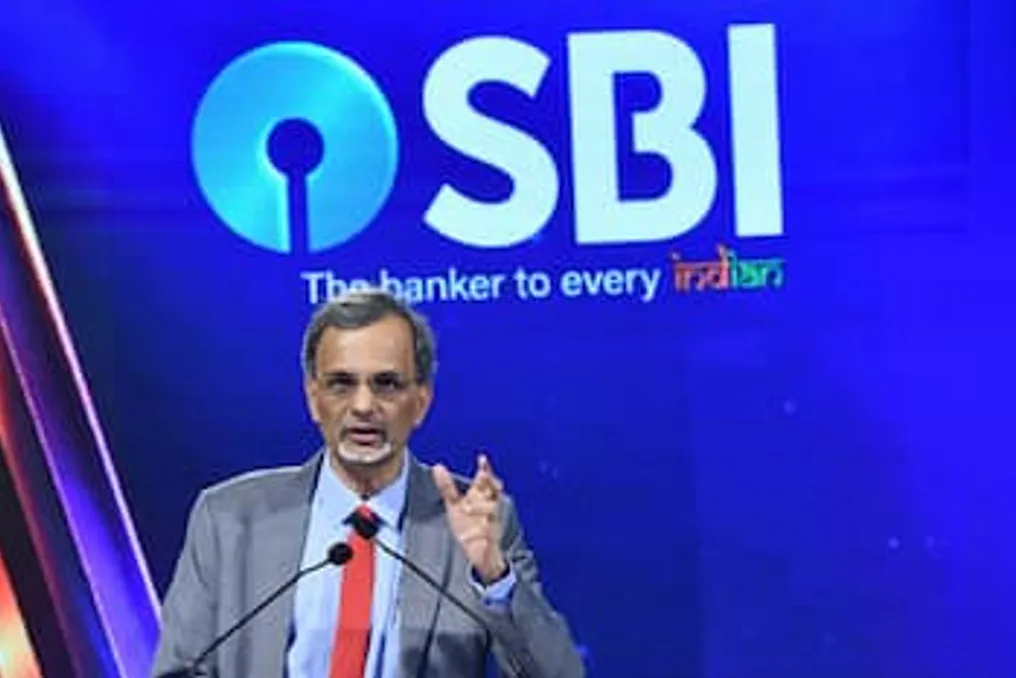
V Anantha Nageswaran, Chief Economic Adviser to India, stated that the country's balance of payments issues will remain persistent rather than episodic. He noted that rising imports, dependence on key commodities, increasing global interest rates, and intensified competition for capital continue to put pressure on India's external account.
Nageswaran emphasized that the funds attracted by the Reserve Bank of India (RBI) this year through the concessional swap window provided 'considerable short-term breathing room,' but this is not a long-term solution as the pressure on the balance of payments will persist.
He explained that due to import growth and reliance on raw materials, coupled with global competition for capital and higher interest rates, the balance of payments problem will arise almost continuously.
This week, the RBI reported that inflows through the concessional currency swap window, launched on June 8, exceeded $143.5 billion as of September 18. These flows include FCNR(B) deposits, External Commercial Borrowings (ECB), and Foreign Currency Borrowings (OFCB), with FCNR(B) deposits forming the bulk, reaching nearly $133 billion. Thanks to these receipts, India is expected to record a balance of payments surplus of $100 billion in the fiscal year 2027, compared to a deficit of $23 billion in fiscal year 2026.
Nageswaran recommended that India closely monitor both capital inflows and outflows amid escalating global competition for capital. He added that developed economies themselves compete for investments from both private and public sectors.
Furthermore, he pointed out that India's merchandise trade deficit ranges from 3.5 to 4 percent of GDP even after excluding oil and gold, making strengthening domestic production extremely vital. This production momentum is necessary not only for diversifying growth but also for enhancing economic resilience, as global supply chains become increasingly vulnerable to disruptions.
The adviser stressed that India cannot afford to choose between manufacturing and services; it must pursue both avenues. He also noted that even with export success, imports will inevitably rise, and such import expenditures must be financed through exports, foreign direct investment, or a combination thereof. Therefore, the focus should be on boosting the global competitiveness of domestic production, rather than merely substituting imports.
Concurrently, India needs to take more steps to attract foreign direct investment, given the aggressive competition from developed nations for global capital. Key factors will include sub-national government policies, tax certainty and simplicity, investor protection, contract reliability and continuity, and the availability of a skilled workforce.
Nageswaran warned that the changing external environment presents three short-term hurdles for India: unstable relations with the US, uncertainty regarding energy supplies and prices amid the Persian Gulf conflict, and the country's lack of participation in the boom of large-scale artificial intelligence systems investment.
He also indicated that due to its geography and size, India cannot belong to any geopolitical bloc. However, maintaining sovereignty and independence entails costs in the form of higher energy prices and potential supply interruptions.
The adviser added that India's development strategy must account for the fact that transitioning to a developed economy by 2047 will occur under vastly different conditions than those faced by East Asian economies. While those countries underwent this transition under more favorable circumstances, India faces geopolitical tensions, militarization of supply chains, climate variability, and the challenge of managing its demographic dividend.
Nageswaran stated that India's demographic dividend must be 'managed and earned,' which extends beyond education and training to include mental, physical, and emotional health. He called for 'rethinking and being prepared to reinvent many aspects of our activities, whether you work in the private or public sector.'
Regarding AI, Nageswaran advised India not to worry excessively about not participating in the growth model based on capital-intensive hyperscalers. Instead, the country can find opportunities in the AI inference layer and edge AI, where computational requirements are relatively accessible. He suggested that 'being the second player, rather than the first, might be an advantage in AI.'
A more immediate concern is the impact of AI on employment, especially among young workers, given India's demographic profile. Nageswaran noted that from India's perspective, it is important to recognize that junior roles have indeed developed slower than before the advent of AI. Therefore, India should focus on creating jobs that utilize AI, rather than solely considering the technology's impact on existing IT jobs.