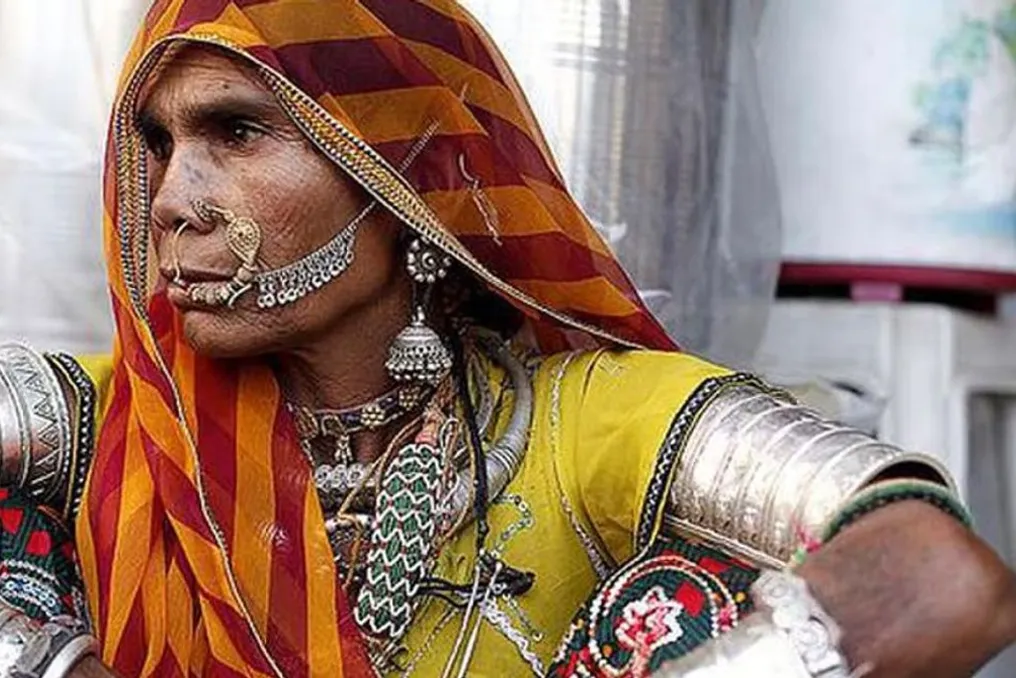
Looking at a necklace with a cowrie shell, one might assume it was made near the sea. However, it is possible that such jewelry belongs to a community living high in the hills of Northeast India. One can also imagine an ornament made from wild boar tusks, reeds, nautilus shells, and carnelian. In another location, in the hills of Niyamgiri in Odisha state, bronze anklets and necklaces were once exchanged between communities for rice, corn, turmeric, and vegetables.
Upon close examination of the traditional ornaments of various tribal communities in India, these unexpected combinations reappear. Shells, tusks, beads, bones, feathers, and metals are transformed into necklaces, anklets, hairpins, and bracelets. But the materials themselves are only the beginning of the story. They can tell us about the origin of the items, who created them, what people exchanged in return, and what significance the ornament held for its owner.
Here are some interesting examples.
Necklace Made from Wild Boar Tusks
Among the Sumi Naga people, the Aminihu ornament cannot be overlooked. Traditionally, this necklace combines pairs of wild boar tusks tied with reeds, fastened by a large button made of a nautilus shell and a carnelian bead. To an outside observer, such a combination might seem unusual. Nevertheless, historically, such materials could carry meaning beyond their mere appearance.
Anthropologist Alok Kumar Kanungo, who documented jewelry among several Naga communities, notes the historical connection of the Aminihu to warrior status and special achievements. Other Naga ornaments also utilize diverse materials. For instance, Angami Tsubo is made from carnelian and glass beads inlaid with ivory or bone.
Thus, a single necklace can contain animal materials, stones, and items obtained through exchange—all unified by the skill and traditions of the community.
Shells tell perhaps an even more intriguing story.
How Did Shells Get to the Mountains?
Among the Tanghul Naga people, ornaments such as Kongsang and Huishon have been documented, which are made using cowrie shells, seashells, and nautilus shells. Kongsang may contain several rows of glass beads, cowrie shells, nautilus, and stones arranged in its characteristic shape.
These shells are particularly interesting because of where they ended up. The homeland of the Tanghul is far from the coast. Yet, marine materials became part of the jewelry worn in the mountains. Kongsang is one of the valuable traditional ornaments for the Tanghul Naga. It is uniquely crafted from cowrie shells, nautilus shells, and precious stones. The Naga live in lush green mountain landscapes where there are no shells or nautiluses.
Their presence serves as a reminder that communities were never necessarily isolated in the landscapes we associate with them today. Materials could travel along trade and exchange networks before ultimately being transformed into something deeply local.
This tradition continues to evolve. Today, Tanghul artisans and designers adapt elements of the Kongsang into smaller necklaces, chokers, earrings, bracelets, and headwear.
However, not all connections between jewelry and nature begin with a shell, tusk, or feather. Sometimes the story lies in what people cultivated.
When Grain Could Become a Bronze Anklet
In the hills of Niyamgiri in Odisha state, the Dongria Kondh people are known for their unique tradition of clothing and ornaments. State documents record aluminum neck rings, beaded and coin necklaces, finger rings, bracelets, and anklets. The Museum of Tribes of Odisha also documents ornaments such as Kagudika—a neckband made of bronze or aluminum; Sipna—a ceremonial pin; and Andu—a bronze anklet worn by Dongria Kondh women.
At first glance, metal might seem like a foreign element in a story about nature. But one must look at how these ornaments were made and exchanged. The Dongria Kondh historically maintained relationships with the Gasi metallurgists, who produced Dhokra ornaments and other items for their households. In some cases, the item of exchange was not currency. Rice, corn, turmeric, and vegetables could be exchanged for items created by artisans.
Suddenly, a bronze anklet carries traces of much more than just metal. Behind it lie harvests from the hills, the craftsmanship of another community, and relationships sustained by exchange.
When Every Body Part Has an Ornament
Elsewhere, the link between ornaments and daily life becomes evident through language itself. Traditional ornaments documented in Chhattisgarh have different names depending on where they are worn. Suta is worn on the neck. Puli adorns the nose. Ainti is placed on the forearm, Kardani around the waist, Paunchi on the upper arm, and Bichchia on the toes. These names hint at how deeply ornaments are woven into clothing and identity.
Although silver plays an important role in these traditions, the ornaments also include beads, shells, and feathers. At this point, a pattern begins to emerge. Is the shell just a shell? Is the tusk just a tusk? Is the metal just metal? As people begin to shape, exchange, and wear these materials, they collect stories. A nautilus shell can travel from the coast to the mountains. A wild boar tusk can become part of an ornament associated with status. Harvests grown in Niyamgiri can be exchanged for ornaments made by a metallurgist.
Perhaps this is what makes these ornaments so striking. The natural world may provide some of their materials, but communities imbue these materials with meaning, transforming them into objects that can carry identity, memory, relationships, and history. Sometimes all of this can fit into a single necklace.