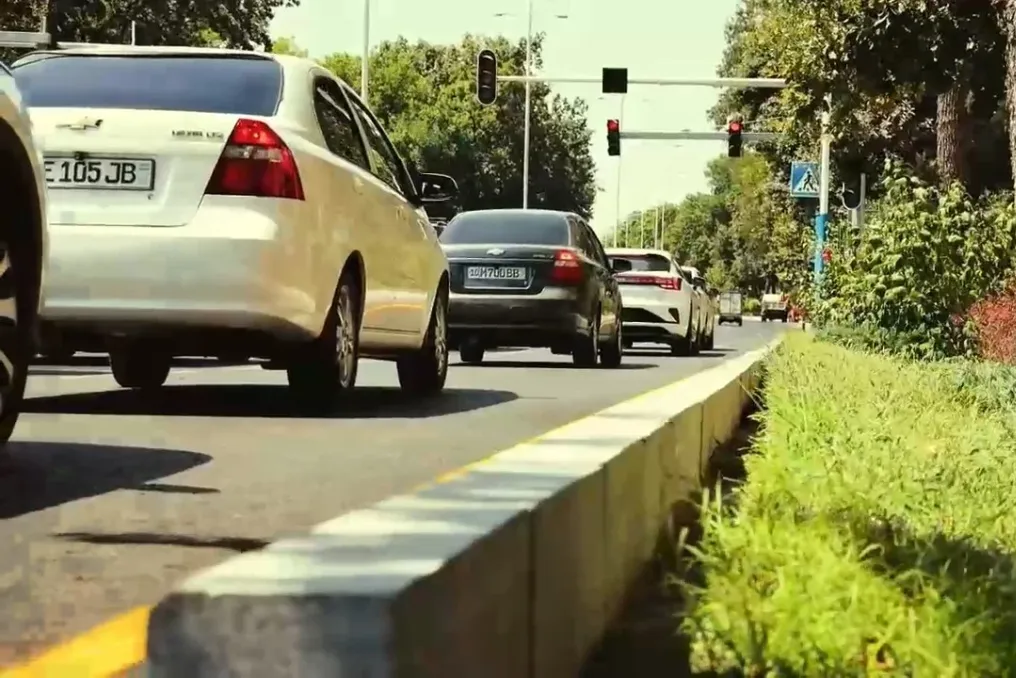
Traffic light regulation system 'Green Wave' reduced travel time in Tashkent by 22%
Read more
UzDaily
uzdaily.uz

Traffic light regulation system 'Green Wave' reduced travel time in Tashkent by 22%

In Tashkent, Uzbekistan, a traffic light synchronization system called 'Green Wave' was implemented on a two-kilometer section of road between Furkat and Shota Rustaveli streets. This measure allowed for a reduction in peak hour travel time from nine to seven minutes.

Specialists from the Tashkent City Traffic Management Center configured the traffic lights according to the direction of traffic flow both in the morning and in the evening. The system is designed for an average speed of about 45–55 km/h.

In the morning, 'Green Wave' operates in the direction from Furkat Street to Shota Rustaveli Street. In the evening, the synchronization works in the opposite direction—from Shota Rustaveli Street to Furkat Street.

After the changes were made, the travel time on the congested section decreased by two minutes, from nine to seven minutes, which represents a reduction of approximately 22%. It is important to note that this improvement is achieved not by increasing vehicle speed, but by coordinating the operation of neighboring intersections.

Coordinated traffic lights contribute to smoother traffic movement, minimizing the number of stops, repeated braking, and accelerations. For comparison, under free-flowing conditions, this section usually takes six to seven minutes, but after launching 'Green Wave', the travel time during rush hour remains around seven minutes.

Thus, the synchronization of nine traffic light installations along the two-kilometer section led to a reduction in congestion periods by almost a quarter. Work on the sequential adjustment and synchronization of traffic lights in Tashkent continues.

Similar stories

Green wave system activated for 11 traffic lights on Makhtumkuli Street in Tashkent
Read more
podrobno.uz

Green wave system activated for 11 traffic lights on Makhtumkuli Street in Tashkent

In Tashkent, on Makhtumkuli Street, specialists from the Road Traffic Organization Center have implemented the 'green wave' mode for eleven traffic light installations. This synchronization has allowed for a 12% increase in the throughput capacity of the main thoroughfare, and the average travel time along this route has decreased by 10%.

A detailed analysis of traffic flows was conducted to configure the system. Analysts took into account traffic intensity, traffic distribution depending on the time of day, traffic light cycle durations, and travel intervals between different intersections. It is worth noting that the average daily traffic intensity on this section reaches approximately 90 thousand vehicles.

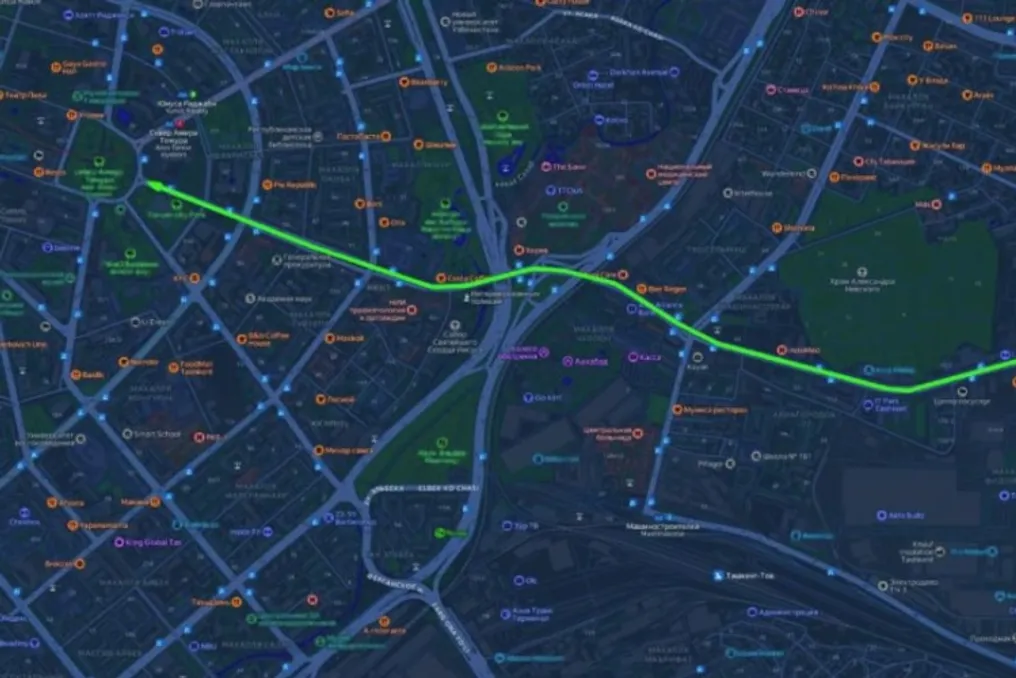
The system operates in two different modes, which depend on the predominant direction of movement. From the beginning of the day until noon (from 00:00 to 13:00), the coordination is set towards the center of Tashkent—from the three-level interchange at the intersection of Makhtumkuli and Yangi Uzbekistan streets to Amir Temur Square. In the afternoon, from 13:00 to midnight, the coordination direction changes to the Tashkent region.

According to calculations, the speed of movement in the coordinated corridor should be 55 kilometers per hour. Provided that the established speed limit is observed, the vehicle will sequentially enter the green signal intervals at subsequent intersections. The main goal of implementing this system is to ensure uniform movement, minimizing the number of stops and reducing delays at intersections, without the need for physical expansion of the road network.

Nevertheless, the actual travel time depends on many factors, including the current traffic situation, public transport operation, the presence of pedestrian phases, as well as possible road accidents or repair work. Specialists continue to monitor traffic and optimize regulation in other parts of the capital.

Popular