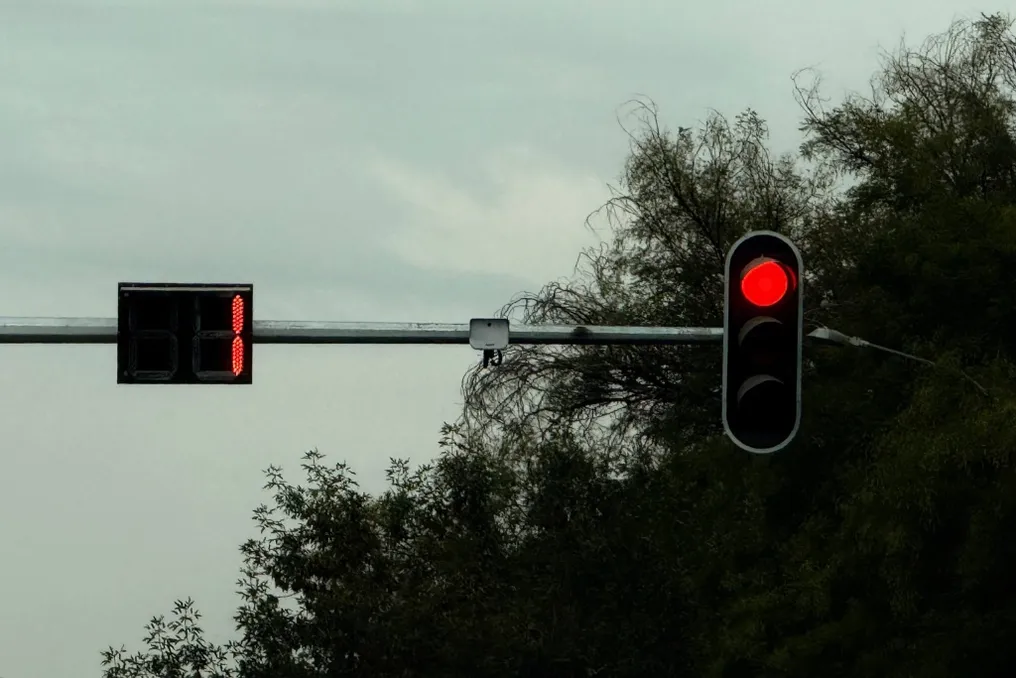
The 'Green Wave' system has been implemented in Tashkent on the section between Furkat and Shota Rustaveli streets, which has significantly reduced travel time during peak hours.
Nine traffic lights on this stretch have been synchronized into a single system. Thanks to this, during periods of maximum congestion, the road, which previously took 9 minutes, is now covered in 7 minutes, representing a reduction in time of almost a quarter.
The new section, approximately two kilometers long, connects Furkat Street and Shota Rustaveli Street. Specialists from the Tashkent Road Traffic Organization Center made adjustments to the operation of these nine traffic lights, taking into account the main directions of movement both in the morning and in the evening.
The morning operating mode of the 'green wave' is set towards Shota Rustaveli Street, while in the evening, the system functions in the opposite direction, moving towards Furkat Street. At the same time, the calculated speed on this section reaches 45–55 kilometers per hour.
A significant effect of the synchronization is observed precisely during peak load periods. The travel time for the section has decreased from 9 to 7 minutes, corresponding to a reduction of approximately 22% compared to previous indicators. It is important to note that the system does not encourage drivers to increase speed; its advantage lies in the coordinated switching of traffic lights, which allows vehicles to move longer without needing to stop at every intersection, thereby minimizing sudden braking, repeated acceleration, and overall delays.
For comparison, without traffic jams, this section usually takes 6–7 minutes to pass, but now the same time is required even under high congestion. This traffic light setting is part of a broader program to spread the 'Green Wave' in various districts of the capital, and synchronization work is ongoing. Previously, a separate lane for cyclists, electric scooters, and other types of transport was being tested on Lutfi Street in Tashkent.