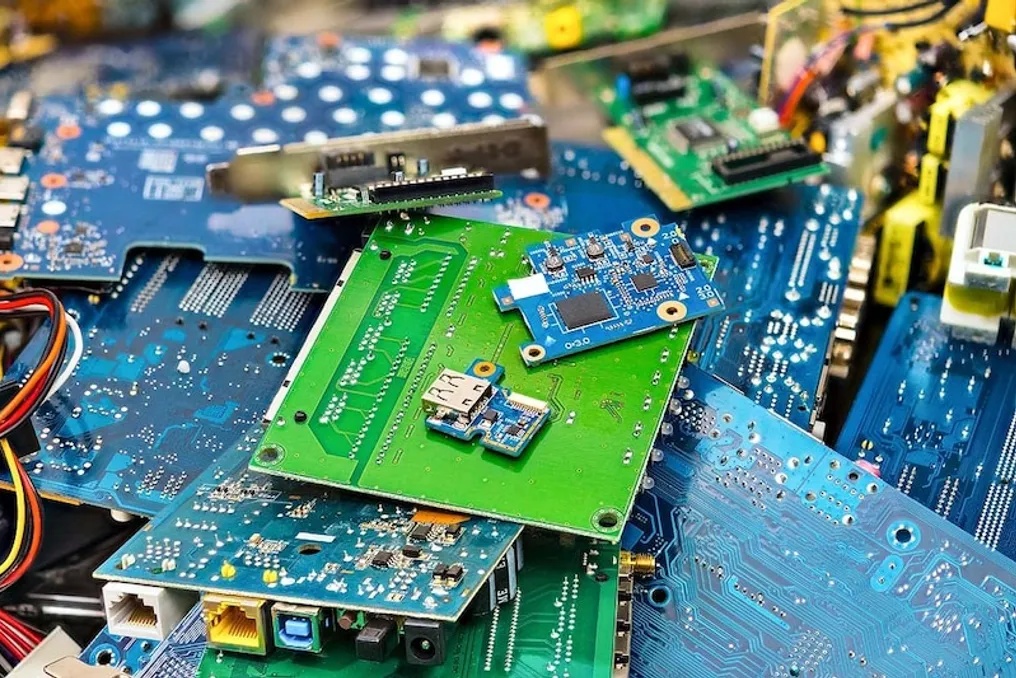
With the increasing use of artificial intelligence (AI) worldwide, the number of new data centers and machines is rapidly growing. However, a serious question arises regarding the fate of these obsolete devices. According to a new report, between 2025 and 2050, AI-related equipment could be decommissioned in volumes ranging from 39.5 to 61.7 million tons.
This means that a significant amount of e-waste from AI will be generated over the next twenty-five years. This waste includes not only AI servers and chips but also network equipment, data storage systems, power supplies, batteries, transformers, and cooling systems installed in data centers that eventually become unusable.
It is projected that by 2050, the annual volume of e-waste from AI could reach between 3.1 and 4.6 million tons. As of August 2026, 12,259 data centers were operating in 179 countries, and their number, along with the number of machines used, continues to grow due to the rising demand for AI. Thus, managing obsolete equipment could become a serious future problem.
The new figure is significantly higher than previous estimates. Previously, calculations for AI e-waste primarily considered devices such as servers and GPUs. However, the new study included other critical components of data centers, including data storage systems for information retention, network equipment for connecting machines, and cooling systems to maintain their operation. All these elements wear out over time.
According to the report, by 2030, AI could lead to the decommissioning of between 8.6 and 13.1 million tons of electronic equipment annually, which is approximately 40–60 times higher than older forecasts.
It is important to note that data centers contain more than just servers and computing machines. According to the report, servers, accelerators, and racks account for only about 13% of the total electromechanical complex. The remaining 87% consists of power supply systems, network equipment, storage, transformers, batteries, backup systems, and cooling systems. Therefore, when calculating AI e-waste, all these components must be taken into account.
As of August 2026, there were 12,259 data centers in 179 countries. The largest concentration of such facilities is in the USA—5,388 centers. There are also 529 centers in Germany and 523 in the UK. The growing demand for AI is stimulating increased investment in these centers. The report mentions McKinsey.
Estimates suggest that around $7 trillion could be invested in AI infrastructure between 2025 and 2030. These funds will go towards installing new servers, network equipment, power supply systems, and cooling systems. Over time, many of these devices will be replaced, leading to an increase in the volume of e-waste.
The increase in waste will not only occur in data centers. The emergence of new technologies may cause computers, mobile devices, peripherals, and telecommunications equipment to become obsolete faster. If a company quickly transitions to a more powerful technology, old equipment may be decommissioned before it reaches the end of its service life.
The report indicates that by 2050, an additional 1.62 to 3.07 million tons of e-waste could emerge annually from sources outside data centers.
Concerns about AI waste are not only related to its quantity. The report also mentions chemical substances such as PFAS, which are classified as 'forever chemicals.' These substances can persist in the environment for a long time. If old electronic equipment is not properly recycled, the chemicals and other materials contained within it can pose ecological problems.
The rise in AI e-waste occurs against the backdrop of an existing global problem. According to the Global E-Waste Monitor, approximately 6.2 million tons of e-waste were produced globally in 2022, of which only 22.3% was officially collected and recycled. Thus, additional waste from AI could put even more pressure on existing e-waste management systems.
When combining regular e-waste with additional AI-related waste, it is projected that between 19.6 and 21.1 million tons of e-waste will be produced globally annually by 2050. This shows that the environmental impact of AI is not limited to energy consumption, water usage, and carbon emissions.
Since the machines powering AI are capable of generating large volumes of waste, mechanisms for extending the lifespan, reusing, and properly recycling old servers, computers, batteries, and network equipment are critically necessary.