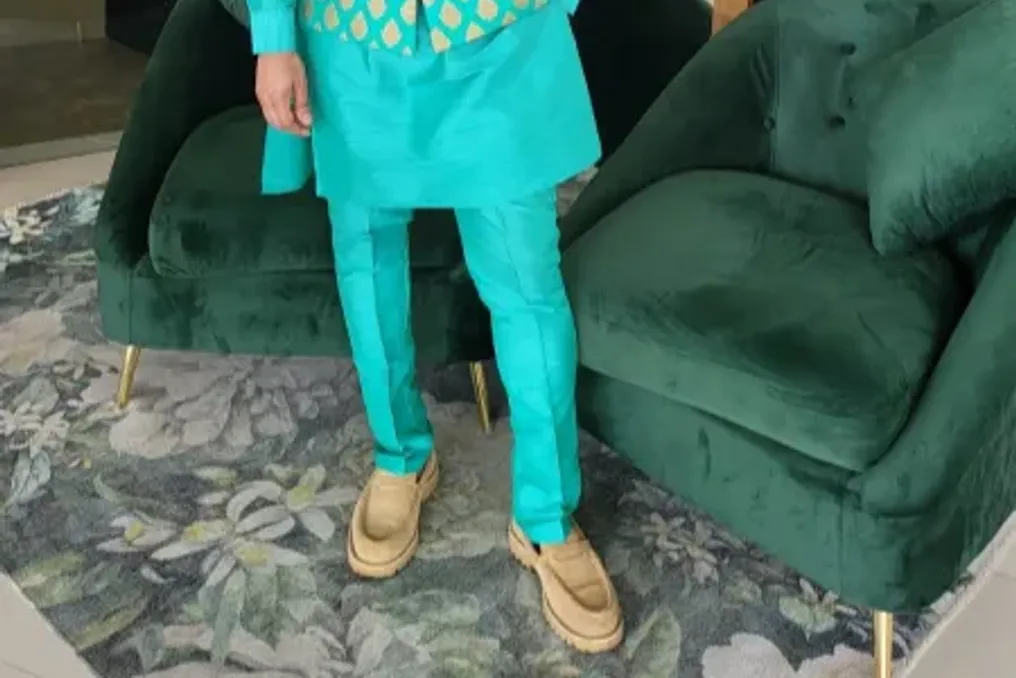
Some memories remain with a person forever. For the author, one such memory is waking up early in his grandparents' home, accompanied by the aroma of incense, the quiet chime of a prayer bell, and the sounds of prayers in Tamil.
In childhood, the author watched his grandparents pray to Suriyan, the Sun god, and then turn to Lord Ganesha and Lord Shiva. At the time, he did not fully grasp the significance of what was happening, considering these rituals merely part of the family's morning routine.
Years later, he realized that these rites were something more than just rituals; they served as connecting threads linking him to previous generations. He recalled asking his Thatha, grandfather, why they prayed in Tamil. His grandfather replied, 'Because I feel it is the most loving way to communicate with My Lord.'
This answer stayed with the author throughout his life. His grandfather unknowingly taught him that the Tamil language is not just speech; it is emotion, faith, identity, and a connection to ancestors and the land from which his family originated. It was through this process of early morning prayers and simple explanations that he began to understand that heritage is not something we simply receive, but something we carry with us.
As South African Indians, the history of this community is deeply interwoven with the history of the country. Their ancestors arrived from India under various circumstances, many facing difficulties as hired laborers. Nevertheless, they brought something incredibly strong with them: their traditions, languages, faith, music, food, customs, and family values. They created families, communities, and lives, leaving us a legacy.
Therefore, for the author, attending Sunday services with his grandparents was not only a way to connect with God but also an act of honoring those who came before them, including great-grandparents whose journey to South Africa became part of his family's history. This is why the author believes that Heritage Month should mean more than just wearing traditional clothes for a day or enjoying dishes of their culture.
Heritage should prompt us to ask questions: Who were the people who came before me? What did they sacrifice? What values did they carry? And what am I doing so that their story does not end with me?
This question is especially important for the youth. We are raising a generation surrounded by technology, social media, and an endless stream of information. The world is changing at an astonishing pace. Embracing modernity is not a mistake, but in the pursuit of everything new, we must not forget the old. After all, sometimes the wisdom we desperately seek is already contained within our own traditions.
Our cultures have preserved practices over generations that encourage calmness, reflection, discipline, prayer, and connection. Practices such as meditation and yoga are increasingly recognized in modern society for their potential to support well-being, yet these practices existed in Indian traditions for centuries. Perhaps the lesson is not about choosing between tradition and modern life, but about learning to carry the wisdom of our traditions forward.
The author knows this personally. As an artist and media personality, he experienced the vulnerability associated with public life. Criticism is inevitable, but in the age of social media, criticism can be cruel. Cyberbullying and public judgment can affect even the strongest person. In such difficult moments, prayer and meditation gave him what the outside world could not always provide: a place to find peace.
They reminded him who he was outside the opinion of others. And perhaps this is one of the greatest gifts our heritage can give us—a sense of belonging in a world that sometimes makes us doubt ourselves. This also explains why the figure of 'Aunt Sheila' is so important to him. Aunt Sheila is a proud South Indian South African. Through her, he celebrates the beauty of his heritage, his Tamil language, and the traditions that have shaped generations of South African Indians.
She proudly wears her sari, pottu, and nose ring. She does not hide her culture; she wears it with pride. But beneath the clothing lies a much deeper message. Aunt Sheila embodies a generation that understands that culture is not something to be ashamed of or quietly hidden because of changes in the world. Culture is what we can proudly carry into the future.
She represents the grandmother, mother, aunt, and daughter who keeps traditions alive at the dinner table, in the temple, at family gatherings, and through stories passed down through generations. She represents the people who came before us. And she represents our responsibility to those who will come after us.
Our children must know the meaning of the Tamil words spoken by their grandparents. They must hear the stories of the people who came to South Africa before them. They must understand why certain traditions matter. They must know that the sari, pottu, prayers, music, food, and language are not just cultural symbols, but parts of a much larger story.
Stories of survival, sacrifice, resilience, and identity.
For Heritage Month, the author hopes that we go beyond simply celebrating what makes us different. He hopes that we also celebrate what our ancestors endured to allow us the freedom to be who we are today. It is suggested that we sit down with our grandparents and ask them questions: Where did their parents come from? What language did they speak? What traditions did they observe? What was life like when they were young? Because one day these voices will stop answering. And then the responsibility for memory will fall upon us.
Heritage is not a museum exhibit. It is a living heritage. It lives in the language we speak, the prayers we recite, the food we cook, the values we teach our children, and the stories we choose to tell. The author's hope for this Heritage Month is not to look back with nostalgia, but to look back with gratitude, and then look forward with responsibility.
He addresses his fellow Indians: let us honor those who crossed oceans, survived hardships, and built lives for generations they will never see. Let us honor them by knowing our history. Let us honor them by preserving our languages. Let us honor them by teaching our children our traditions. And above all, let us honor them by never being ashamed of our origins. Because our heritage is not a burden of the past; it is the foundation upon which we stand while building the future. Mikka Nandri.