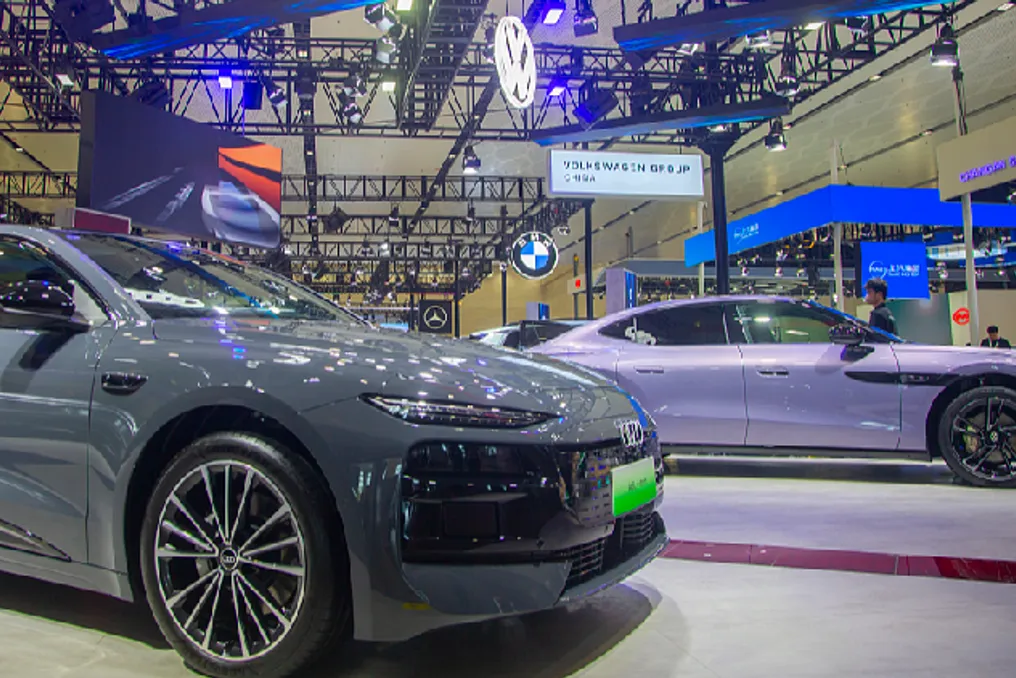
The global new energy vehicle (NEV) market is demonstrating rapid growth, with official representatives from China's Ministry of Industry and Information Technology stating that NEVs now account for over 25% of global car sales. This information was presented at the World New Energy Vehicle Congress in 2026 on Tuesday.
China's automotive market has entered a phase where NEVs have become a significant driver of growth in the country's automotive sector. Experts note that China has transformed into the main engine for global large-scale NEV development. In the first eight months of 2026 alone, NEV production and sales in China exceeded 10 million units.
Nevertheless, the development of the NEV market is uneven across different regions. The transition to electric mobility in Europe is steady: China Media Group (CMG) reported that in August 2026, registrations of battery electric vehicles in 16 major European markets exceeded 200,000 units, accounting for over 30% of the market. However, in developing regions such as Southeast Asia and the Middle East, NEV penetration remains below 10%, similar to major automotive markets including the US and Japan.
Zhang Xiuming, Secretary-General of the World Organization for New Energy Vehicle Development, pointed out that limited competition, relatively high prices, insufficient charging infrastructure, and policy fluctuations can influence the development of NEV markets and consumer confidence.
As the Chinese NEV industry expands rapidly, cooperation with international markets is deepening. Cooperation between China and Germany in the NEV sector is developing in a direction described by industry experts as 'bilateral strengthening,' moving beyond traditional market and production partnerships to joint research and technology development, as well as industrial chain coordination.
A recent survey by the German Chamber of Commerce in China showed that over the past two years, the share of German automakers conducting R&D in China to serve both Chinese and global markets has increased from 12% to 33%. Furthermore, 81% of German companies operating in China stated that localized R&D accelerated their development process.
Chinese NEV companies are also expanding into foreign markets, including Southeast Asia, bringing their manufacturing capabilities and industrial chains to local markets. CMG reported that seven Chinese automakers invested in factories in Thailand with a total investment exceeding $3 billion, according to information presented at the event.
Chinese companies are also engaging with local suppliers. Changan Automobile's plant in Thailand has established connections with over 40 Thai auto parts suppliers and attracted 10 key suppliers to open operations in Thailand.
According to the International Energy Agency's forecast in its Global EV Outlook 2026 report, global electric vehicle sales will reach 23 million units in 2026, accounting for nearly 30% of global new car sales. By 2035, the share of electric vehicles could approach 50% of global vehicle sales.
Experts believe that over the next decade, China will continue to leverage its strengths in the NEV industry, strengthen international cooperation, and offer more NEV product options to global markets.