
School experiment in Uttar Pradesh to combat mobile phone addiction causes alarm
Read more
Aaj Tak
www.aajtak.in

School experiment in Uttar Pradesh to combat mobile phone addiction causes alarm

The problem of children's dependence on mobile phones is growing. In schools in Uttar Pradesh, particularly in Hathim, an activity was conducted aimed at explaining the harm of excessive gadget use to children. However, the method proved so frightening that many children began to cry.

This incident occurred at Adarsh India Montessori School in Hathim, Udham Singh Nagar district. The school was trying to raise children's awareness about the dangers of mobile phones, games, and prolonged screen time. According to reports, as part of the activity, one child was covered with a red blindfold, creating the impression of bleeding from the eyes. The children were told that this child had lost their sight due to excessive phone use. Hearing this, the children panicked and started crying, expressing a desire to give up using mobile phones.

Following this incident, the Department of Education ordered an investigation into the circumstances of the case. Experts note that such methods are not effective in combating phone addiction, but the growing dependence of children on gadgets poses a serious threat.

A study published in the journal Indian Pediatrics in 2025 analyzed the time spent by children aged 3 to 14 over three months. The average screen time for children was about 2.62 hours per day, which significantly exceeds established norms. Of particular concern is that due to excessive phone use, children are becoming victims of virtual autism.

Younger children, especially those under five, show symptoms similar to autism due to intensive phone use. Although this is not a separate medical term, it has been named virtual autism. Dr. Vipinchandra Upadhyay from the pediatric department of Ghaziabad district hospital notes that excessive phone use leads to the child not maintaining eye contact during conversation or when looking at the interlocutor, and also exhibits strange behavior characteristic of phone use. This problem has intensified over the last four or five years, and its prevention is extremely important.

For prevention, it is recommended not to give phones to children, as they are unnecessary for children under five. It is also important to communicate regularly with children, take them out for walks, and seek treatment if any signs of a problem appear.
Similar stories

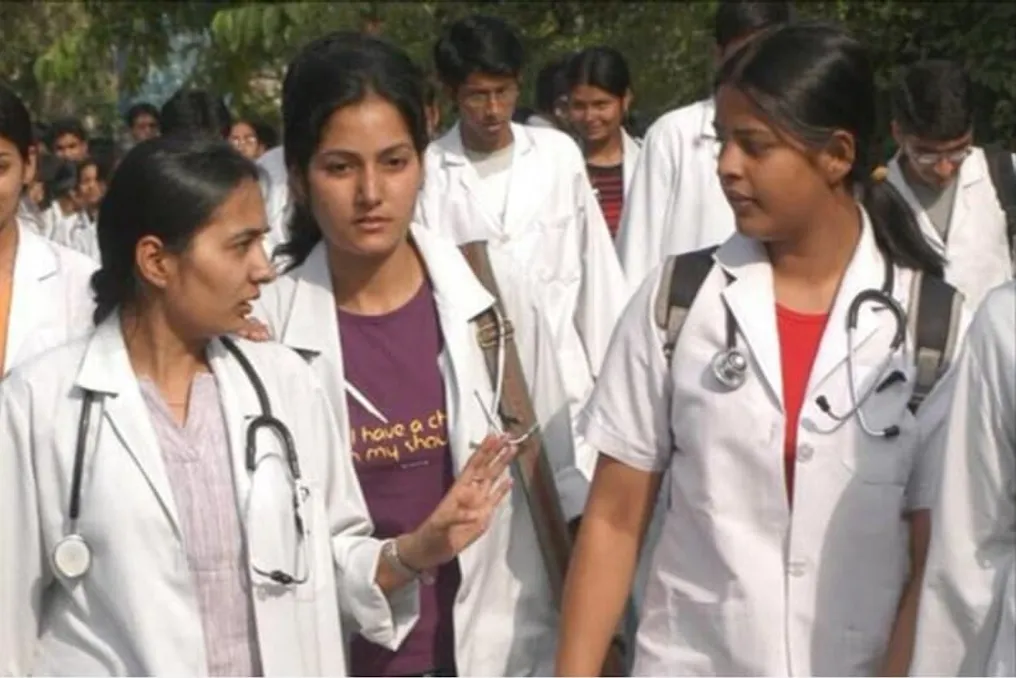
NEET-PG 2026 Results Announced: Information on Qualification, Scores, and Rankings Available on NBEMS Website
Read more
www.aajtak.in

NEET-PG 2026 Results Announced: Information on Qualification, Scores, and Rankings Available on NBEMS Website

The wait for millions of medical candidates has ended: the National Board of Examinations in Medical Sciences (NBEMS) has officially announced the results of the NEET-PG 2026 examination. Applicants can check their scores and rankings on the official website of the board at natboard.edu.in.

This examination was conducted for admission to postgraduate medical courses such as MD, MS, DNB, and others, for the academic year 2026-27. The main examination day took place on August 30, 2026, across the country. However, for 2,416 candidates whose exams were affected by a power outage at the ION Digital Zone Center in Sitapura, Jaipur, a re-examination session was organized on September 5.

A total of 283,544 students participated in the exam on August 30. The board emphasized that after conducting the test, both sets of questions were re-verified by faculty members and experts in the respective disciplines. The verification showed no technical errors or inaccuracies in either the answer keys or the questions themselves.

Threshold values have been published for various categories. For General and EWS categories, the minimum qualifying percentile was 50th percentile, and the threshold score (out of 720) was 262 marks.

For the General - PwBD category (Persons with Benchmark Disabilities), the minimum qualifying threshold was set at the 45th percentile, and the required score was 244 marks. In the SC / ST / OBC category (including PwBD), the minimum qualifying threshold was 40th percentile, and the required score was 226 marks.

Students will be able to download their individual result sheets from the board's website starting from October 1, 2026. These sheets will only be available on the website for six months from the date of issuance; after this period, requests to send the sheets via email or post will not be accepted.

As per the Supreme Court order, starting from October 1, 2026, applicants will be able to check the question ID, correct answer ID, and their own answers through their login in the system.

In addition to the All India Rank, final admission lists for state quota seats will be published separately by the respective states and territories according to their policies regarding admissibility and reservation.

If an applicant has any questions or issues related to the results, they can contact the NBEMS helpline at 011-45593000 or submit a request through the communication web portal.

Popular