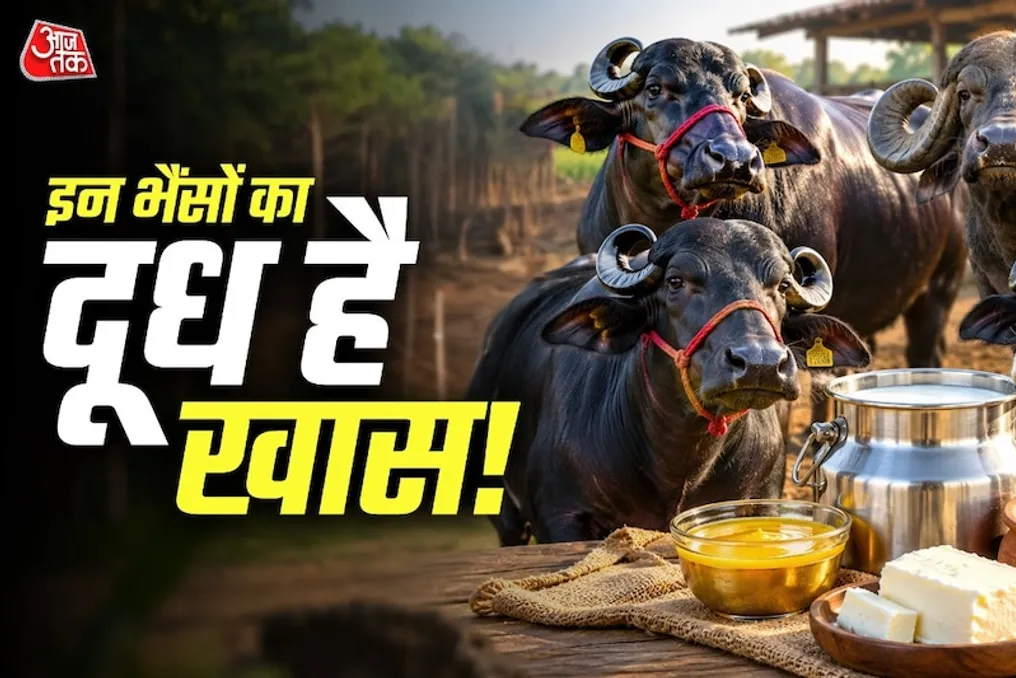
When planning a business for the production and sale of oil and ghee from milk, the choice of buffalo breed plays a significant role. Since the higher the fat content in the milk, the better the potential for producing oil and margarine, the demand for breeds that yield high-fat milk remains high in the livestock industry.
According to a livestock report, among the breeds with high milk fat content, Murra, Jaffarabadi, Nili Ravi, and Bhadawari are highlighted. The milk of these breeds is distinguished by a higher fat content compared to other breeds, allowing it to be used for making ghee, oil, and other dairy products.
The Bhadawari buffalo is known for its high-fat milk. According to the report, its milk can contain between 8 and 13 percent fat. Due to this high fat content, products such as oil and ghee can be produced from this milk. The Bhadawari breed is mainly found in certain areas of Uttar Pradesh and Madhya Pradesh. Farmers starting a small dairy or oilseed business may consider this breed as an option.
The Jaffarabadi buffalo is one of the main breeds of Gujarat. It is characterized by a large body structure and is known for its ability to produce a large amount of milk. The report indicates that Jaffarabadi milk contains about 7-9 percent fat. This allows for the production of oil and ghee from it. This breed can be an alternative for farmers who want to sell value-added products instead of raw milk.
The Murra buffalo is one of the most discussed dairy breeds in the country. It is raised in many regions, including Haryana and Punjab. It stands out in the dairy industry due to its high milk productivity. According to the report, Murra milk contains approximately 7-8 percent fat. This means its milk can serve as good raw material for producing oil and ghee. The appeal of the Murra lies not only in its fat content but also in its overall productivity, so farmers often prefer this breed in the dairy business.
The Nili Ravi buffalo is primarily associated with the Punjab region. It is valued for its high milk yield and good milk fat content. The report states that its milk contains between 6 and 8 percent fat, making it suitable for producing dairy products like oil and ghee. Nowadays, there is the possibility not just to sell raw milk, but to create and sell products such as ghee, oil, and cheese. Ghee, in particular, can be packaged and delivered to online customers. However, before starting an online business, all expenses must be considered, including the cost of milk, animal feed, costs for ghee extraction, packaging, delivery, and marketing. High fat content alone does not guarantee profit.
When purchasing a buffalo, the decision should not be based solely on the breed name. It is also important to consider the animal's age, health condition, current lactation period, previous performance indicators, feed availability, and local weather conditions. Furthermore, the volume and percentage of fat in the milk vary from one individual to another. Therefore, it is recommended to consult a veterinarian or experienced livestock breeder before purchasing. Overall, if a farmer intends to expand their business by producing oil and ghee from milk, studying breeds with high fat content such as Murra, Jaffarabadi, Nili Ravi, and Bhadawari will be beneficial. However, before starting the business, it is essential to conduct calculations of the local market and all expenses.
If you want to start a ghee sales business online, the first priority is to obtain registration or a license from FSSAI. The requirements for this depend on your turnover volume and type of activity. The quality of the ghee must also comply with established FSSAI standards. According to the rules, ghee must contain no less than 99.5 percent milk fat and no more than 0.5 percent moisture. Additionally, other standards and tests are set to verify the purity of the ghee. The ghee packaging must clearly state the product name, FSSAI license number, batch number, net weight, manufacturing date, and expiration date or best-by date. Adherence to hygiene and cleanliness rules during the production, packaging, and storage of ghee is also mandatory. Even when selling ghee through e-commerce platforms such as Amazon or Flipkart, FSSAI norms apply. Thus, for successful online ghee sales, not only a quality product but also compliance with FSSAI licensing requirements and labeling rules is necessary.