US extends trade truce with China until January 10 after meeting in Washington
Read more
Noticias ao Minuto
noticiasaominuto.com

US extends trade truce with China until January 10 after meeting in Washington

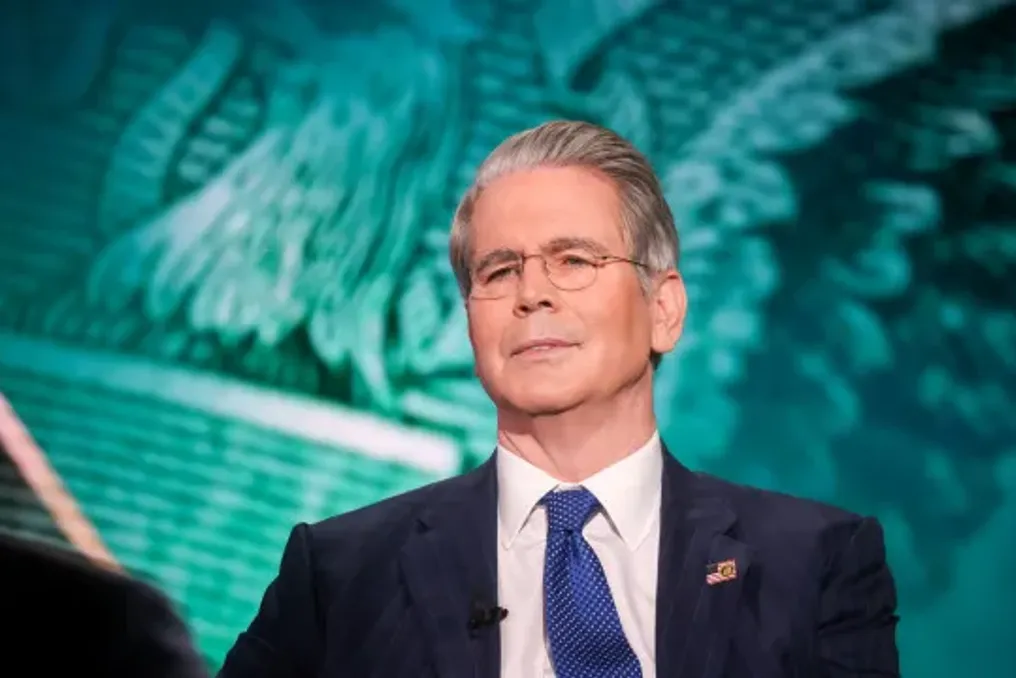
The United States announced the extension of the economic détente with China until January 10. Secretary Scott Bessent confirmed this decision in an interview with Fox News, stating that the extension aims to allow more time to evaluate possibilities in the economic plan, given that the original agreement would expire on November 10.

This announcement came after a meeting held in Washington between Scott Bessent and Chinese Vice Premier He Lifeng. Bessent mentioned on X that they held important discussions about the economic relationship between the US and China.

The conversations, according to him, remained focused on ensuring relevant commitments that benefit American workers, farmers, and businesses, while also promoting the country's national and economic security interests.

Xi Jinping arrived in Washington for his first visit to the United States in over ten years. In an unusual gesture for an American president, Trump personally went to the runway at Andrews Air Force Base, near Washington, to receive his counterpart, instead of waiting for the guest's arrival at the White House during his first state visit to the capital.

In an effort to honor the Chinese leader, the American President and First Lady, Melania Trump, participated in the reception ceremony for Xi and his wife, Peng Liyuan. This three-day visit is scheduled to be quite ceremonial, even by White House standards.

The state visit, which includes an official dinner at the White House on Thursday, seeks to mirror the ceremonial pomp that occurred during Trump's visit to China in May.

This ostentation occurs during a period of high tension between the two geopolitical rivals, driven by issues such as trade, artificial intelligence, Trump's confrontation with Iran, and China's aspirations regarding Taiwan.

Besides seeking to maintain 'strategic stability' between the nations, Trump has praised Xi, referring to him as a 'great leader' and describing the relationship as warm, addressing him as a friend. However, he avoids confronting the Chinese president on sensitive issues, despite internal pressure from his own party.

Republican Senator Roger Wicker, chairman of the Senate Armed Services Committee, criticized the 'sumptuous reception' given to Xi, raising doubts about 'China's massive military expansion goals or clear support for Iran.' Wicker argued in a Senate speech on Tuesday that Trump should not have invited the Chinese leader, 'given all the worrying issues we have regarding President Xi and the Chinese Communist Party.'

On the other hand, U.S. Secretary of State Marco Rubio argued that Washington and Beijing need to interact at the highest levels, given that they are 'the world's two largest economies' and 'probably the world's two greatest military powers.' Rubio told journalists in New York that 'the idea of not interacting with them at the highest levels is irresponsible. It is absurd. We must do it.'

Xi's reception at the airport will be followed on Thursday by other formalities, including arrival at the White House and an inspection of troops. It is expected that the two leaders will privately discuss issues such as trade and artificial intelligence (AI) before a gala dinner, which will feature figures from the technology sector, such as Jensen Huang (Nvidia) and Elon Musk (SpaceX).

On Friday, Xi and Peng will return to the White House for tea with the Trump couple before being taken on a tour of the National Archives in Washington. The White House announced that they will examine historical documents that illustrate the relationship between the two countries.


Similar stories

Government lowers import duties on vegetable oils to stabilize prices ahead of holidays
Read more
www.aajtak.in

Government lowers import duties on vegetable oils to stabilize prices ahead of holidays

Amid global tensions and persistent inflation risks, the government has made a significant decision. The Modi government has reduced the basic import duty on raw and refined edible oils. This decision, made just before the start of the holiday season, may lead to lower prices for edible oils.

The official notification of these measures was published late Wednesday evening. According to a Reuters report, prices for various types of edible oils, including palm, soy, and sunflower oil, are expected to decrease during the festive period.

As part of measures to reduce prices for the public during the holidays, the government has lowered duties on raw oils. According to the government notification, the basic import duty on raw palm oil and raw soybean oil was reduced from 10% to half, i.e., to 5%. Furthermore, the import duty on refined palm and soybean oil was lowered from 32.5% to 27.5%.

For raw sunflower oil, the import duty was reduced from 10% to zero. As for refined sunflower oil, the duty was decreased from 32.5% to 22.5%. It was also announced that the total import duty on raw palm oil and raw soybean oil will be 11%, compared to the previous 16.5%.

Over the past year, prices for vegetable oils in India have risen by approximately 20%. Thus, this substantial reduction in import duties introduced by the government should help bring down prices. This means that during the major religious holidays from September to November, consumption of sweets, snacks, and fried foods may increase.

According to traders, the rise in demand in India will support futures prices for Malaysian palm oil and US soybean oil internationally. India covers about two-thirds of its vegetable oil demand through imports. Specifically, palm, soy, and sunflower oils are imported from Malaysia, Indonesia, Argentina, Russia, and Ukraine.

Ashish Acharya, Vice President of Patanjali Foods Limited (PAFO.NS), noted that the duty reduction will benefit sunflower oil the most, making it more attractive to processors. This could potentially lead to some decrease in demand for soybean and palm oils.

Financial documents reveal details of the deal between TVS and Hanno, including a 29-year lease agreement and a custom build model
Read more
yourstory.com

Financial documents reveal details of the deal between TVS and Hanno, including a 29-year lease agreement and a custom build model

According to documents studied by the publication YourStory, the commercial relationship between TVS Motor Company and Hanno One Warehousing, a company associated with the family of Tata Sons Chairman N Chandrasekaran, turned out to be more extensive than previously assumed.

Hanno One Warehousing was registered in March 2025. Its board of directors includes N Chandrasekaran's wife, Lalita Chandrasekaran, and his son, Pranav Chandrasekaran. According to MCA records, the company's activities are focused on warehousing and storage operations, including the storage of various goods such as automobiles, furniture, chemicals, and textiles.

Hanno's annual report, Ministry of Corporate Affairs (MCA) filings, and approved project plans demonstrate that TVS Motor entered into a 29-year lease agreement with Hanno for a plot of land measuring 17.41 acres in Uddanapalli village, Krishnagiri district, Tamil Nadu state. The documents also contain details of a project worth approximately 106 crore rupees, including planned financing, and indicate that Hanno is considering a similar custom build model in Mysuru.

YourStory has sent queries to Hanno One Warehousing, former TVS Motor Chairman Venugopal Srinivasan, TVS Motor, and Tata Trusts. These queries concern Hanno's selection criteria for the project, the existence of a competitive process, the commercial viability of this arrangement, disclosure of relationships, and consideration of withdrawing from discussions upon Chandrasekaran's reappointment.

These documents add detail to the commercial ties that are under scrutiny amid the corporate governance dispute at Tata Sons. Srinivasan is a director of Tata Sons, Vice Chairman of Tata Trusts, and a member of the Tata Sons Nomination and Remuneration Committee, which assesses the performance of the Tata Sons Chairman. He supported N Chandrasekaran's new five-year term at the board meeting on September 17, while Tata Trusts Chairman, Noel Tata, opposed his reappointment.

Initially, the relationship between TVS and Hanno was reported by the publication Mint, which stated that TVS Motor leased about 17 acres in Krishnagiri from Hanno three months after the company's registration. Tata Sons stated that Hanno's registration was disclosed to companies where Chandrasekaran serves as chairman in April 2025, insisting that this specific deal with TVS did not require separate disclosure because TVS Motor is an independent public company without dealings with Tata group companies.

Tata Trusts reported that Srinivasan made no disclosures to its trustees regarding the TVS-Hanno deal. Under the Krishnagiri project, TVS Motor leased 17.41 acres from Hanno for 29 years. Subsequently, Hanno entered into an agreement with TVS Motor, listed in the annual report as a client, to construct an industrial shed of 330,418 sq ft on the same site. Upon completion, TVS is expected to occupy the facility and pay rent to Hanno. Thus, this arrangement makes TVS simultaneously a lessor of the base land and a client for the facility being developed by Hanno.

Hanno expects rental income from this project to commence in November 2026. Hanno's annual report indicates that Pragati Infra Solutions was appointed as the contractor for design, procurement, and construction for 76.85 crore rupees, excluding GST. MCA mortgage records reviewed by YourStory show the registration of a mortgage of 60 crore rupees in favor of HDFC Bank. The remaining funding is expected to come from a combination of equity, director loans, mandatory convertible bonds issued to shareholders, customer deposits, and bank financing.

Hanno contributed paid-up share capital of 10 lakh rupees for the period covered by its first annual report. The report states that the company borrowed 10.86 crore rupees from one of its directors for partial funding of the Uddanapalli project and financing the acquisition of industrial land in Mysuru. The section describing the loan does not specify which director provided the funds.

Separate approved building plans viewed by YourStory provide a more detailed picture of the development in Uddanapalli. The plans cover cadastral numbers 475, 476, 477, 478, 834, 835/2B, 839/1, 840/1, 841/1, 842/1A, 918/1A, and 918/2B2. They include a factory building of 28,072 sq m, a mezzanine office and dining area of 2,952 sq m, a warehouse building of 4,229 sq m, and auxiliary infrastructure. The total built-up area indicated in the plans is approximately 35,647 sq m, or about 3.84 lakh sq ft. The development is classified as light engineering industry category Orange, excluding manufacturing and forging.

The site plan also includes a substation, wastewater treatment plant, fire reservoir, kindergarten, internal roads, and parking for 44 trucks and 430 two-wheelers. The required equipment capacity is 1,500 kW. The total built-up area of 3.84 lakh sq ft shown in the approved plans exceeds the 330,418 sq ft industrial shed area mentioned in Hanno's annual report. The reason for this discrepancy is unclear from the presented documents; it may reflect office, warehouse, or utility areas not included in the industrial shed metric. YourStory has requested clarification from Hanno.

The annual report also hints that Hanno plans to expand beyond its first project in Krishnagiri. The Karnataka Industrial Area Development Board has allocated industrial land in Immavu, Mysuru, valued at approximately 27 crore rupees to the company. As of the report date, Hanno has invested 7.91 crore rupees for this land and stated that it is negotiating with potential clients for the development of industrial sheds and leasing facilities using the same custom build model.

The document states that the company intends to grow its operations and asset base in the coming years. The allocation of land in Mysuru indicates Hanno's ambition to replicate this model outside the Krishnagiri project. The scale of the proposed development in Mysuru and the identities of potential clients were not disclosed in the report.

The TVS-Hanno relationship attracted attention because Srinivasan was involved in the Tata Sons board decision-making process regarding Chandrasekaran's reappointment. The issue of disclosure remains contentious. Tata Sons' position is that Hanno's registration was disclosed, and the specific deal with TVS did not require disclosure to Tata Sons. Tata Trusts stated that Srinivasan made no disclosure of this deal to its trustees. Tata Trusts also told Mint that it cannot definitively state whether disclosure was made to the Tata Sons board, as it lacks independent access to board meetings.

Tata Trusts added that if the allegations prove true, it will assess its institutional response and take appropriate action. A broader disagreement between Tata Sons and Tata Trusts extends beyond Hanno and includes Chandrasekaran's reappointment, the proposed listing of Tata Sons shares, and wider corporate governance, listing, and shareholder rights disputes.

UAE's public debt decreased amid global debt reaching record high of 1.339 trillion dirhams
Read more
www.khaleejtimes.com

UAE's public debt decreased amid global debt reaching record high of 1.339 trillion dirhams

According to the latest Global Debt Monitor from the Institute of International Finance (IIF), the public debt of the United Arab Emirates (UAE) decreased to 31 percent of GDP in the second quarter of 2026, compared to 32.9 percent the previous year.

This figure is among the lowest among major economies included in the report. At the same time, the IIF warned that global debt exceeded the mark of $365 trillion (equivalent to 1.339 trillion dirhams).

Although government borrowing relative to output volume decreased, other sectors of the UAE economy increased their debt burden. The financial sector's debt grew to 55.8 percent of GDP from 51.9 percent, which was the most significant increase among all sectors in the country. Corporate debt of non-financial companies also rose to 53.6 percent from 52.7 percent, and household debt increased to 25.8 percent from 24.2 percent.

In Saudi Arabia, public debt increased to 34.3 percent of GDP compared to 28.9 percent the previous year, representing an increase of 5.4 percentage points. The financial sector in the Kingdom increased its debt to 13 percent from 10.2 percent, corporate debt reached 46.6 percent from 45.2 percent, and household debt rose to 31.7 percent from 31.2 percent.

The IIF noted that Saudi Arabia is among the leading issuers of emerging market sovereign Eurobonds this year, alongside Mexico, Poland, and Turkey. The Kingdom's foreign currency public debt stands at 13.3 percent of GDP, and this entire amount is denominated in US dollars.

Across the Middle East, the average public debt was 35.9 percent of GDP, higher than 32.3 percent. Kuwait's debt rose to 18.6 percent from 8.8 percent, and Bahrain's rose to 150 percent from 139.4 percent.

Globally, debt increased by more than $10 trillion in the first half of 2026. This is less than half of the increase of $21 trillion during the same period last year. The IIF explains this by stating that higher interest rates, sharp increases in energy prices, and the conflict with Iran have put pressure on borrowers.

Most of the growth is attributed to emerging markets, where debt increased by $6.5 trillion, reaching over $110 trillion, with China leading this growth. Excluding China, emerging market debt reached a record $38 trillion.

The ratio of global debt to GDP is about 310 percent, which is approximately 25 percentage points lower than the peak at the beginning of 2021. The IIF cautions that this reflects nominal growth due to inflation rather than a real reduction in debt burden.

Average costs for government borrowing in G7 countries are the highest since mid-2008, with annual interest expenses nearly 85 percent higher. Developed economies paid over $3.3 trillion in interest on international government bonds last year. This amount exceeds estimated global spending on defense ($3.1 trillion), artificial intelligence ($2.6 trillion), and clean energy ($2.3 trillion).

The IIF points out that persistent deficits in the US, France, the UK, and Japan replicate problems long associated with developing markets under debt stress. It warns that elections, including midterm elections in the US and national elections in France, Spain, and Italy in 2027, could weaken fiscal discipline.

Corporate debt of non-financial companies in the US reached $24 trillion amid a surge in AI-related borrowing. Private credit now accounts for just over 5 percent of this debt, compared to about 1 percent in 2014. The IIF found little evidence that AI-related bond issuance is displacing government borrowing but noted that the situation could change if corporate bond ages increase.

The IIF forecasts that healthcare, energy, AI, and IT expenditures, along with defense, will total about $25 trillion this year, roughly one-fifth of global output. It notes that the growing share of these expenditures will be financed through markets, indicating a sustainable future for bond placement. Rising healthcare and state pension costs create additional pressure on public finances.

Emerging markets face record $3.5 trillion in debt repayments in 2026, yet financing conditions remain favorable. A weaker dollar has helped, and even vulnerable borrowers like Bolivia and Gabon have returned to international markets. The IIF urged governments to use this period to strengthen investor relations and noted that Senegal's debt restructuring under the Common Framework will be a key test for emerging country sentiment.

The ESG debt market reached approximately $9 trillion by mid-September, up from $7.8 trillion at the end of 2025, with green bond issuance expected to set an annual record.

Popular