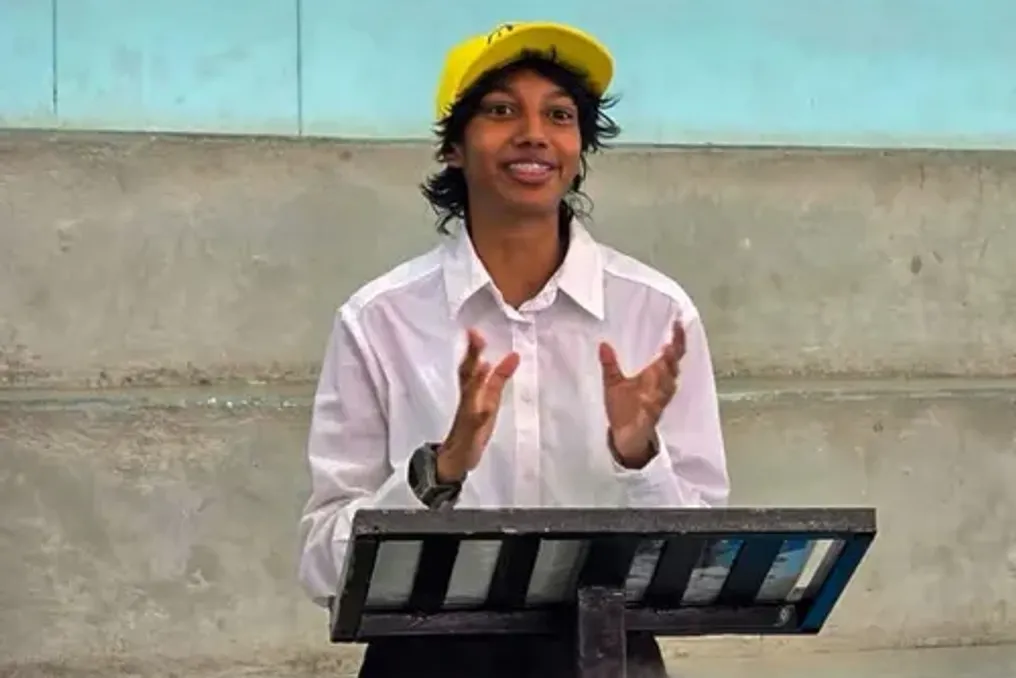
Heritage Day is a time when South Africans gather to celebrate the rich diversity of South Africa's cultures, languages, and traditions. During shared meals and in traditional attire, young people spoke to POST about how they navigate a dual identity—South African and Indian—and how this affects their self-awareness and cultural appreciation.
Abigail Pillay, a 20-year-old Christian from Queensburg, is a great-great-granddaughter of Padavatan Six, who helped rescue people during the Umngeni River flood in Durban in 1917. She believes that knowing her family participated in helping others in a difficult time makes the heritage very real. For her, heritage is the story of ancestors and the values they left behind, which gives her an understanding of her origins and a connection to generations of people who lived and built life in South Africa.
Abigail's great-grandfather, Gangan Padavatan, embodies values such as courage, resilience, compassion, and helping others. She emphasizes that heritage is not just a memory of ancestry but also a remembrance of what kind of people they were.
Abigail does not separate her Indian heritage from her South African identity. She sees them as 'two sides of one story': her Indian background represents the roots, and South Africa is the country where those roots grew. Her great-grandfather, being part of the Indian community in Durban, became part of the broader history of South Africa through his actions during the 1917 floods, which she takes pride in.
Dinisha Danaee, a 30-year-old travel consultant from Durban, states that heritage serves as a 'living compass that anchors my identity and guides my path forward.' She defines heritage as a vibrant tapestry of culture, values, family stories, and traditions passed down through generations, encompassing both material things (recipes, photographs) and intangible aspects (music, language).
Danaee notes that heritage provides a sense of rootedness in a rapidly changing world, offering context to her personality and reminding her of belonging to something larger. She believes that maintaining heritage is a conscious responsibility that requires actively passing down stories and values to the next generation.
Junaid Rahim, a 23-year-old sports science and management specialist from Phoenix, shares that through sports, he has made friends of different races, many of whom have been interested in his Indian culture. He notes that for him, heritage means his identity as an Indian Muslim in South Africa, including cultural beliefs, values, faith, and traditions. He practices his heritage through prayer and striving to follow the core values of Islam.
Darshan Reddy, a 30-year-old entrepreneur from Durban, upholds his heritage through family, traditions, food, and religious practices. He believes that the beauty of South Africa is that individual cultures can be embraced while remaining part of one diverse nation. He stresses the responsibility of each generation to preserve positive traditions and values.
Timika Keandra Reddy, a 27-year-old lawyer from Queensburg, says that her Indian roots and South African identity do not contradict each other. Her Indian heritage speaks to her origins, while her South African identity speaks to where she belongs. She mentions that South African Indians endured forced labor, discrimination, and apartheid, but also fought against injustice.
Kelita Shaidin Singh, a 19-year-old model and content creator from Phoenix, believes that heritage is a reminder of her roots, the people, and the values that shaped her personality. She says that heritage must not only be preserved but also carried forward by creating one's own story.