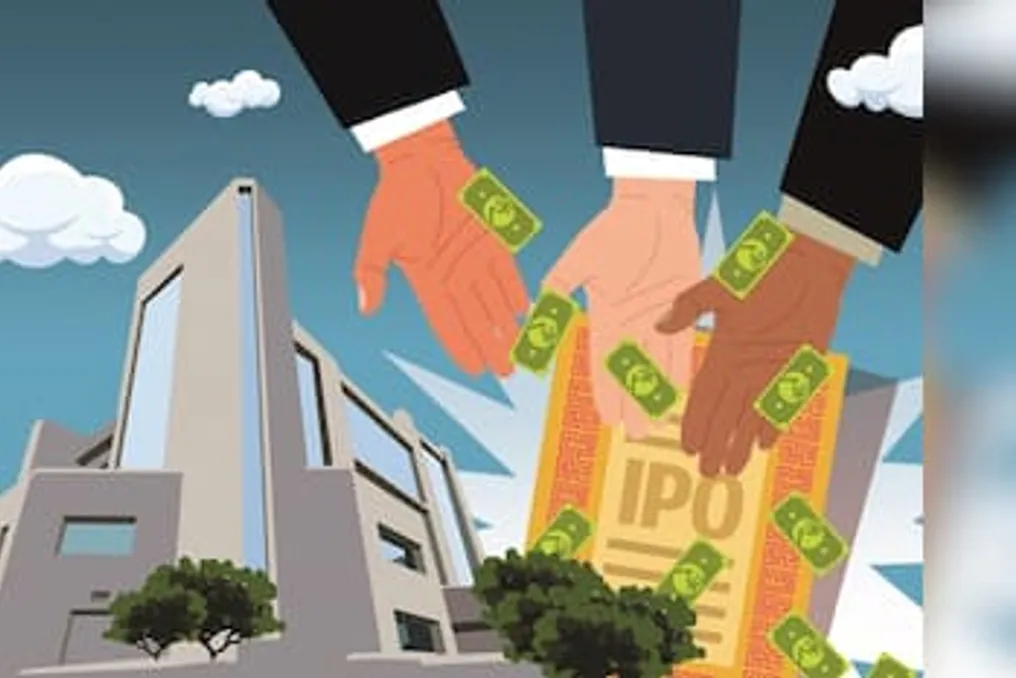
NSE Valuation Nearly Double the Combined Market Capitalization of BSE, MCX, and IEX
Read more
Business Standard
business-standard.com

NSE Valuation Nearly Double the Combined Market Capitalization of BSE, MCX, and IEX

The Initial Public Offering (IPO) of National Stock Exchange (NSE) has positioned it among India's most valuable companies and cemented its status as the country's largest exchange by market capitalization. Valued at ₹4.45 trillion at the time of listing, NSE was twice as expensive as the combined market capitalization of BSE, Multi Commodity Exchange (MCX), and Indian Energy Exchange (IEX).

The combined market value of these three exchanges amounted to ₹2.28 trillion. At 10 am, the market capitalization of BSE was valued at ₹1.31 trillion, MCX at ₹86,875 crore, and IEX at ₹9,973 crore.

On the debut day, NSE shares traded at ₹1800, which was 0.84 percent higher than the IPO price of ₹1785. According to Vinita Bolinjkar, Head of Research at Ventura, this valuation reflects NSE's dominant position in the market, high profitability, and network-based business model.

Bolinjkar noted that compared to competitors like BSE, MCX, and IEX, NSE operates a broader ecosystem of multi-active exchanges, covering stocks, derivatives, currencies, debt, clearing, indices, data services, and technology solutions, giving it an advantage.

Harshal Dasani, Business Head at INVasset, pointed out two aspects to watch on the first day of trading: the maintenance of thin retail volume and the purchase of the remaining order book by institutional investors in the secondary market.

NSE is also India's largest exchange by trading volume, accounting for 92.99 percent of the cash market turnover for the financial year 26, 99.79 percent in stock futures, and 74.71 percent in stock option premiums.

How should investors approach the exchange business?

Dasani believes that exchanges function like toll roads for activity, making them the best business model in the financial services sector while being the most cyclical. Revenue is generated by two factors: trading volumes and commissions. Volume depends on the market cycle, whereas commissions are largely determined by regulators.

Dasani suggests viewing the exchange business through three lenses. First, regulatory risks must be monitored. Changes in derivative lot sizes or trading fees can affect stocks more than quarterly earnings. He cites the example of IEX: its 85 percent market share is being re-evaluated as regulators move towards market convergence, lowering its valuation to 21 times earnings compared to nearly 50 times for competitors.

Second, one should support shareholders rather than active traders. In his view, at such a scale, growth is often achieved by capturing market share. He points out that BSE's profit grew by 62 percent in the June quarter, while NSE's profit declined by 15 percent for the financial year 26.

Third, valuations should be viewed as a bet on volumes. BSE and MCX, trading at multiples of 48–53 times earnings, require sustained activity growth to justify these ratios. The listing of NSE at around 43 times earnings for the financial year 26 could also set a benchmark for the sector.

He concludes that 'this structure suits patient capital that builds positions for a cycle, not for a quarter, and views every regulatory consultation document as a real income event.'

Similar stories

National Stock Exchange (NSE) Share Issuance Debuted on Market with Small Premium, Then Rose Sharply
Read more
www.aajtak.in

National Stock Exchange (NSE) Share Issuance Debuted on Market with Small Premium, Then Rose Sharply

The share issuance of the National Stock Exchange (NSE) entered the market, but its debut was rather modest. On Thursday, when the listing occurred, NSE shares appeared on the exchange with only a 1% premium compared to the IPO price range, which happened against the backdrop of a stock market crash.

Nevertheless, after a sluggish start, the shares experienced a sudden sharp rise. They soon climbed by more than 5%, reaching the mark of 1867 rubles.

The NSE IPO was open to retail investors on September 17, and the application period was extended until September 21. This large issue, amounting to 22,569.2 billion rubles, attracted 5.71 times interest over three days. The initial offering price ranged from 1700 to 1785 rubles.

Signs of a weak start for the NSE IPO were already observed earlier. Shares were trading in the grey market at a very low GMP. At the time of writing, shortly before the listing, the NSE IPO GMP was only 2.13%, corresponding to an increase of 38 rubles per share and an estimated listing price of 1823 rubles.

It is worth noting that the NSE IPO was the second-largest issuance in the country. The largest before it was the Hyundai Motor India issuance worth 27,870.2 billion rubles, and the third place is held by the LIC IPO worth 21,000.2 billion rubles.

Although the NSE IPO listing occurred with a smaller premium compared to the GMP figures, experts maintain high expectations for this asset. Macquarie rated NSE stock as 'outperform'. Furthermore, brokerage firms began highlighting NSE Stock, setting a target price of up to 1965 rubles.

After entering the stock market, NSE's MCap increased to 4.56 trillion rubles. Because of this, the National Stock Exchange became the tenth most valuable company in India, surpassing major enterprises such as Hindustan Unilever Limited (HUL), Infosys Limited, SunPharma, Titan Ltd, and Kotak Mahindra Bank Limited.

Regarding the overall state of the stock market, the Sensex and Nifty indices plummeted immediately after opening on Thursday. The BSE index, consisting of 30 stocks, showed a significant drop of 730 points by the time of the report. Similarly, the NSE index also fell by approximately 250 points.

Soach Global sells 20% of its stake in the National Stock Exchange of India after ten years of investment
Read more
yourstory.com

Soach Global sells 20% of its stake in the National Stock Exchange of India after ten years of investment

Soach Global plans to partially exit the National Stock Exchange of India (NSE) by selling 20% of its stake, which was acquired ten years ago. This partial sale could yield approximately 280–295 crore rupees. The fund will retain the remaining 80% of its shareholding, which was initially purchased in 2016 and has significantly appreciated due to corporate actions.

The offering is a sell-side offering, meaning existing shareholders are realizing their assets, and the NSE itself is not raising new capital. As of September 21, the subscription for the issue reached 5.7 times, and the listing is scheduled for September 24.

Soach's investments began in January 2016 when the fund acquired 1.5 lakh shares of NSE from IFCI for 59.25 crore rupees. Subsequent corporate actions increased the ownership volume to 82.5 lakh shares without additional investment, lowering the adjusted acquisition cost to approximately 71.8 rupees per share.

At the IPO price range, the entire stake is valued at approximately 1,403–1,473 crore rupees, representing about 24–25 times the initial outlay. However, only the partial sale is valued at approximately 4.7–5 times the initial investment.

Anubhav Dayal, founder and director of Soach Global Opportunities Fund, explained the sale, partly citing the expansion of the shareholder base. He noted that 'India is a fast-growing economy with a large young population eager for growth, who quickly absorb the risks and rewards of participating in capital markets.'

Dayal stated that the fund wishes more retail investors to own NSE either directly or through mutual funds. It is reported that the registered investor base of NSE exceeded 13 crore by April 2026, compared to 12 crore in September 2025.

Arguments for retaining the remaining stake are also linked to the breadth of NSE's activities and operational model. Dayal emphasized that 'as a multi-active trading platform, NSE will register revenue growth while operating at constant costs, most of which have already been incurred. It is a high-tech platform that executes trades in nanoseconds.'

NSE began electronic stock trading in 1994 and has since expanded its operations beyond stocks and debt to include equity derivatives, currency, interest rates, and commodities, as well as indices, data, and clearing services.

Nevertheless, there are important industry counterarguments. Although derivatives have become central to the exchange's operations in India, trading has recently come under closer regulatory scrutiny. Reuters reported that the average daily turnover for derivatives stocks fell by 27.1% in July 2026 to 1,70,000 crore rupees, the lowest level since November 2023.

SEBI is also reviewing the closed auction session and the settlement methodology for derivatives following volatility related to end-of-day pricing. Competition and product expansion are developing parallel to these regulatory changes. Competitor BSE is attracting increasing attention as a rival in the derivatives space, while commodity exchange MCX has expanded its range, adding Silver 100 futures in June and Rapeseed oil futures in August.

NSE sets IPO price band at ₹1700–₹1785; subscription begins September 17
Read more
yourstory.com

NSE sets IPO price band at ₹1700–₹1785; subscription begins September 17

The National Stock Exchange (NSE) has determined the price band for its highly anticipated Initial Public Offering (IPO) at ₹1700–₹1785 per share. Subscription for this offering will commence on September 17.

The total IPO size will be ₹22,569 crore and will conclude on September 21. This will make it the second-largest public offering in the country after Hyundai Motor India's offer of ₹27,870 crore in 2024.

This IPO takes place nearly a decade after NSE's plans to list were suspended due to regulatory hurdles. Now that approval has been received from Sebi, the exchange plans to debut in the market on September 24.

According to the public announcement, the auction for anchor investors will take place on September 16. The IPO will entirely consist of an Offer for Sale (OFS) of up to 12.64 crore shares among existing shareholders, which is less than the previously planned 14.9 crore shares.

The reduction in the OFS volume led to a decrease in the overall issue size from the initial estimate of ₹30,000 crore. At the lower end of the price band, the issue is valued at ₹21,494 crore, and at the upper end, at approximately ₹22,569 crore, which will prevent it from becoming the largest public offering in India.

The NSE IPO will surpass the Life Insurance Corporation of India's offering of ₹21,000 crore, which took place in 2022, but Hyundai Motor India retains the record for the largest public offering in the country with its ₹27,870 crore proposal.

As part of this offering, the company has reserved shares worth up to ₹70 crore for eligible employees. NSE employees will also be offered a discount of ₹170 per share.

Share allocation will include a 50% reserve for qualified institutional buyers, 15% for non-institutional investors, and 35% for retail investors.

According to the Red Herring Prospectus (RHP), existing shareholders have also reduced the volume of their stake sales. State Bank of India has reduced its proposed OFS to approximately 1.60 crore shares from 2.47 crore shares, and MS Strategic (Mauritius) Ltd has reduced its offer to 1.1 crore shares from 1.6 crore shares.

Bank of Baroda, Stock Holding Corporation of India Ltd, and General Insurance Corporation of India have also reduced the volume of shares offered for sale, while SBI Capital Markets Ltd is a new selling shareholder in the RHP.

Since the offering is entirely an OFS, the proceeds from the share sale will go to the selling shareholders, not to NSE itself.

This public offering marks a significant milestone for NSE after the market regulator Sebi granted the exchange permission to conduct the offering last week. Listing plans had been frozen for almost ten years due to regulatory issues, including a dispute over co-listing.

The NSE offering will compete with the Jio Platforms offer, a digital services division of Reliance Industries conglomerate led by billionaire Mukesh Ambani. The Jio offer is valued at ₹37,700 crore, although its timeline has not yet been announced.

Popular