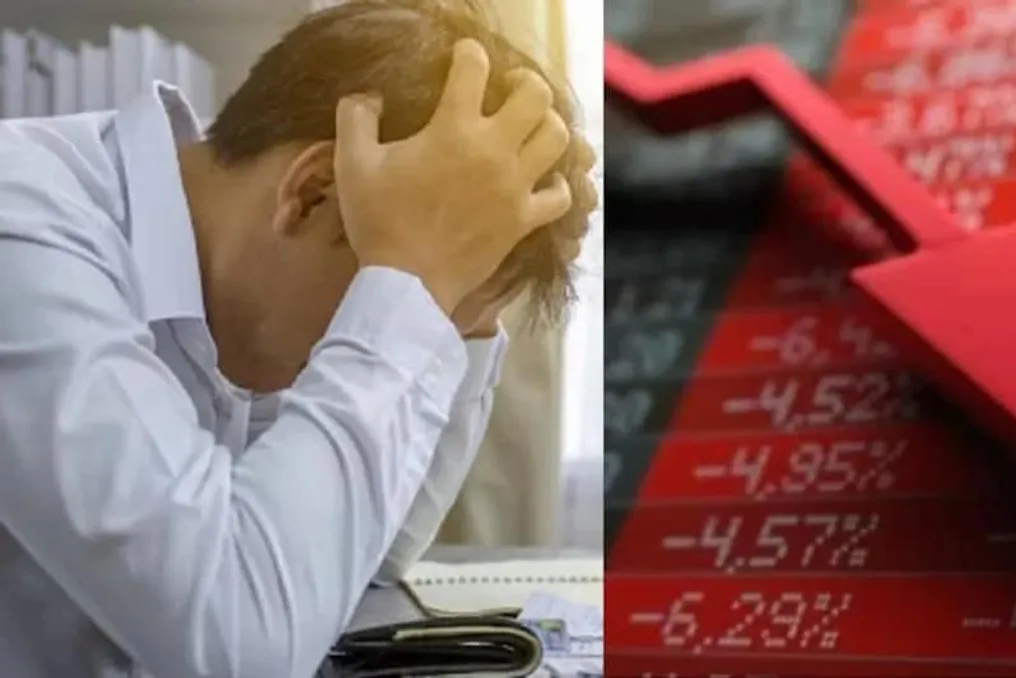
Indian benchmark indices began the trading session on Thursday with a decline, which was caused by rising bond yields, increased crude oil prices, and selling in the banking and insurance sectors.
The BSE Sensex index lost 707 points, or 0.94 percent, reaching a daily low of 74,120.62 points. By 9:25 AM, the three-component index had fallen by 575 points or 0.77 percent, standing at 74,251 points. Meanwhile, its counterpart on the NSE, Nifty 50, plummeted by 241 points or 1.02 percent, reaching the level of 23,205. According to the latest data, it was at 23,245, down by 201 points or 0.86 percent.
Most sectoral indices, with the exception of pharmaceuticals, showed a significant decline. The shares of the banking and financial sectors exerted the greatest pressure on trading.
Dr. V K Vijayakumar, Chief Investment Strategist at Geojit Investments, noted that the sharp rise in Brent crude oil prices above $102 and the increase in US 10-year bond yields to 5.11 percent would negatively affect the market. He added that as long as these two global risk factors persist, the prospects for a reasonable market recovery seem unlikely.
Key reasons for the stock market crash
There are several factors explaining today's stock market fall. Firstly, there was a surge in global bond yields, which caused concern among stock market investors. The yield on US 10-year bonds stabilized at 5.11 percent during the Asian trading session after increasing by 15 basis points in the previous session, marking the highest level since 2007. At the same time, the yield on Japanese government bonds rose by 8 basis points to 3.06 percent, a level not seen since August 1996. Higher rates reduce the attractiveness of riskier assets, such as emerging market stocks, like those in India.
Secondly, oil prices remain high. Despite a slight softening in oil prices during the day, they continue to hold above the $102 per barrel mark. Brent crude futures rose by 4 percent in the previous session due to the ongoing rift between Iran and the United States regarding the completion of their war. The Iranian President told the UN General Assembly that Tehran would never surrender to US pressure, according to Reuters.
Thirdly, the probability of an interest rate hike by the Fed is growing. US Federal Reserve officials maintained a hawkish tone amid rising inflationary pressures caused by higher oil prices. Federal Reserve Governor Michael Barr stated on Wednesday that the central bank's recent rate hike was part of efforts to adjust borrowing costs and signaled the possibility of further increases, according to a Reuters report. Now, CME FedWatch predicts a 69 percent probability of a Fed rate hike at the next meeting, up from 44 percent a month ago.
Fourthly, shares of banks and financial companies exerted downward pressure. Shares in the banking and financial sector faced intense selling pressure after IRDAI proposed reforming commission rules to limit payouts, tie them to product complexity, and extend insurer commissions for up to the first year of the policy.
Among the biggest losers in the Nifty 50 package today were HDFC Life, Bajaj Finance, Axis Bank, and Bajaj Finserv, which lost up to 8.5 percent. The banking and financial sectors constitute the largest weight in the Nifty 50 package.
Technical forecast
Shrikant Chauhan, Head of Equity Research at Kotak Securities, noted that Nifty formed a small bullish candle on daily charts and maintains a range-bound movement during the day. He added that the current market structure has no definite direction, and traders can expect sideways breakout. 'In the upward direction, the key resistance zone remains 23,500/75,000. Above 23,500/75,000, the market may move towards 23,600-23,650/75,800-76,000. On the other hand, below 23,250/74,300, selling pressure may intensify. Below this level, the market may slide to 23,150-23,000/74,000-73,600.'