Meta develops AI device called Muse Charm, inspired by Tamagotchi
Read more
Olhar Digital
olhardigital.com.br

Meta develops AI device called Muse Charm, inspired by Tamagotchi

Meta is in the process of creating exclusive hardware for its new artificial intelligence agent, named Muse. This device, dubbed Muse Charm, was briefly presented by the company's CEO, Mark Zuckerberg, at the end of his presentation during the Meta Connect event, held this Wednesday, the 23rd.

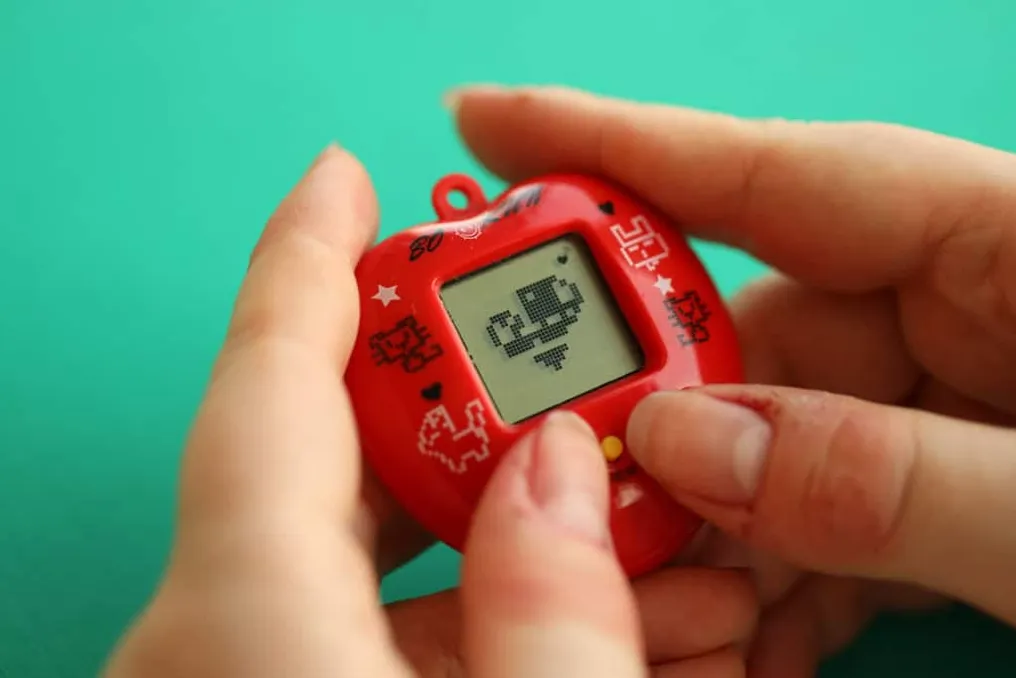
The device's design recalls a modern version of Tamagotchi, although it has a more robust structure. It resembles a smartwatch that does not require a strap, featuring a considerable screen size and a small stand to facilitate portability.

A crucial feature of the Muse Charm is that it can be operated without the need for a mobile phone. Meta plans to make the Muse Charm available for sale before the year-end holiday season, specifically in December.

Currently, the device development is in the preliminary phase. As reported by Zuckerberg, the company has produced only a limited number of prototypes so far and still needs to decide which material will be used for the product's finish.

During the presentation, Zuckerberg provided hints about the planned aesthetic for the Muse Charm. He emphasized several times the possibility of a transparent casing, which would allow visualization of the device's internal components. The executive characterized this look as an 'elevated hacker visual' and guaranteed that more information about the Muse Charm would be disclosed in the near future.

Similar stories

Meta launches AI assistant Muse, which achieves many downloads but creates conflict with Amazon
Read more
olhardigital.com.br

Meta launches AI assistant Muse, which achieves many downloads but creates conflict with Amazon

Meta has introduced Muse, a new personal artificial intelligence agent that has gained rapid acceptance in the United States. The application reached the top of the App Store and positively contributed to the company's stock performance, although it is already facing criticism regarding security, privacy, and access to third-party systems.

Within days of its launch in the American market, Muse surpassed 2.5 million installations, according to data provided by Sensor Tower. In response to this success, Meta's shares rose by 11% on Monday. Truist Securities projects that this feature could add US$ 28.5 billion (approximately R$ 146.4 billion) to the company's revenue by 2030.

To optimize its operation, Muse has the ability to access emails, calendars, and messages, implying that the user must deposit a considerable amount of personal data into the agent. A survey conducted by Oppenheimer & Co. illustrates this hesitation, indicating that only 8% of American consumers declared confidence in sharing their passwords with Meta, compared to 30% for Google.

Meta assures that the development of Muse prioritized security, stating that each agent operates on a dedicated and protected computer. Prior to the launch, Alexandr Wang, the company's head of AI, mentioned that the main concern was preventing leaks of personal data or accidental deletion of important emails.

Nevertheless, security concerns persist. Youssef Squali, an analyst at Truist, warned that a large-scale incident compromising credentials or credit card information could undermine trust not only in Muse but in the entire AI agent sector.

The first significant challenge for Muse arose in the e-commerce segment when Amazon blocked the agent on its website, preventing it from browsing or making purchases on behalf of users. Amazon stated that it had not received prior notice of such access nor authorized the action. An Amazon spokesperson emphasized that external applications making purchases for customers must operate transparently and respect the access permission guidelines established by the services.

Behind this block lies also a concern related to the business model. If AI agents start making purchases in place of individuals, users might have less exposure to pages displaying advertisements. For several analysts, this could generate resistance from major internet platforms, especially those whose revenue depends on advertising.

Meta, for its part, signals partnerships with Shopify, Instacart, and Dick’s Sporting Goods. Muse's advancement also generated reactions in other segments: there was a decline in the stocks of asset managers, brokers, and banks, with Charles Schwab registering a drop of over 6%. Booking Holdings and Allstate were also impacted.

Meta holds a crucial advantage, given that Facebook and Instagram offer vast distribution infrastructure, in addition to their services already accumulating data from millions of users. Currently, the only comparable product is the Instinct startup's agent, which is available only by invitation.

However, this landscape is expected to change soon. Analysts predict that OpenAI will announce a consumer-focused AI agent in the coming weeks. Google is also cited as a potential competitor, and Apple may enter this market later.

In this context of fierce competition, being a pioneer can be decisive. According to Ken Gawrelski, an analyst at Wells Fargo, the effectiveness of these assistants improves as consumers become familiar with them and direct their functionalities. Furthermore, Muse demands high computational capacity, as each agent runs on its own virtual computer, which represents a factor in the dispute; however, analysts cited by the Wall Street Journal indicate that Google possesses sufficient infrastructure to develop a similar solution.

So far, the rapid implementation of Muse has positioned Meta at the epicenter of this new dispute. However, the agent's success will not depend solely on the number of users, but also on the willingness of platforms to allow an artificial intelligence to perform tasks on behalf of their customers.

Meta tests use of outsourced human agents to complement AI agents
Read more
tecnoblog.net

Meta tests use of outsourced human agents to complement AI agents

Meta implemented a test using outsourced human agents in phone calls that would otherwise be managed by the Muse Artificial Intelligence agent. This experimental feature, called 'human concierge,' allows human collaborators to discreetly take over a call in certain situations.

The concierge concept aims to complement an existing capability in Muse, which already allowed users to use the assistant to contact establishments, schedule appointments, or check product availability, among other activities. These tests had been running since August.

According to messages obtained by the Reuters agency, the company itself clarified that 'Muse is now capable of forwarding requests to a trained agent, who makes the call and handles the entire process.' However, this operation with human support was halted after receiving internal criticism.

According to the agency's investigation, the internal complaints were motivated by concerns regarding user privacy. The main apprehension lies in the possibility of personal data and other sensitive information being exposed to outsourced customer service employees.

Although there is little detailed information about the exact functioning of the tool, the term 'discreet redirection' suggests that the change of control may not be clearly signaled to the user.

In response to the negative reaction, an executive from the Superintelligence Lab acknowledged in a subsequent statement that it 'was a failure' to start the tests with operators without providing proper transparency warnings. She confirmed that the novelty has been temporarily suspended.

On the other hand, spokesperson Daniel Roberts contested the agency's leaks, stating that the feedback received was 'overwhelmingly positive' and defending the system's refinement. He declared: 'We are working with merchants to continue refining this potential calling feature and will only launch it when it is ready.'

This persistence occurs parallel to the recognition that human intervention increased the tool's effectiveness, something common in customer service. An internal document indicated that the success rates of this new service range between 95% and 98%, a higher index than achieved by calls made exclusively by artificial intelligence.

This innovation follows the highly successful launch of Muse, which took the lead in the application download ranking in the United States, reaching over 2.5 million installations in the first two weeks. It is important to note that the application is not yet available in Brazil.

The assistant was designed to operate autonomously in routines such as sending emails, online shopping, and travel bookings, competing with other tools like Gemini Spark and Claude Cowork.

During its presentation, Meta strongly emphasized security, guaranteeing that each user would have access to an isolated 'virtual machine' in the cloud to protect sessions, and that sensitive credentials would be stored in specific encrypted vaults. Amazon is among the major companies that chose to block the agent.

Popular