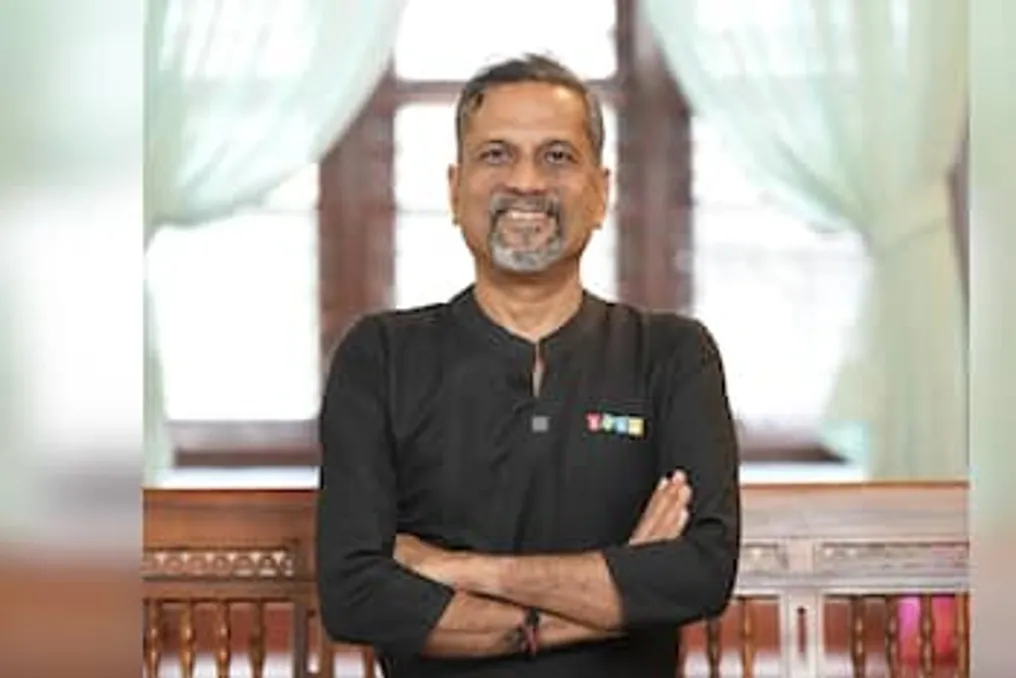
Zoho co-founder Sridhar Vembu stated on Wednesday that predictions of catastrophic consequences from artificial intelligence are exaggerated, and a worldwide halt to AI development is unlikely. He urged India to maintain its strategic capabilities and actively invest in fundamental research and development across all sectors.
Vembu emphasized that India should pursue an independent course in AI, utilizing partnerships but avoiding entanglement in the developing technological competition between the United States and China. "We must be friends with everyone, enemies with no one, and keep our options open," said Vembu, who is the chief scientist and co-founder of Zoho, in an interview with PTI.
He argued that any major technology company genuinely wishing to slow down AI development has the right to do so independently; no one can force the entire industry to follow its lead. Vembu expressed skepticism regarding calls from AI labs for an industrial pause, believing it is a tactic by some players to slow competitors while they build their advantage and strengthen market dominance.
In Vembu's view, the strategy is undermined by where the market is actually heading. Since there are too many competing models and token costs are rapidly falling, AI is becoming a commodity, which makes justifying valuations of one trillion dollars or more, based on the current 'token economy,' difficult. He added, "Suppliers who want to slow everyone else down have the freedom to slow themselves down. No one forces anyone to write code. For example, if I want to slow down, I can slow down myself; I don't need to ask the whole industry to do it."
Vembu remained cynical about the overall situation, asserting, "I look at this more cynically. These companies want everyone to slow down so they can move faster and monopolize the market."
These remarks came amid a broad discussion about the outcomes of rapid AI development after researchers and safety experts at leading companies, including OpenAI and Anthropic, publicly issued sharp warnings about potential risks from increasingly powerful advanced models, some of which raised the specter of catastrophic consequences for humanity due to AI risks.
Nevertheless, the US opposed the calls for a halt, as the Donald Trump administration argued that slowing down AI development could undermine US leadership and give an advantage to China. Vembu insisted that India should focus on large-scale investments in fundamental research and development, distinguishing between long-term scientific and technological capabilities and the huge sums global companies spend on developing and implementing advanced AI models.
He explained, "We need to make extensive investments in critical fundamental R&D. There is a difference between fundamental R&D and spending tens of billions of dollars on developing or implementing AI models." According to Vembu, such research should cover all sectors, and building fundamental capabilities does not necessarily require investments on the scale of advanced AI model development. He clarified, "It's not a $10 billion proposal; it can be done for $100–200 million."
Vembu stated that he does not share the predictions that AI will inevitably destroy humanity, although he acknowledged that concerns about risks associated with increasingly capable systems deserve more attention now than before. He stressed, "... Perhaps we can pay attention to this, but am I really worried about it? No, absolutely not."
His main concern relates to the erosion of human judgment and skills as people become increasingly dependent on AI tools, as well as the potential disruption of the labor market, especially in software development. Regarding regulation, Vembu suggested that governments will likely lag behind technological advancements, as was the case with previous technologies. He compared AI development to the early automotive industry, when cars became widespread before rules governing licensing, speed, and road safety were established. Consequently, he concluded that AI governance will evolve parallel to the technology itself, rather than necessarily preceding it.
Vembu also rejected calls for a global halt to AI development, arguing that such a movement would be difficult to implement because major AI labs would have little incentive to stop while competitors continue to develop the technology.
The key issue for Vembu is the impact of AI on skill development among young workers and students. Citing a study by the U.S. Bureau of Economic Research concerning lawyers, he noted that junior lawyers using AI tools completed tasks faster, but this did not necessarily foster or maintain the basic knowledge required for independent work. He suggested that the same dynamic might be observed among software engineers, while more experienced specialists were better prepared to use AI due to strong foundational training.
Therefore, Vembu proposed that Zoho might consider restricting access to AI for junior engineers until they master core skills and fundamentals. He believes a similar principle should apply in schools and colleges. "The priority must be for people to learn," he stated, arguing that workers must retain critical skills rather than outsourcing them to AI systems.
Vembu's comments are significant as this issue has broader implications for education and workforce development. He believes that while AI can boost productivity in the short term, excessive reliance on the technology during the learning phase can affect how effectively future workers acquire experience and apply independent judgment.
Vembu reported that while he uses AI, having several applications, he prefers to think originally and not surrender his judgment to AI. He explained, "I write myself. Checking a document for edits and language is fine. All my posts on X and my emails are my own (thoughts). I don't pass that to AI. That is the distinction I make."
Vembu does not expect AI to render entire professions obsolete, pointing to the continued importance of human judgment, responsibility, and context in fields such as medicine, law, and software architecture. He acknowledged that jobs in software development may come under pressure as AI capabilities increase, but argued that automation can also create demand in other areas of the economy. "I worry about the number of jobs in software development, but at the same time, I am optimistic that other job categories will expand to absorb us."
He described four broad "pillars" of sustainable human activity—nature, nurture, culture, and writing—covering areas such as agriculture, education, healthcare, entertainment, and sports, as well as religious life. His argument is that the cost reduction and productivity gains generated by automation can free up resources for sectors where human participation, judgment, and relationships remain central.