Numeral raises $100 million to expand AI-powered tax compliance platform
Read more
Ventureburn
ventureburn.com

Numeral raises $100 million to expand AI-powered tax compliance platform

Numeral has successfully raised $100 million in a Series C funding round. These funds will be used to scale its artificial intelligence-based sales tax compliance platform.

Insight Partners led this round, with participation from Salesforce Ventures, Geodesic, Benchmark, and Mayfield. Additional investors included FCVC, Y Combinator, and Uncork. This latest round brings Numeral's total funding to $157 million.

The San Francisco-based company plans to use the new capital to accelerate product development. Furthermore, it intends to expand its offerings across software, manufacturing, distribution, and wholesale sectors. Numeral also plans to grow its teams in engineering, sales, marketing, and product development.

Founded in 2023, Numeral was established by CEO Sam Ross and CTO Matt Duval. The company previously raised $35 million in a Series B round in September 2025.

The Numeral platform integrates a deterministic tax mechanism with automation and AI, managing various stages of tax compliance. These stages include nexus monitoring, registration, tax calculations, filing, and payment remittance.

Through the platform, businesses can manage exemption certificates and virtual mailbox services. Numeral supports VAT and GST compliance in over 90 countries and integrates with more than 40 payment and financial systems.

Reports indicate that clients can reduce registration and filing workload by up to 80%. The company also reports a 95% reduction in manual spreadsheet work and filing errors. Exemption certificate management tools can save businesses up to 400 hours annually.

The company notes that 30%–40% of submitted certificates may fail verification, which helps identify previously unnoticed compliance issues. The system provides growing companies with a centralized workflow for monitoring obligations, preparing declarations, and maintaining documentation across different jurisdictions as they expand.

The fundraising followed strong growth in Numeral's transaction processing activity. The company reported a 327% year-over-year increase in total transaction volume. Numeral expects its tax mechanism to process over 80 million transactions.

The company's client base is also expanding across various industries. Software, manufacturing, and distribution are adopting the platform fastest, as these sectors often face complex tax requirements in multiple jurisdictions.

Regulatory changes can also create additional compliance requirements for growing businesses. For example, California recently introduced changes affecting taxes on certain electronically distributed software. These changes are expected to impact software companies starting in 2027.

Numeral is also strengthening its partnerships with accounting firms. Therefore, companies need systems that allow them to track changing obligations in various markets. Numeral recently launched a program for accounting partners, enabling partners to recommend clients or resell the Numeral platform. They can also utilize the technology when providing their own services.

This approach keeps tax consultants involved in important client decisions. Numeral also provides access to internal specialists to resolve complex tax issues. The company asserts that this combines automated infrastructure with human tax expertise.

Numeral plans to extend this model as it enters additional industries. The latest funding will support broader product development and market entry, as well as provide resources to increase the company's international presence.

Numeral positions its platform for enterprises managing increasingly complex tax liabilities, anticipating growing demand for automated compliance across various markets, thereby reducing the burden on internal finance teams.


Similar stories

Ande raises $52 million to scale its AI-powered corporate entertainment network
Read more
ventureburn.com

Ande raises $52 million to scale its AI-powered corporate entertainment network

Ande, which has emerged from stealth mode, announced the raising of over $52 million in funding, combining seed and Series A rounds. Leaders of this round included Lightspeed Venture Partners, Redpoint Ventures, Duration Ventures, and Sierra Ventures; Bain Capital Ventures also participated in the financing.

The company's main goal is to service large enterprises' expenses for corporate events. These expenses include client dinners, team outings, sporting events, catering, and corporate gifts. Enterprises are estimated to spend around $325 billion annually on such activities.

Despite significant spending, the booking process remains fragmented across various systems. Ande solves this problem by integrating all these activities into a single corporate platform. Employees can book experiences while finance and legal departments maintain control over expenditures. The company spent two and a half years digitizing venue data.

The platform uses agent workflows to automate administrative tasks. These workflows can identify suitable venues, route requests for approval, and manage contracts. Furthermore, they support payments and expense reconciliation, significantly reducing manual work for teams managing corporate entertainment programs.

Ande provides a shared workspace for employees involved in corporate entertainment. Executive assistants and office managers can handle requests alongside marketing teams. Managers can also participate in approval processes through the same platform. Then, AI agents advance requests through stages of approval, signing, and payment.

Currently, the platform is used by over 60 enterprises. Among Ande's clients are Cloudflare, Salesforce, McGraw Hill, and Netskope. Other clients include Navan, Sigma Computing, Monday.com, Workato, and Semgrep. These clients account for over $400 million in annual entertainment spending through Ande, with clients reporting savings of 12% to 15%.

The platform also provides teams with better transparency regarding their entertainment programs. Ande's model addresses both sides of each transaction: companies gain procurement infrastructure, and venues gain access to corporate buyers. The company has also trained its AI model for enterprise-specific entertainment workflows.

Ande's network includes over 93,000 entertainment venues, and currently, more than 1,600 hotel properties are direct partners of the platform. Partners include Altamarea Group, Che Fico, and Gracious Hospitality. Other partners include JKS and The Mina Group. Tao Group Hospitality and Wolfgang Puck are also among its hospitality sector partners. Ande provides these companies access to corporate clients through a single distribution channel, as venues traditionally lacked specialized corporate sales networks.

Ande aims to fill this gap through its marketplace. The platform allows venues to offer their services to corporate buyers and interact with companies and manage transactions through the network. This forms a two-sided model for Ande.

Enterprises gain easier access to venues, and the hospitality industry gains corporate demand. Ande's new funding will be directed towards further developing its native AI platform, as well as expanding its network among corporate buyers and venues.

CEO Lohit Sarma emphasized that entertainment plays an important role in business relationships, highlighting its significance for culture, sales, and client interaction. Venture investors also see opportunities in this fragmented market.

Arif Janmohamed from Lightspeed Venture Partners described Ande as a bridge between companies and venues. Alex Bard, Managing Director at Redpoint Ventures, noted Sarma's experience in the enterprise space and the founder's ambition. Ande positions itself as the infrastructure for corporate entertainment, and its AI agents are designed to reduce the administrative burden across the entire booking process. The company's growth will depend on expanding both sides of its network.

}))
Factory raises $200 million at $5 billion valuation to scale AI software development
Read more
ventureburn.com

Factory raises $200 million at $5 billion valuation to scale AI software development

Factory has successfully raised $200 million in a new funding round, achieving a valuation of $5 billion. Investors in this round include Blackstone, Khosla Ventures, and Sequoia Capital. Insight Partners, Evantic Capital, and Sound Ventures also participated.

Factory was founded in 2023 by Matan Greenberg and Eno Reyes. Other investors included NEA, Mantis VC, and Clearlake. The round also attracted angel investors, including Nico Rosberg, Brad Gerstner, and Mark Benioff.

The new funding increases the company's total capital raised to over $400 million. This represents significant growth compared to the $1.5 billion valuation set in April. Thus, in five months, Factory's valuation has more than tripled; previously, the company had raised $150 million at that same valuation.

The latest capital raise reflects growing enterprise demand for autonomous software development tools. The San Francisco-based company aims to increase the degree of autonomy in software development. Its platform enables large enterprises to create, test, and maintain software using artificial intelligence agents throughout the entire development lifecycle.

Factory differs from platforms focused on individual coding agents because it provides enterprises with a unified system for managing software development. The platform allows companies to control the training process of their 'software factory,' as well as manage models and system deployment. Factory can operate through its managed cloud infrastructure, or clients can deploy it on-premises or in fully isolated environments, giving enterprises greater control over AI-driven development.

The company reports that its platform is used by hundreds of thousands of developers. Factory's clients include Nvidia, Blackstone, Royal Bank of Canada, Palo Alto Networks, and Adobe. This growing client portfolio underscores the increased interest from the corporate sector in AI-powered software development.

Enterprises are increasingly using AI to boost engineering productivity. Factory believes that companies are moving from using individual coding assistants to building broader software factories around autonomous systems. Matan Greenberg noted: 'Major enterprises worldwide are transitioning from individual coding agents to software factories,' adding that clients confirm the potential for rearchitecting software development systems, although the company is still in the early stages of this transition.

Factory's strategy is focused on creating autonomous software factories that operate continuously under human supervision. Enterprises can regulate measurable outcomes while AI performs development tasks. The company competes in the rapidly growing AI coding market. Factory plans to use the new capital to support further growth, focusing particularly on platform expansion and adoption within the corporate sector.

Positron AI raises $875 million to scale AI inference hardware
Read more
ventureburn.com

Positron AI raises $875 million to scale AI inference hardware

Positron AI has successfully raised $875 million in a Series C funding round, valuing the company at $5 billion. The company's core business involves developing hardware that makes the artificial intelligence inference process more energy-efficient and cost-effective.

The funding was secured in two stages: first, a Series C round of $375 million was closed, followed by a Series C-1 round of up to $500 million. The main round was led by NEA, Atreides Management, and Valor Equity Partners, with co-leads from Andra Capital and SemiAnalysis Capital participating. The second tranche was led by Jim Clark, founder of Silicon Graphics and Netscape, with participation from several institutional and strategic investors.

The capital raised will allow Positron to significantly expand its growing business in inference and add several experienced technology investors to its board of directors. Forest Basket from NEA and Gavin Baker from Atreides Management will join the board. Thomas Germoluk and Dylan Patel will also become directors.

As AI workloads increasingly shift towards inference, infrastructure is necessary for the continuous operation of models by every AI assistant, agent, and helper. Positron focuses on solving memory and power issues arising from this growth. The company's systems are designed with an emphasis on bandwidth and memory capacity, rather than raw computational power.

The company's next-generation systems utilize standard LPDDR5X memory, which reduces dependence on constrained high-performance memory supply chains. Positron claims its systems can achieve over 90% of available memory bandwidth.

Furthermore, the company focuses on high performance in tokens per dollar and tokens per watt metrics. Positron's architecture supports both air-cooled and liquid-cooled data centers, giving customers flexibility in deploying systems across various rack densities.

Positron already has clients using the first version of the Atlas system. Over 50 Atlas racks have been deployed in Oracle Cloud Infrastructure, where Parasail uses this power for its own inference services. Jump Trading and i3d.net are also production clients of Atlas.

The new funding will be directed towards developing the next generation of silicon chips. The Asimov chip is scheduled for fabrication using TSMC's N3P process by the end of 2026; TSMC describes N3P as an improved 3nm process. Production of Asimov is slated for the second half of 2027. Each Asimov chip will support between 288 GB and 2304 GB of memory, meeting the demands of increasingly complex AI inference workloads.

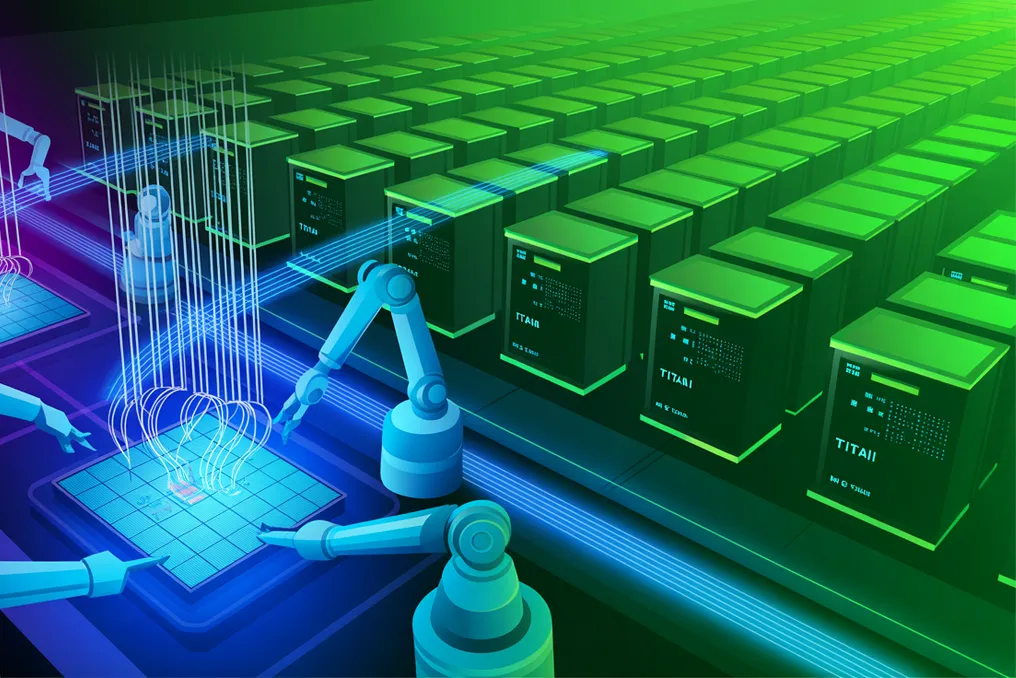
The Titan system will integrate four to eight Asimov chips into a single system and is designed to support models exceeding 16 trillion parameters. Titan will also target context windows exceeding 10 million tokens and can scale to thousands of nodes for larger deployments. Positron also plans to build a data center engineering facility with a capacity of over 2 MW and an emulation platform to support development, testing, and manufacturing readiness.

Positron intends to use the funds to secure LPDDR5X supply commitments, as well as to increase manufacturing capacity and system integration. Go-to-market operations will expand in parallel with production, helping the company meet the growing demand for inference infrastructure.

CEO Mitesh Agrawal noted that the Atlas deployments provided valuable customer insights that influenced the design of Asimov and Titan. The company is currently in a demanding execution phase, requiring it to complete silicon development while simultaneously scaling production and customer adoption.

Positron's strategy is focused on the economic efficiency of AI model operation. Its memory-centric architecture aims to reduce both energy consumption and infrastructure costs. The $5 billion valuation reflects investor confidence in the inference market.

Popular