Basecamp Research raises $140 million to develop AI-driven drugs
Read more
Ventureburn
ventureburn.com

Basecamp Research raises $140 million to develop AI-driven drugs

Basecamp Research has successfully raised $140 million in a Series C funding round, with the funds designated for advancing drug candidates created using artificial intelligence. This re-signed round was led by S32, and supported by major investors from the technology and healthcare sectors.

Participants in the round included Anthology Fund from Anthropic, NVIDIA, Catalio Capital Management, and True Ventures. Additional investors comprised NATO Innovation Fund, Redalpine, Singular, and The Rockefeller Foundation. The London-based company intends to use the capital to train new EDEN models and to advance its portfolio of AI-developed therapeutics into clinical trials.

Basecamp Research was founded in 2019 by Glenn Goers and Timothy Hyde. Goers serves as co-founder and CEO. The company's objective is to develop medications capable of reprogramming the body for self-repair. Their approach integrates advanced AI models with proprietary biological data and DNA sequencing technology.

The company applies its EDEN biological foundational models for in vivo cell therapy. This methodology aims at directly reprogramming a patient's cells within the body. Existing cell therapy methods often require complex manufacturing processes and significant per-patient costs.

Basecamp seeks to simplify this process through AI-designed genetic payloads. The company's technology enables the creation of long and complex DNA sequences for therapeutic use. Furthermore, the company develops large serine recombinases capable of precisely integrating these sequences.

This combination can make cell therapies more sophisticated and customizable. Potential applications include the treatment of cancer, autoimmune diseases, and other conditions. Basecamp claims to have already achieved compelling preclinical results across multiple modalities.

At the core of Basecamp's AI platform is its Atlas of Trillion Genes. The company describes it as the world's largest proprietary dataset for training biological AI. According to Basecamp's website, this dataset contains over 100 billion novel genes. It was compiled through biodiversity partnerships spanning more than 30 countries and including biological samples from all seven continents. Basecamp developed the Atlas in collaboration with partners such as NVIDIA, Anthropic, PacBio, and Ultima Genomics.

The acquired dataset grants EDEN models access to previously unseen biological patterns. These models are designed to understand DNA function across various life forms and to generate potential therapeutic candidates based on disease information. Application areas include cell and gene therapy, enzymes, and peptides. Basecamp demonstrated this approach in collaboration with Anthropic on the Claude Science project. The Series C round marks a transition from biological data collection to therapeutic development. The company has not yet announced a date for its first clinical trial.

Basecamp now plans to transform its biological intelligence into potential medicines. Its six-program portfolio will allow testing the technology across various diseases. The company also intends to expand pharmaceutical partnerships around its platform.

Richard Pierce has joined as Chief Business Officer to support these efforts. Pierce previously held a senior position at Biogen. Andy Conrad, Managing Partner at S32, will also join Basecamp's board of directors. Previously, he led Google's Verily.

The round also attracted senior executives from pharmaceutical and biotechnology companies. Among the additional investors was Roche Vice Chairman Andre Hoffmann. Basecamp states that its platform can help reduce the manufacturing requirements for future cell therapies. The company's headquarters are in London, with laboratories located in Cambridge, Massachusetts. The company's long-term goal is to use AI to develop drugs for previously intractable diseases. Its portfolio includes three in vivo CAR-T programs and other therapeutic projects.


Similar stories

FintechOS raises $28 million to scale AI-based financial products
Read more
ventureburn.com

FintechOS raises $28 million to scale AI-based financial products

FintechOS has successfully raised $28 million through a combination of equity and debt financing. The majority of the equity funding was provided by existing shareholders. Among the group's investors are Bek Ventures, IFC, Cipio Partners, and Molten Ventures. Additional senior debt financing was provided by Santander CIB.

This fundraising occurred following a strong first half of 2026. FintechOS achieved profitability, and revenue from recurring payments increased by 40% compared to the previous year. The company's operating EBITDA also grew by over 102% year-over-year. The company forecasts reaching a record number of new clients in 2026.

It is expected that more than 20 financial institutions will implement the FintechOS 8 platform this year. This platform offers artificial intelligence-based tools for managing financial products. FintechOS serves banks, insurance companies, and other organizations providing financial services. The company's technology allows institutions to customize and launch financial products without replacing core systems.

The United States is the fastest-growing market for FintechOS. Revenue in the US increased by 130% year-over-year in the last reporting period. The company now aims for growth of over 200% in the US over the next twelve months. In connection with this, the company is appointing directors to its board of directors in the US and a new chairman.

These appointments are aimed at supporting regional expansion and strategic partnerships. FintechOS is strengthening relationships with major banking system providers. The partnership with Finxact provides access to additional opportunities in the US banking sector, as Finxact operates within Fiserv.

FintechOS also collaborates with Finastra Phoenix. These partnerships may connect the company with a larger number of banks and credit unions. Current clients in the US include ESL Federal Credit Union and Vibrant Credit Union. The platform is also used by Hanscom Federal Credit Union and Farmers Bank of Willards.

FintechOS 8 utilizes a native AI approach for financial product operations. The Dex AI Copilot allows non-technical users to configure products and offerings. The platform integrates product management, data, and AI execution with compliance. It is designed to operate on top of existing financial infrastructures.

Furthermore, the company is implementing a pre-deployment delivery practice. Each client-facing team includes a technical consultant and an engineer. These teams work directly with client product groups, configuring and launching products through a more agile implementation process. FintechOS expects this model to reduce deployment times, lower implementation costs, and increase operational efficiency.

The company has expanded its customer base in Europe parallel to its growth in the US. European clients include BRD Groupe Société Générale, Admiral, CEC Bank, and Bankinter. The latest funding will strengthen FintechOS's expansion base in the US and deepen the company's client portfolio in Europe. The additional capital will also support the delivery organization behind FintechOS 8, including the expansion of engineering and client teams. Other European clients include Howden and Groupama.

The financing structure combines equity with senior debt. This approach provides additional capital without complete reliance on a new equity round. FintechOS founder and CEO, Theo Blidarus, stated that growth and profitability can develop simultaneously. The company continues to work with banks and insurance companies in both regions.

The company's financial performance supports its next phase of expansion. CFO Kirill Desuza noted that the company spent years improving costs and margins. This preparation helped FintechOS return to growth on a stronger operational foundation. The company will present the next phase of growth at the FintechOS Elevate '26 event, held in London on October 14, 2026. FintechOS enters a new phase with reinforced momentum in the US and a profitable operating model.

Factory raises $200 million at $5 billion valuation to scale AI software development
Read more
ventureburn.com

Factory raises $200 million at $5 billion valuation to scale AI software development

Factory has successfully raised $200 million in a new funding round, achieving a valuation of $5 billion. Investors in this round include Blackstone, Khosla Ventures, and Sequoia Capital. Insight Partners, Evantic Capital, and Sound Ventures also participated.

Factory was founded in 2023 by Matan Greenberg and Eno Reyes. Other investors included NEA, Mantis VC, and Clearlake. The round also attracted angel investors, including Nico Rosberg, Brad Gerstner, and Mark Benioff.

The new funding increases the company's total capital raised to over $400 million. This represents significant growth compared to the $1.5 billion valuation set in April. Thus, in five months, Factory's valuation has more than tripled; previously, the company had raised $150 million at that same valuation.

The latest capital raise reflects growing enterprise demand for autonomous software development tools. The San Francisco-based company aims to increase the degree of autonomy in software development. Its platform enables large enterprises to create, test, and maintain software using artificial intelligence agents throughout the entire development lifecycle.

Factory differs from platforms focused on individual coding agents because it provides enterprises with a unified system for managing software development. The platform allows companies to control the training process of their 'software factory,' as well as manage models and system deployment. Factory can operate through its managed cloud infrastructure, or clients can deploy it on-premises or in fully isolated environments, giving enterprises greater control over AI-driven development.

The company reports that its platform is used by hundreds of thousands of developers. Factory's clients include Nvidia, Blackstone, Royal Bank of Canada, Palo Alto Networks, and Adobe. This growing client portfolio underscores the increased interest from the corporate sector in AI-powered software development.

Enterprises are increasingly using AI to boost engineering productivity. Factory believes that companies are moving from using individual coding assistants to building broader software factories around autonomous systems. Matan Greenberg noted: 'Major enterprises worldwide are transitioning from individual coding agents to software factories,' adding that clients confirm the potential for rearchitecting software development systems, although the company is still in the early stages of this transition.

Factory's strategy is focused on creating autonomous software factories that operate continuously under human supervision. Enterprises can regulate measurable outcomes while AI performs development tasks. The company competes in the rapidly growing AI coding market. Factory plans to use the new capital to support further growth, focusing particularly on platform expansion and adoption within the corporate sector.

Positron AI raises $875 million to scale AI inference hardware
Read more
ventureburn.com

Positron AI raises $875 million to scale AI inference hardware

Positron AI has successfully raised $875 million in a Series C funding round, valuing the company at $5 billion. The company's core business involves developing hardware that makes the artificial intelligence inference process more energy-efficient and cost-effective.

The funding was secured in two stages: first, a Series C round of $375 million was closed, followed by a Series C-1 round of up to $500 million. The main round was led by NEA, Atreides Management, and Valor Equity Partners, with co-leads from Andra Capital and SemiAnalysis Capital participating. The second tranche was led by Jim Clark, founder of Silicon Graphics and Netscape, with participation from several institutional and strategic investors.

The capital raised will allow Positron to significantly expand its growing business in inference and add several experienced technology investors to its board of directors. Forest Basket from NEA and Gavin Baker from Atreides Management will join the board. Thomas Germoluk and Dylan Patel will also become directors.

As AI workloads increasingly shift towards inference, infrastructure is necessary for the continuous operation of models by every AI assistant, agent, and helper. Positron focuses on solving memory and power issues arising from this growth. The company's systems are designed with an emphasis on bandwidth and memory capacity, rather than raw computational power.

The company's next-generation systems utilize standard LPDDR5X memory, which reduces dependence on constrained high-performance memory supply chains. Positron claims its systems can achieve over 90% of available memory bandwidth.

Furthermore, the company focuses on high performance in tokens per dollar and tokens per watt metrics. Positron's architecture supports both air-cooled and liquid-cooled data centers, giving customers flexibility in deploying systems across various rack densities.

Positron already has clients using the first version of the Atlas system. Over 50 Atlas racks have been deployed in Oracle Cloud Infrastructure, where Parasail uses this power for its own inference services. Jump Trading and i3d.net are also production clients of Atlas.

The new funding will be directed towards developing the next generation of silicon chips. The Asimov chip is scheduled for fabrication using TSMC's N3P process by the end of 2026; TSMC describes N3P as an improved 3nm process. Production of Asimov is slated for the second half of 2027. Each Asimov chip will support between 288 GB and 2304 GB of memory, meeting the demands of increasingly complex AI inference workloads.

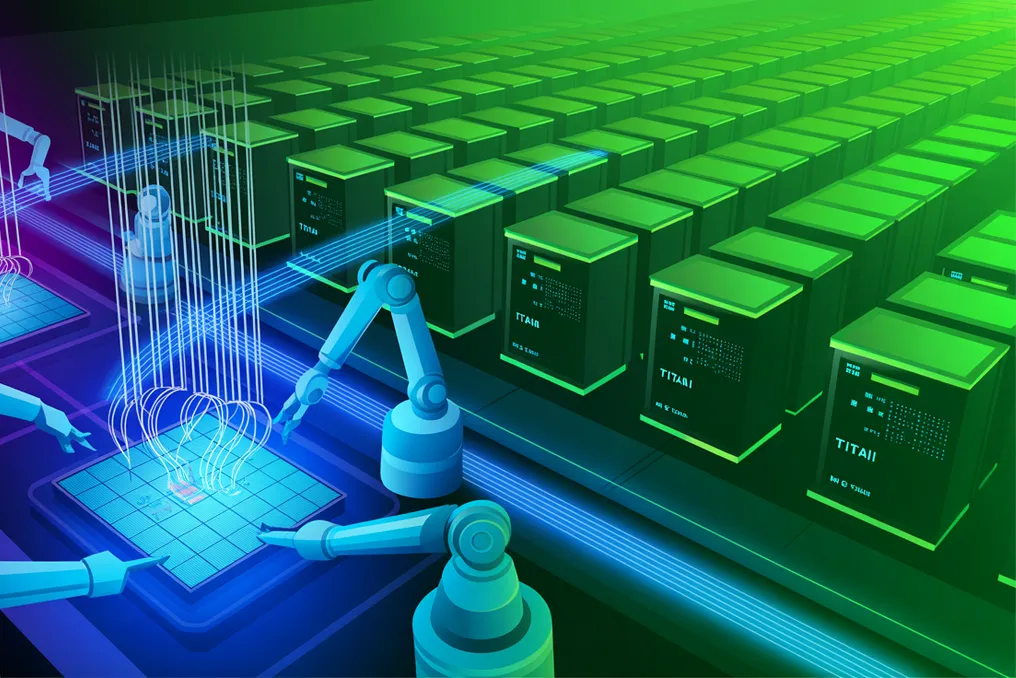
The Titan system will integrate four to eight Asimov chips into a single system and is designed to support models exceeding 16 trillion parameters. Titan will also target context windows exceeding 10 million tokens and can scale to thousands of nodes for larger deployments. Positron also plans to build a data center engineering facility with a capacity of over 2 MW and an emulation platform to support development, testing, and manufacturing readiness.

Positron intends to use the funds to secure LPDDR5X supply commitments, as well as to increase manufacturing capacity and system integration. Go-to-market operations will expand in parallel with production, helping the company meet the growing demand for inference infrastructure.

CEO Mitesh Agrawal noted that the Atlas deployments provided valuable customer insights that influenced the design of Asimov and Titan. The company is currently in a demanding execution phase, requiring it to complete silicon development while simultaneously scaling production and customer adoption.

Positron's strategy is focused on the economic efficiency of AI model operation. Its memory-centric architecture aims to reduce both energy consumption and infrastructure costs. The $5 billion valuation reflects investor confidence in the inference market.

Popular