São Paulo Exhibition Reveals the Personal Life of Luís Fernando Veríssimo
Read more
Viagem e Turismo
viagemeturismo.abril.com.br

São Paulo Exhibition Reveals the Personal Life of Luís Fernando Veríssimo

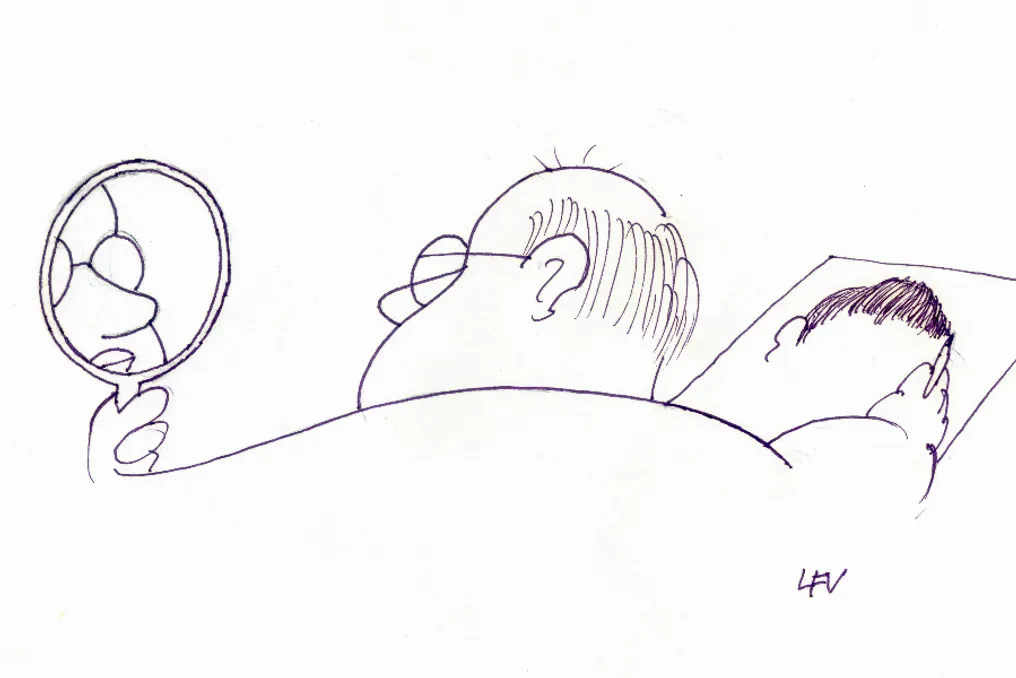
The Fiesp Cultural Center is presenting, for the first time, a free exhibition dedicated to the intimate life of the renowned Luís Fernando Veríssimo. More than three hundred items from the Brazilian writer, originating from his residence in Porto Alegre, have been brought to São Paulo.

The exhibited materials include drawings, caricatures, book manuscripts, notebooks, as well as photographs from his childhood and family. The show, titled Tracing Veríssimo – The Fabulous World of the Humor Master, will begin on September 24th and remain open until February 28, 2027.

The opening takes place two days before the author's 90th birthday, which would be celebrated on September 26th. It is important to note that Luís Fernando Veríssimo passed away on August 30, 2025, at the age of 88, in Porto Alegre, following complications from pneumonia.

Curatorship and Exhibition Content

The curation of the event was carried out by Isa Pessoa, an editor who collaborated with the writer for more than fifteen years. During this period, she published some of his highly successful works, such as As mentiras que os homens contam (2000) and Comédias para se ler na escola (2001).

The exhibition will feature interactive installations inspired by characters created by Veríssimo, such as Analista de Bagé and as Cobras. Additionally, there will be a space dedicated to jazz, a musical genre for which the author had great appreciation. Videos and testimonials from friends and artists about the writer will also be displayed.

Life and Career of Luís Fernando Veríssimo

Luís Fernando Veríssimo, son of the writer Érico Veríssimo, was born in Porto Alegre in 1936. He spent part of his childhood in the United States, between 1941 and 1945, while his father taught Brazilian literature at the universities of Berkeley and Oakland. It was during this period that he discovered two lasting passions: literature and jazz.

Upon returning to Brazil, Veríssimo worked as a translator, copywriter, and journalist before dedicating himself fully to writing. His talent for humor was his most striking characteristic. Starting in the 1970s, he began publishing chronicles in newspapers, addressing themes such as politics, customs, and small moments of daily life. Iconic characters such as Ed Mort, the Analista de Bagé, and Velhinha de Taubaté emerged during this period, as did books like O Analista de Bagé (1994) and Comédias da Vida Privada (1994).

As a chronicler of astute observation, the author had the ability to transform common situations into engaging jokes, becoming one of the country's most popular writers. His artistic production spanned novels, short stories, scripts, and cartoons, while maintaining his saxophone practice. He died in Porto Alegre in 2025 at the age of 88.

Show Details

The exhibition is located at the Fiesp Cultural Center, situated at Avenida Paulista, 1313. Visitors can view the items from September 24th until February 28, 2027, from Tuesday to Sunday, from 10 am to 8 pm. Admission is free.


Similar stories

Continuation of 'Drishyam' may affect box office of 'Hanuman ANS'; producers confident in success
Read more
www.aajtak.in

Continuation of 'Drishyam' may affect box office of 'Hanuman ANS'; producers confident in success

The film 'Hanuman ANS' is approaching the 400 crore mark, and the creators hope the movie will stay in theaters for 100 days. However, the appearance of 'Drishyam 3', scheduled for release on October 2, creates serious competition. Nevertheless, producer Ragini Sona stated that the team is not afraid of the competition, relying on their hard work and the blessings of Nim Karoli Baba.

A natural question arises as to whether 'Drishyam 3' will have a direct impact on the box office of 'Hanuman ANS'. Ragini Sona admitted that there will be an influence but emphasized that the genres of both films are completely different. She noted that despite the anticipation of 'Drishyam's' release, she herself plans to attend a screening because she is a fan of 'Drishyam'. At the same time, she stressed that they do not compete in the same genre, which was evident when the film 'Toxic' was released.

The creators are also not worried about a reduction in screenings and screens due to the release of major releases. Ragini Sona explained her confident attitude by saying that the team has been through a lot and is ready to handle any difficulties. She added that fluctuations in the schedule show that this happens with any film, so they are not afraid. According to distributors, viewers are not objecting to the reduction in showings, although she suggested that some theaters might refuse to screen it.

The dream of the 'Hanuman ANS' team is to have the film shown in theaters for one hundred days. Ragini Sona expressed complete confidence in achieving this goal, citing the support of Nim Karoli Baba, Hanuman, and the film itself, which, in her opinion, came to ensure the film is watched by as many people as possible. Thus, besides collections, the team aims for a hundred-day run.

The film 'Hanuman ANS', directed by Vishal Chaturvedi, is based on the life of Nim Karoli Baba, whom his followers call Maharaj and consider an incarnation of Lord Hanuman. In Nim Karoli Baba's teachings, love, devotion, and service were highly valued. His influence spread far beyond India: in the 1960s and 1970s, many spiritual seekers from Western countries came to India and found inspiration in him.

Regarding financial performance, 'Hanuman ANS' collected 331.70 crore rupees in domestic and international box office and earned 280.93 crore rupees in net profit. The global collection amounted to 366.45 crore rupees. These figures are considered very significant for a film with a budget of about 1.75–2 crore rupees. Therefore, the industry is closely monitoring both the earnings of 'Hanuman ANS' and its future deal with online platforms. Although the producer denied rumors of a 100 crore rupee deal, an official announcement regarding the contract with an OTT service is expected soon.

Tips for Polishing Wooden Furniture: How to Restore Shine Using Tea Leaves and Other Ingredients
Read more
www.aajtak.in

Tips for Polishing Wooden Furniture: How to Restore Shine Using Tea Leaves and Other Ingredients

Wooden furniture gives a home an elegant and expensive look, whether it is a bed, sofa, table, or wardrobe. However, over time, furniture begins to dull due to dust, humidity, and daily use, and its natural shine disappears, leaving stains.

Many people think that in such cases it is time to replace the furniture or spend money on expensive polishes and cleaning agents. Nevertheless, it is possible to restore the original shine to old wooden items using simple household remedies, which avoids the purchase of new expensive goods.

Polishing Wooden Furniture Using Olive Oil and White Vinegar

If the shine of wooden furniture is lost, you can try a simple method using olive oil and white vinegar. To prepare the mixture, take a small bowl, add two tablespoons of olive oil and one tablespoon of white vinegar, and mix thoroughly. Then, take a clean and soft cotton cloth, slightly dampen it in this mixture, and carefully apply it to the furniture surface.

After application, wipe the furniture with a dry cloth to remove excess. This mixture helps restore the cleanliness and shine of the wood: olive oil conditions the surface, and white vinegar aids in cleaning. It is important to test the composition on an inconspicuous area beforehand, as the finish of each wood may differ.

Homemade Polish Based on Tea Infusion

Even used tea leaves can help clean dull wooden furniture. First, heat water in a saucepan, adding two or three tablespoons of tea leaves, and bring it to a boil. After the water has taken on a rich color, turn off the heat and let the liquid cool.

Add two tablespoons of coconut oil and two tablespoons of white vinegar to the resulting warm solution, then mix thoroughly. This creates a homemade wood polish. To apply this polish, first wipe the furniture surface thoroughly with a dry clean cloth to remove dust. Then, evenly distribute the prepared mixture over the furniture with a clean cloth and leave it for 10 minutes to dry. Afterward, wipe the furniture with a dry cloth, which should give it cleanliness and shine.

Important reminder: before using any homemade remedy, always conduct a test on a small, hidden area of the furniture, especially if the wood has a special coating.

How to Keep Furniture Shiny for a Long Time

For furniture to remain shiny for a long time, simply polishing it is not enough; daily care is necessary. Following several simple rules will help maintain the shine of the wood for a long time.

School where Aristotle taught Alexander the Great found in Greece
Read more
super.abril.com.br

School where Aristotle taught Alexander the Great found in Greece

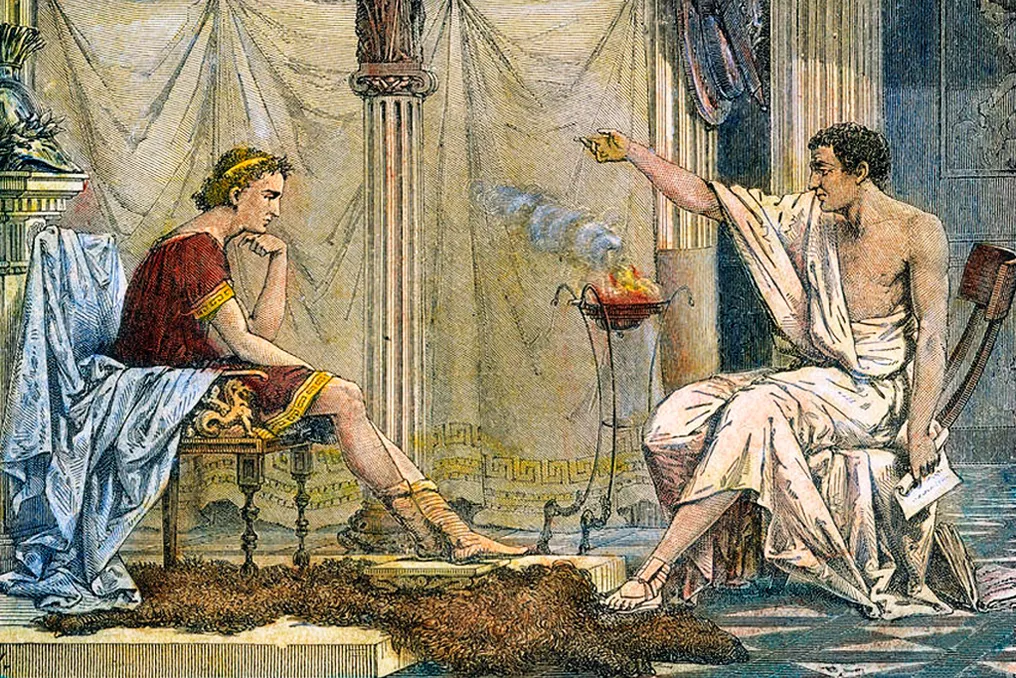
The school where Aristotle taught Alexander the Great over 2,300 years ago was discovered in the ancient Macedonian city of Mieza, located in northern Greece. According to the Greek Ministry of Culture, the excavation work unearthed an architectural complex that included stone desks, two halls, a sports area, a stadium, and a covered veranda.

In addition to the infrastructure, the archaeological site preserved everyday artifacts of the students, such as coins, ceramics, and four styluses used for writing. The ruins of the school, dated to the 4th century BC, featured mosaic floors and columns, as well as rooms equipped with raised pedestals, where originally about a dozen sofas would have been placed.

To specialists, the architecture and decoration of this place resemble the royal palace of Macedon in Aigai (modern Vergina), where Alexander and his father, King Philip II, resided. The opulence of the site suggests that the attendees were sons of the most prominent members of Macedonian society, making it likely that Philip II ordered the construction of the school specifically to receive them.

Educational institutions in ancient Greek world, known as 'gymnasia,' offered a variety of subjects aimed at the comprehensive development of students. However, educating a future monarch represented a responsibility of greater magnitude. Philip II sought out Aristotle, whom he considered 'the wisest and most illustrious of philosophers,' to instruct the young prince Alexander, who was between 13 and 16 years old at the time.

As reported in Plutarch's work 'Life of Alexander' (c. 46 – 120 AD), the king made great efforts to bring the philosopher to Macedonia. Plutarch describes that 'Philip II rebuilt the city of Stagira, Aristotle's homeland, which he himself had destroyed, and repopulated it with exiled or enslaved citizens,' adding that 'he reserved the nymphaeum of Mieza for the master and the student to dedicate themselves to study.'

Aristotle remained responsible for Alexander's education for a period of three years. During these lessons, he covered various topics, including nature, logic, zoology, society, mathematics, politics, poetry, physics, and ethics. During this period, between 343 BC and 336 BC, the Greek philosopher was already over forty years old and had dedicated much of his life as a student of Plato in Athens.

After the assassination of Philip II in 336 BC, Alexander assumed the throne of Macedon at the age of twenty. Even after separating, the king retained some of Aristotle's teachings; notably, his deep appreciation for Homer's Iliad was directly influenced by the philosopher, who introduced him to the work. In his military campaigns, which culminated in the formation of one of the greatest empires of antiquity, Alexander always carried a copy of this work with him.

Plutarch mentions in his biography of Alexander the Great that the prince and Aristotle held their classes in the city of Mieza. For this reason, Angeliki Kottaridi, archaeologist and director of antiquities at the Greek Ministry of Culture, who led the excavations at the site, maintains that the discovered archaeological complex corresponds to the school where Alexander the Great studied.

The location of the site also coincides with Plutarch's records. Mieza is located in northern Greece, approximately 43 kilometers from Pella, the ancient capital of the Kingdom of Macedon. At that time, political assassinations were relatively frequent, and keeping the prince away from the center of power served as a protective measure. Thus, if the king were killed, Alexander would have a greater chance of surviving unharmed, which indeed happened.

Popular