In Media Pradesh, traders held a 'Day without UPI' on Wednesday, September 23rd, to express disagreement with the proposed Merchant Discount Rate (MDR) of 0.4 percent for certain UPI transactions exceeding 2000 rupees. Protests took various forms in cities such as Indore, Bhopal, Jabalpur, Gwalior, Ratlam, Neemuch, Mandsaur, and Jawar.
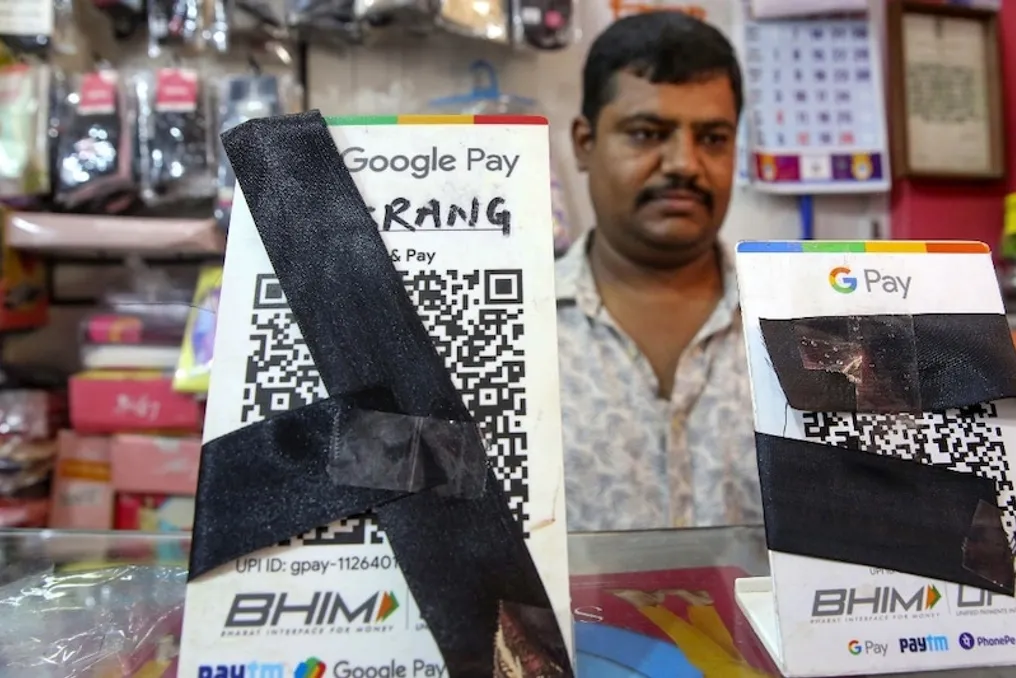
Some shops covered their UPI QR codes with black cloth, while other traders staged a symbolic protest by placing their barcode boxes in one location. Trade associations urged customers to pay in cash instead of using UPI. Traders emphasized that their protest is not against the digital payment system in general, but against the additional financial burden imposed by the proposed MDR.
In Bhopal, traders voiced their dissatisfaction by covering UPI scanners and QR codes in their stores with black cloth. Some entrepreneurs also demonstrated by covering a symbolic UPI figure with black cloth. Traders stated that if an additional cost is charged for digital payments in low-margin businesses, it could negatively affect overall business expenses. They demanded that the government review and withdraw the MDR-related system. The Bhopal traders clarified that they are not against UPI, as digital payments have become an integral part of business, but they object to the proposed additional commission for UPI transactions.
The method of protest differed in Indore. Here, initiated by the Ahilya Chamber of Commerce and Industries, over 125 trade organizations participated in the 'Day without UPI.' Traders transported the boxes containing UPI barcodes used in their establishments to Rajbad and placed them there in protest. Akshay Jain, President of the Indore Retail Garments Association, noted that the traders' goal is not to stop digital payments but to convey their concerns about the proposed commission to the government and relevant authorities. The traders' argument is that additional charges can directly impact operational costs in low-margin businesses.
Problems for customers due to 'Day without UPI'
During the 'Day without UPI,' some markets faced difficulties for shoppers. Many customers accustomed to digital payments came to shop but did not have enough cash. A similar situation was observed at Dal Bazaar in Gwalior. Although traders had warned customers in advance about the inability to accept UPI payments, some buyers still arrived without cash. According to traders, some customers had to resolve the payment issue after the purchase by using money from others, ordering cash from home, or using ATMs. Some buyers shared that UPI had become their daily habit in recent years, so the sudden switch to cash caused them difficulty.
The central point of contention is the 0.4 percent MDR rate for P2M (person-to-merchant) UPI transactions exceeding 2000 rupees. According to available information, this new structure is set to come into effect on October 15, 2026. MDR will not apply to UPI payments to merchants under 2000 rupees. At a rate of 0.4 percent, the MDR would amount to 8 rupees for a 2000 rupee payment and 40 rupees for a 10,000 rupee payment. The maximum limit for charging a transaction fee of 75,000 rupees or more is set at 300 rupees. However, this does not mean that customers will pay an additional 0.4 percent commission when paying via UPI. The government has clarified that this MDR burden should not fall on customers, and no extra charge will be levied on the customer making the UPI payment.
Trade organizations argue that UPI has long been used without MDR, and the introduction of additional costs could seriously affect low-margin businesses. Ramesh Khandelwal, President of the Ahilya Chamber of Commerce and Industries, reported that traders in several cities of Media Pradesh participated in this campaign, stating their disagreement with this system to the government. Akshay Jain, President of the Indore Retail Garments Association, demanded that the government cancel the proposed MDR system before October 15. He warned that if the decision is not canceled, traders might stage a protest similar to submerging UPI QR code machines in water bodies. This statement belongs only to him, not an implemented action.
Protest in Jabalpur: Allegations of lack of objection request
In Jabalpur, P.G. Najapande from the Citizen Consumer Guidance Committee also expressed disagreement with the UPI commission system. He alleged that citizens were not given opportunities to voice objections before the UPI fee was introduced. Referring to Section 10 of the Payment and Settlement Systems Act of 2007, he stated that the government should have first sought public opinion. Najapande also expressed concern that even if collecting funds directly from customers is prohibited, the increase in business operating costs could indirectly affect consumers.
} , 3.