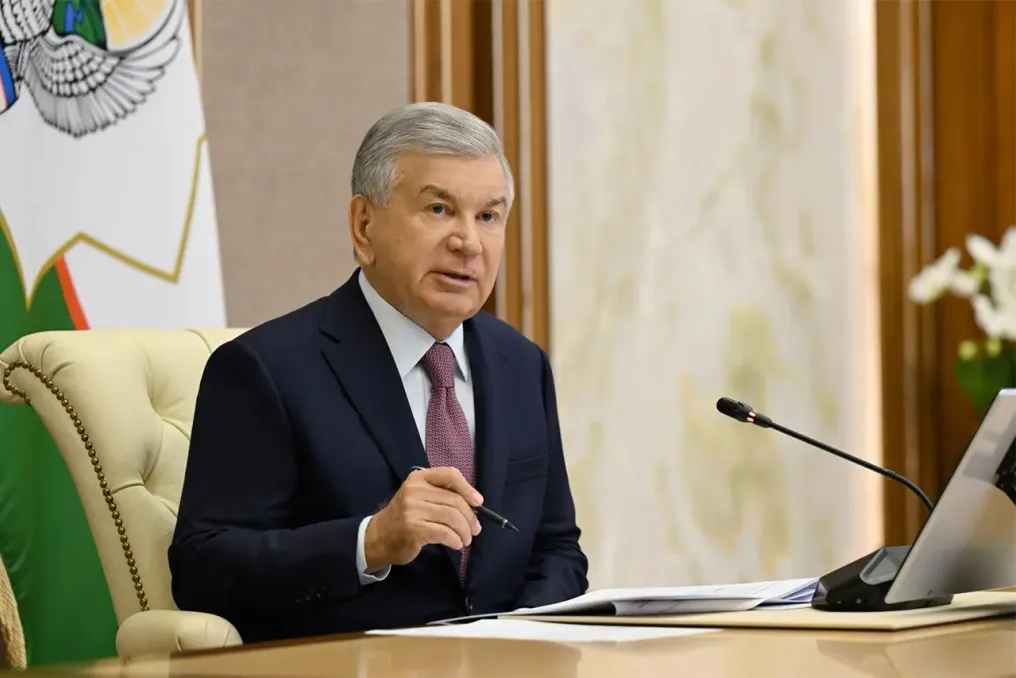
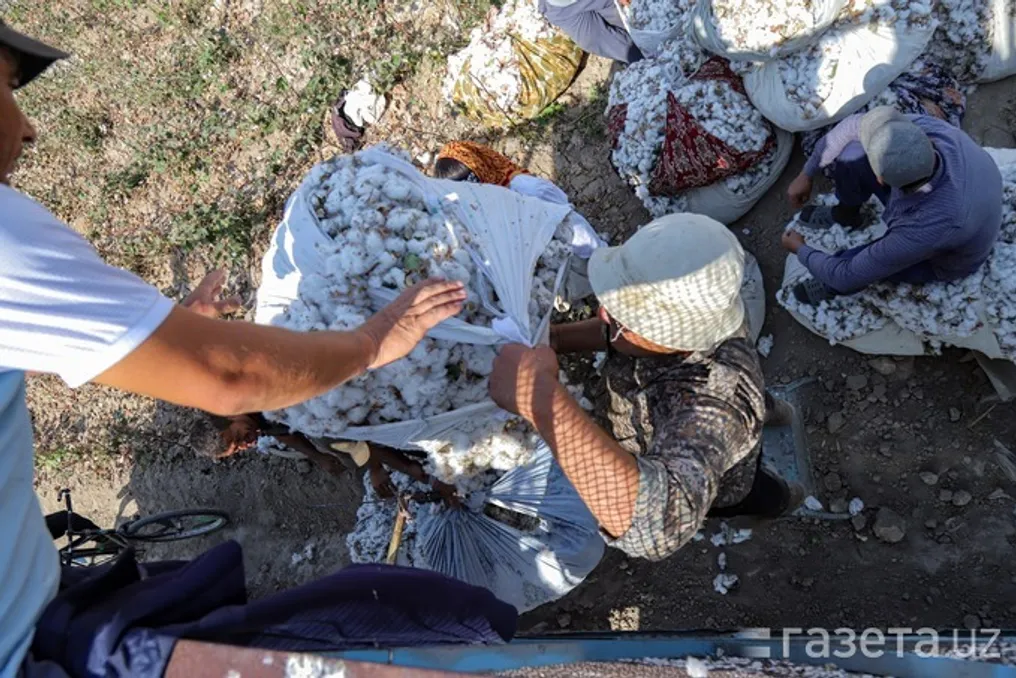
Mirziyoyev inspected cotton cultivation technology from Xinjiang in Uzbekistan
Read more
UzDaily
uzdaily.uz

Mirziyoyev inspected cotton cultivation technology from Xinjiang in Uzbekistan

Uzbekistan President Shavkat Mirziyoyev visited the Oltinkul Agrocluster on September 23 to examine the application of technologies developed in Xinjiang for cotton cultivation. According to a statement from the President of Uzbekistan's press service, the new approach is capable of roughly doubling cotton yields: from the traditional 30–35 centners per hectare to 60–70 centners per hectare.

The development of modern agricultural technologies, increasing production efficiency, and implementing scientific achievements are priorities in this sector. The legal basis for expanding measures to increase cotton and grain yields was established by a presidential decree dated December 9, 2025.

The total area of cultivated land at the Oltinkul Agrocluster is 850 hectares, with the Xinjiang method being applied to 23 hectares of cotton fields.

According to this technology, cotton seeds are sown in two rows under plastic film. This method helps maintain stable soil temperature and humidity, allowing seeds to germinate more evenly and earlier.

In combination with drip irrigation and fertilization systems, the technology ensures direct delivery of water and nutrients to the plant roots. This leads to reduced resource consumption: water savings reach 40%, and fertilizer savings reach almost 30%.

The technology also accelerates the harvesting process. Thanks to the favorable microclimate under the film, cotton ripens 10–15 days earlier than in fields using traditional farming methods.

A significant part of the agricultural work at the enterprise is carried out using agricultural drones. This reduces the need for specialized equipment and helps lower fuel consumption.

The head of state was presented with the results of this project, its economic efficiency, and plans for further expansion of the use of Xinjiang technologies in cotton farming.

Similar stories

Mirziyoyev inspected the production of smart water meters in Andijan
Read more
uzdaily.uz

Mirziyoyev inspected the production of smart water meters in Andijan

President of Uzbekistan Shavkat Mirziyoyev visited the technopark in the Khodjaab district of Andijan region to familiarize himself with the production of smart water meters designed for water consumption control.

Andijan region is one of the most densely populated regions in the country, despite its relatively small area. Because of this, special attention is paid to efficient land use, the development of hilly territories, and the creation of new industrial zones.

One such project is the Andijan Technopark, which was established in the Khodjaab district by attracting foreign investments totaling 300 million US dollars. This 100-hectare site, located in hilly terrain, is planned to host 51 industrial enterprises.

According to forecasts, after the industrial zone reaches full capacity, 3,000 jobs will be created. The annual production volume of over 50 types of products is estimated at 200 million US dollars. Budget revenues are expected to reach 160 billion soms, and the region's export potential is expected to increase by 50 million US dollars.

A company for the production of smart water meters was established at the technopark in collaboration with the Chinese company Sanchuan. This project is valued at 25 million US dollars and is fully financed by foreign investment. Approximately 80% of the production processes are automated using robotic systems.

Smart meters, developed in cooperation with Huawei using 5G technology, allow for online monitoring of water quality, equipment status, and water balance, as well as controlling water consumption. The enterprise annually produces 1 million smart meters of 15 different types. These devices have a design that prevents water accumulation and are equipped with frost-resistant casings.

A dual education system has also been implemented at the production facility. As part of the further development of the industrial zone, the localization rate is planned to reach 70% by 2030, which will be achieved by placing enterprises that produce components and spare parts in the technopark.

Mirziyoyev reviewed Uzbekistan's energy plans until 2050
Read more
uzdaily.uz

Mirziyoyev reviewed Uzbekistan's energy plans until 2050

Uzbekistan President Shavkat Mirziyoyev reviewed medium- and long-term plans for the electricity sector development, as well as considered proposals to change approaches to managing investment projects in the fuel and energy sector, according to the president's press service.

The presentation noted that energy development remains one of the key conditions for economic growth, attracting investments, and improving living standards. In recent years, private and foreign investments have been actively attracted to the sector, and projects for building new power plants, developing renewable energy sources, and modernizing network infrastructure have been implemented.

As a result of the reforms conducted, the total capacity of solar and wind power plants in the country has exceeded 6.3 GW. The number of hydroelectric power plants has exceeded 100, and their total capacity is close to 2.5 GW. Broader use of renewable energy sources also allows for significant annual savings in natural gas.

According to the presented forecasts, by 2030, the economy of Uzbekistan should reach a volume of 300 billion US dollars, and the population is predicted to exceed 41 million people. Only industrial electricity consumption can increase from the current 38 billion kWh to 53.5 billion kWh. The development of electric transport and data centers will create additional demand on the energy system.

In this regard, the task was set to increase generating capacities ahead of demand, expand network capacity, and maintain the necessary reserve.

According to the plan, by 2030, the total installed capacity of power plants should be 46.1 GW, ensuring an annual output of about 129 billion kWh. By 2035, this capacity is planned to increase to 57.2 GW, with expected annual generation reaching 154.7 billion kWh.

Various scenarios for changes in electricity demand were presented. Under moderate consumption growth until 2030, calculations show that generation and demand will remain in the required balance. However, accelerated development of the economy, industry, electric transport, and digital infrastructure will require additional capacity.

Shavkat Mirziyoyev instructed officials to take into account high rates of economic growth when preparing energy plans and to ensure sufficient reserves in advance.

In particular, proposals were considered regarding the construction of additional wind power plants and energy storage systems, as well as accelerating solar and wind generation projects. Simultaneously, it was proposed to revise projects with low economic efficiency, lack of specific funding sources, or significantly delayed implementation timelines.

When selecting new power plants, it is proposed to consider not only capacity but also the cost of electricity generation, grid connection capabilities, compatibility with storage systems, and the object's impact on the overall energy balance.

Energy storage systems are gaining particular importance as the share of renewable energy grows. They allow for storing electricity generated by solar and wind plants during the day and using it during periods of peak evening demand. This reduces the need for additional generation from traditional power plants and increases the stability of the energy system.

Currently, 26 energy storage system projects with a total capacity of 4.2 GW have been formed, 17 of which are at the implementation stage. It is proposed to develop additional projects in this area until 2030.

At the same time, the expansion of the main transmission infrastructure is planned. By 2030, the construction of nine 220 kV substations and seven 500 kV substations, as well as the construction of nearly 5,000 kilometers of new power lines, is planned.

These facilities are intended to connect new power plants to the energy system and expand interregional electricity exchange capabilities. Projects concerning 500 kV lines and new substations scheduled for 2027–2029 were also discussed separately, including their financing and measures to eliminate delays.

Special attention was paid to the development of the digital economy infrastructure in Karakalpakstan using the region's wind potential. It is proposed to connect promising wind power plants in Karakalpakstan to data centers with a total capacity of 1 GW. To achieve this, the construction of a new substation and 220 kV power lines is planned. This infrastructure should connect data centers to the energy system, attract high-tech investments, and utilize the region's energy potential.

The presentation also reviewed proposals to change the procedure for developing and implementing investment projects in the energy sector. According to the current system, the investor often initiates the project, after which issues such as land allocation, grid connection, technical specifications, tariffs, and investment agreements are coordinated with various state bodies. Proponents of the proposals believe that this approach can lead to lengthy procedures, duplication of functions, and insufficient consideration of the energy system's needs.

Instead, it is proposed to form energy projects based on the projected demand of the economy, population, and regions. First, the required level of consumption is determined, followed by the corresponding generating capacity and infrastructure. The project is provided with a land plot, connection point, and technical solutions in advance, after which the investor is selected through an open competition.

Furthermore, the responsibilities of state bodies should be divided: the Ministry of Economy and Finance will forecast demand, the Ministry of Energy will be responsible for strategic planning and technical policy, and the Agency for Development and Regulation of the Energy Market will regulate market relations and tariffs. Agencies responsible for investments will attract investors through open tenders, while local authorities will handle issues related to land plots and necessary infrastructure.

It was also proposed to update the three-year investment plans annually based on accurate forecasts of energy resource needs by region and sector. This mechanism is designed to ensure more coordinated planning of power plant construction, networks, and associated infrastructure.

In the long term, a concept for ensuring the country's fuel and energy resources until 2050 is planned. The document must take into account the country's resource potential, demographic and economic changes, energy efficiency improvement, development of renewable and nuclear energy, as well as energy security. It is proposed to review this concept every five years.

Shavkat Mirziyoyev emphasized that every new energy project must comply with the long-term needs of the economy and the population, while constantly maintaining a balance between electricity generation, network load, and consumption.

After the presentation, officials were instructed to ensure the timely launch of major ongoing projects, take measures against investors facing delays, develop generation and transmission networks in a balanced manner, expand energy storage systems, and implement a new model of planning and management in the sector.
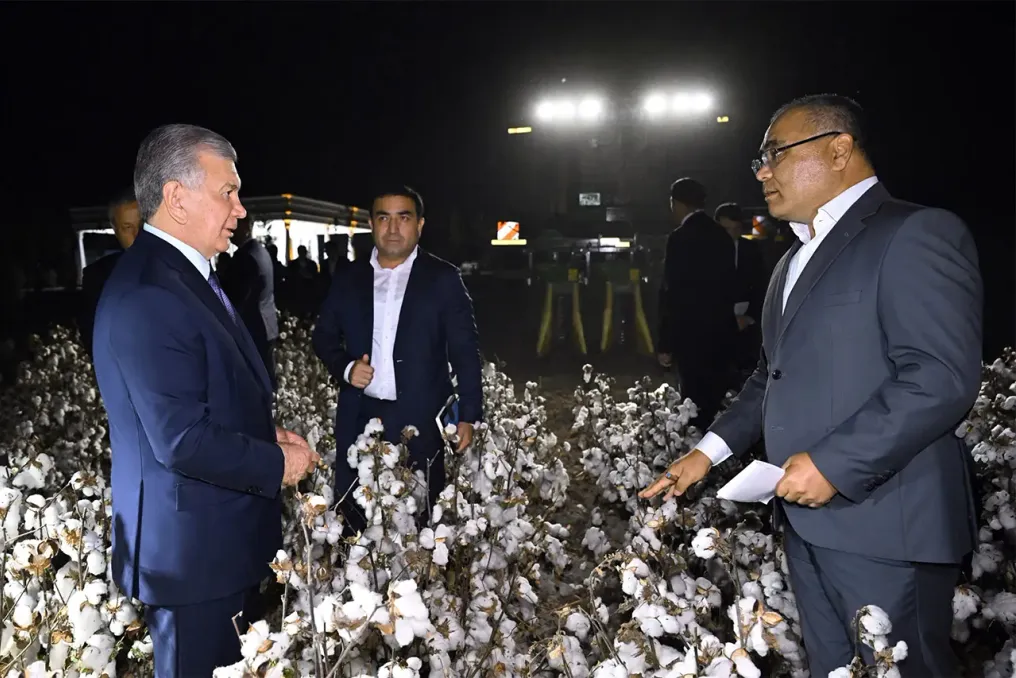
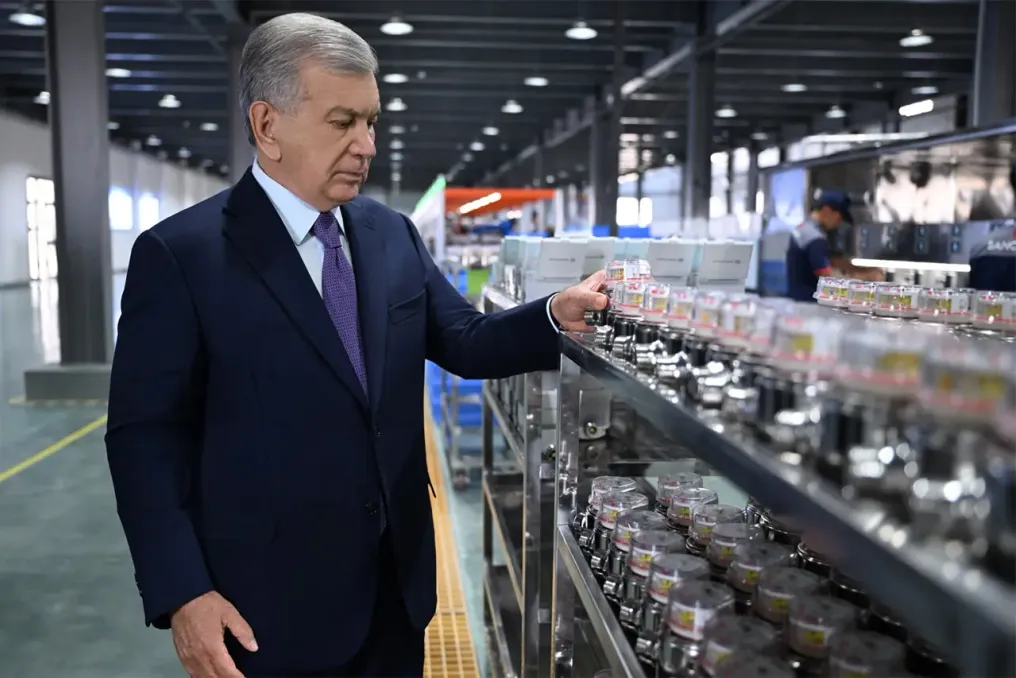
Monitoring of cotton pickers' working conditions in Uzbekistan for the 2026 season starts on September 25
Read more
gazeta.uz

Monitoring of cotton pickers' working conditions in Uzbekistan for the 2026 season starts on September 25

The national monitoring of working conditions for cotton pickers in the 2026 season will begin in Uzbekistan on September 25 and continue until October 31. The main objective of this monitoring is to prevent cases of child and forced labor in agricultural fields. Information about the start of this initiative was presented on September 18 at a briefing held by the Federation of Trade Unions of Uzbekistan.

The monitoring group consists of 65 specialists, with five participants from each region. These specialists represent industry trade unions, Federation labor inspectors, as well as members of the Chamber of Commerce and Industry and the National Association of Non-Governmental Non-Profit Organizations.

The inspection process is organized as follows: on Mondays and Saturdays at 7:00 AM, group leaders receive random GPS coordinates of three locations in their region and travel to conduct inspections by 9:00 AM. Daily data and photo reports are sent to the federation. Additionally, starting from September 15, a 24-hour duty regime has been introduced at the federation and its branches for the entire season. Citizens can report labor rights violations via the short number 1092, through the Federation of Trade Unions website, or by using the organization's Telegram bot.

To inform the population across the country, 200 banners have been placed, and plans are underway to prepare another 10,000 posters and distribute 200,000 leaflets with relevant information.

Bakhtiyor Makhmadaliyev, Deputy Chairman of the Federation of Trade Unions, emphasized that the current situation is fundamentally different from the situation in 2020, let alone from ten-year-old figures. He noted that previously there was no administrative or criminal liability for forced labor. However, the administrative code has been tightened, and a special article has been added to the Criminal Code.

According to Makhmadaliyev, the Federation of Trade Unions has not recorded cases of child or forced labor in recent years. Nevertheless, among the identified problems remain issues such as delayed payments, work without contracts, and inadequate working conditions. The continuation of inspections is due to the fact that international structures demonstrate increased confidence in the results obtained by non-governmental organizations.

Katerina Gorbunova, a representative of the Better Cotton Initiative program in Uzbekistan, added that the need for such monitoring will disappear only after mechanization is implemented. The organization certifies over 20% of global cotton and has been conducting its own monitoring of working conditions in Uzbekistan since 2022.

The specialist explained that comparing it with large farms in the USA or Brazil is incorrect: only three people may work on 10,000 hectares there, and monitoring under such conditions is meaningless. The situation changes drastically when 5,000 temporary workers are involved in the same 10,000 hectares.

Gorbunova also noted that the cotton season requires manual harvesting by a significant portion of the workforce. Three or four years ago, about 2 million people were employed annually for cotton picking, and most of them worked informally. Informal employment relations are a general characteristic of agriculture worldwide, and this sector, as a whole, carries a greater risk from a labor law perspective than any other. Therefore, Gorbunova views monitoring not as a punitive tool, but as a way to support workers and a kind of training for farmers, as employers often have a low level of awareness of labor legislation.

The results of last season's monitoring demonstrated the types of violations faced by pickers. In 2025, the Federation of Trade Unions did not find cases of child or forced labor. However, inspectors recorded the following violations: 166 cases of untimely salary payment affecting 8,752 pickers; 227 cases of working without an employment contract involving 9,075 people; and 1,222 pickers in 24 farms and clusters who worked under conditions that did not meet labor and rest requirements.

Bakhtiyor Makhmadaliyev reported that all identified wage arrears have been fully repaid, answering 'Gazeta's' question about the procedure for resolving such disputes. The Deputy Chairman of the Federation of Trade Unions specified that inspectors, together with farm management, addressed the issue of unpaid labor for 8,752 pickers, and the debt was liquidated one hundred percent. If a violation is not rectified on site, materials are transferred to the State Labor Inspectorate for fines, and if this does not yield results, the case is sent to the prosecutor's office, which oversees compliance with the law.

Minimum working condition standards are approved annually in August by the Republican Trilateral Commission on Social and Labor Issues, which includes representatives of the government, trade unions, and employers. According to these standards, field stations must have showers, toilets, hot meals, and clean drinking water.

Last season, the State Labor Inspectorate of the Ministry of Employment and Poverty Reduction conducted its own inspections. Inspectors visited 986 farms and fined 116 officials a total of 397.44 million soms. Through hotline 1176 and the inspection's Telegram bot, 222 appeals regarding payment delays were received, resulting in the return of 1.785 billion soms to the pickers. The overall results of the 2026 season monitoring will be presented in December.

Popular