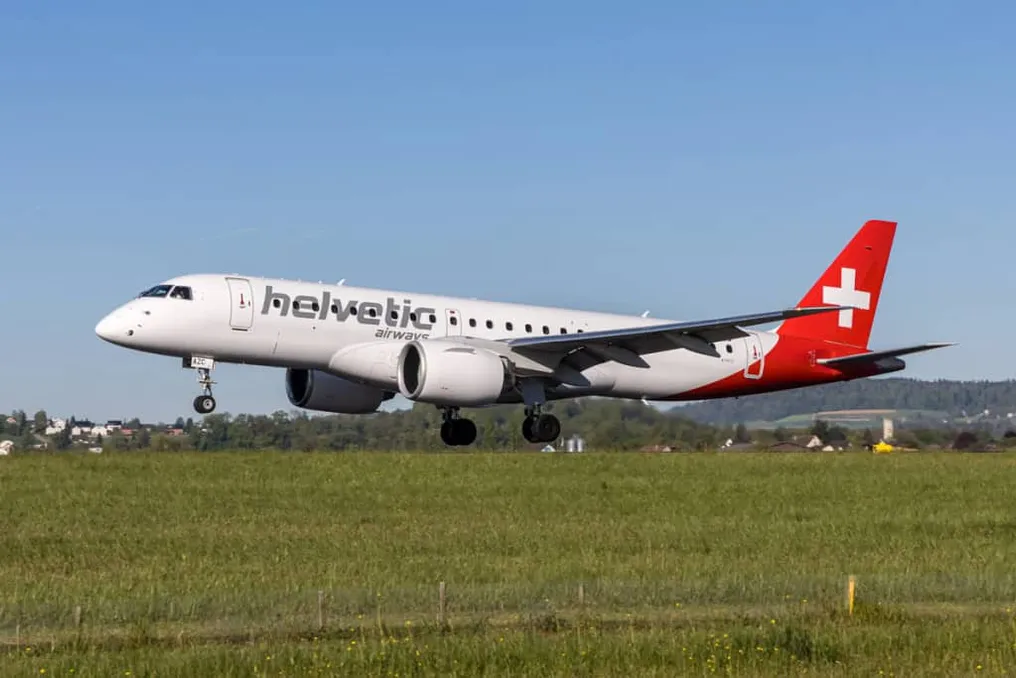
The E2 aircraft family, developed by Embraer, has gained a significant position in the commercial aviation sector. Factors explaining this strong performance include its range, lower fuel consumption, and suitability for operating on routes that do not require larger aircraft.
Comprising the E175-E2, E190-E2, and E195-E2 models, this line enters a market where there are long waiting lists for aircraft produced by Airbus and Boeing. While orders from these giants can take up to ten years to be delivered, Embraer manages to supply the E2 in less than two years.
The E175-E2, E190-E2, and E195-E2 models have distinctions in terms of range, weight, and passenger capacity. The family was introduced in 2017, and its manufacturing takes place in São José dos Campos, located in the state of São Paulo.
The British magazine The Economist highlighted the range and low fuel consumption as crucial elements driving the success of the E2. Furthermore, the publication emphasized the increase in orders received by Embraer.
New Orders and Deliveries
In July 2024, the manufacturer announced a total of US$ 34.5 billion (equivalent to R$ 177.7 billion) in orders, covering its entire portfolio, which includes both private jets and military aircraft. In 2021, 141 aircraft were delivered, and the projection for 2026 is 255 units.
Although Embraer is still smaller in scale compared to Airbus and Boeing, airlines face a waiting time that can reach ten years for narrow-body aircraft, characterized by having only one aisle, manufactured by the two leading companies.
The growing demand for travel, combined with persistent challenges in the supply chain since the Covid-19 pandemic, has intensified the demand for smaller-sized aircraft. In this context, Embraer demonstrates its ability to deliver the E2 in less than two years.
Recently, the E2 family also attracted attention for another reason: a global instability in the GPS system impacted the operation of E2 aircraft, especially those belonging to Azul. However, Embraer itself assured that this failure did not compromise flight safety, given that the jets are equipped with navigation systems that ensure operation even with signal problems.
Technical Features and Applications
Bruno Chieregatti, a mechanical engineer at the Mauá Institute of Technology, pointed out that the E2 combines an efficient mass design, state-of-the-art engines, and highly modern navigation systems. He observed that, despite Embraer's aircraft having lower capacity than Boeing's and Airbus's models, they perfectly meet routes where it is not necessary to transport between 180 and 200 passengers.