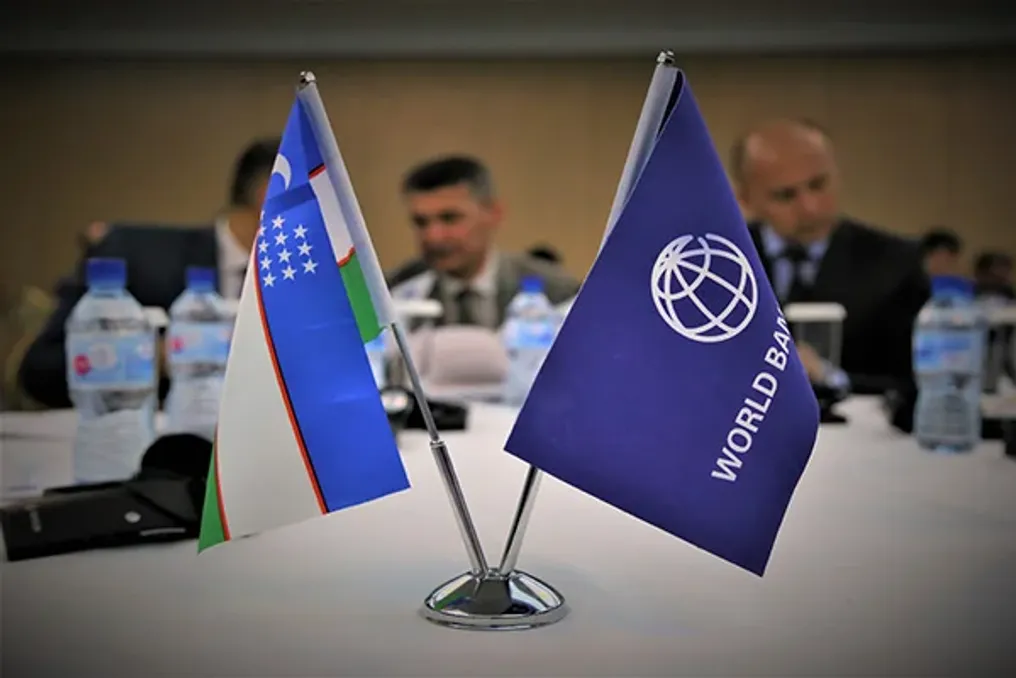
World Bank: Poverty level in Uzbekistan has decreased
Read more
UzDaily
uzdaily.uz

World Bank: Poverty level in Uzbekistan has decreased

According to a new World Bank study titled 'Poverty and Inequality Assessment in Uzbekistan: Towards Shared Prosperity and Opportunities for All,' the absolute poverty rate in Uzbekistan, calculated using the World Bank's international methodology, has decreased from 4.4% in 2021 to 2.3% in 2025. During this period, approximately 3.7 million people have managed to exit poverty.

The report was presented jointly with the Ministry of Employment and Poverty Reduction, as well as the Ministry of Economy and Finance. The study identifies Uzbekistan as one of the upper-middle-income countries that has made significant progress in combating poverty in recent years.

Based on the poverty line established for upper-middle-income countries in Europe and Central Asia, Uzbekistan achieved approximately 40% of the overall poverty reduction among countries in this regional group.

Changes were also observed in the structure of household welfare. If 37% of the population of Uzbekistan belonged to the middle class in 2021, this share exceeded 72% by 2025. Furthermore, between 2019 and 2024, 44% of the country's population moved into a higher economic category.

There was also an increase in employment among the most vulnerable households. The share of men from such households who had paid employment increased from 18% in 2022 to 46% in 2025. Simultaneously, real annual wages in these households grew by 11–12%.

The study showed that poverty in Uzbekistan is no longer predominantly a rural phenomenon. The faster reduction of poverty in rural areas significantly narrowed the urban-rural gap. If this gap was 5.9 percentage points in 2021, it reduced to 1.2 percentage points by 2025.

During the presentation of the study, methods for improving household welfare and economic mobility, reducing regional inequality, creating stable and well-paid jobs, expanding women's economic participation, and increasing the efficiency of the social protection system were also discussed. Further priorities included increasing household incomes, developing sustainable and decent employment, enhancing women's economic activity, and consolidating the achieved progress.

Similar stories

Minister states that Uzbekistan can eliminate poverty and unemployment by the end of the year
Read more
uzdaily.uz

Minister states that Uzbekistan can eliminate poverty and unemployment by the end of the year

The Minister of Employment and Poverty Reduction, Botir Zakhidov, reported that Uzbekistan is capable of becoming a country free from unemployment and poverty, provided that adopted resolutions and decrees are fully implemented.

Previously, on September 9, President Shavkat Mirziyoyev held an expanded meeting dedicated to regional measures for job creation and increasing household incomes, as reported by the President of Uzbekistan's press service.

In an interview with the O’zbekiston 24 channel, Zakhidov stated that over the past three days, a new employment procedure has covered 100,000 households, including 46,000 low-income families.

Instructions defining tasks and work processes, including members of the so-called 'seven', were developed for responsible officials in every mahalla. In accordance with the new guidelines, 12,000 employees completed online training: 9,000 mahalla hokim assistants and 3,000 mahalla bank employees.

The work began by identifying citizens who potentially have low incomes and are unemployed and need to increase their earnings. Their preferences, aspirations, and actual capabilities were assessed through an electronic questionnaire.

Based on the survey results, support measures were determined for members of low-income families, which include employment, involvement in entrepreneurship, referral to specific vacancies, or vocational training. It is planned that about 13,000 people will be engaged in entrepreneurial activities, and another 12,000 will be directed to specific vacancies.

Meetings were held with 162 entrepreneurs across all districts, and 48 job fairs were organized.

Zakhidov noted that the six-day work week showed that existing opportunities are not being utilized to their full potential. According to the minister, previous efforts were primarily focused on increasing income.

After the meeting, the President set tasks in eight areas. He emphasized the need to focus not only on increasing household incomes but also on professional counseling.

Zakhidov concluded: 'The full implementation of adopted resolutions and decrees will allow us to transform our republic into a region free from poverty and unemployment by the end of the year.'

Popular