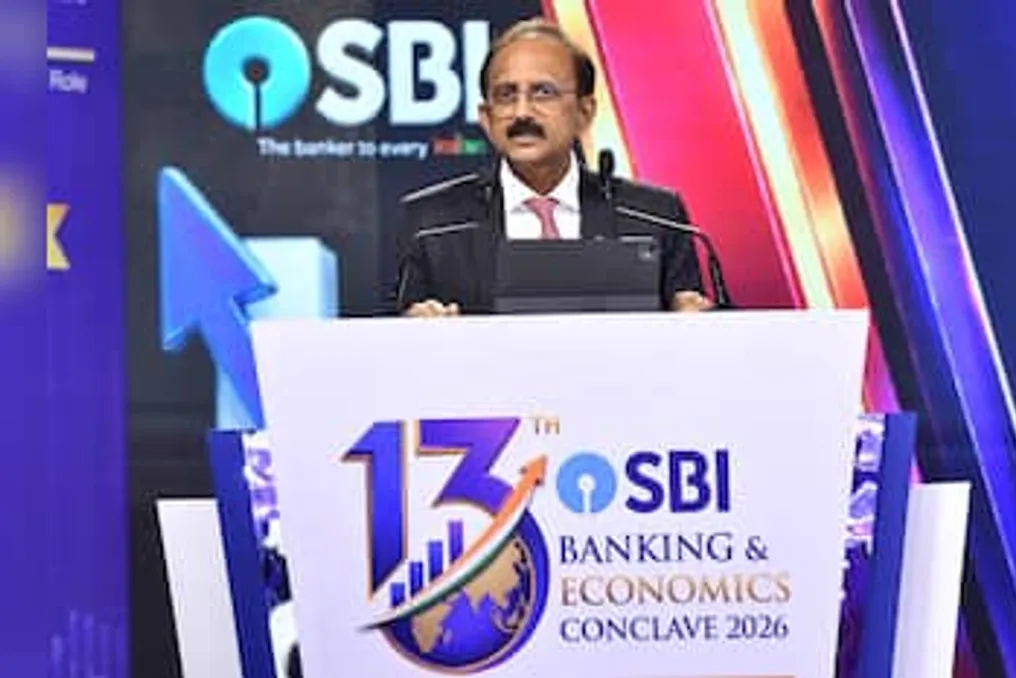
C S Setty, Chairman of the State Bank of India (SBI), emphasized at the Banking and Economy Conclave that the banking sector plays a critical role in financing infrastructure, enterprises, innovations, and the broader transformation of the manufacturing economy as it expands.
Speaking at the XIII SBI Banking and Economy Conclave in 2026, Setty noted that despite challenging external conditions, real GDP grew by 7.8 percent in the quarter from April to June 2026. This growth was supported by strong domestic demand, as well as increases in the manufacturing and services sectors.
He added that the financial sector has amplified this momentum, and the state of the banking system has reached a level unseen in a decade. This is due to sustainable profitability, high credit demand, and improved asset quality, allowing the sector to better support the investment cycle.
According to the latest data from the Reserve Bank of India, bank loans grew by 19 percent year-on-year by the end of August, while deposit growth reached 17.8 percent, the highest figure in 16 years. The asset quality of commercial banks has improved over the past years, with gross non-performing assets at a multi-decade low of 1.8 percent.
Setty stated that the resilience of the financial system in the face of successive global and domestic difficulties has strengthened the sector's ability to participate in the next stage of economic development. He noted that the transition from an emerging economy to a leading economic power requires looking beyond the current cycle.
The SBI Chairman also pointed out that the next wave of global investments is likely to focus on areas such as rising sectors, renewable energy, micro-capacitors, battery storage, and green hydrogen. India possesses significant talent, entrepreneurs, and technologically skilled people to actively participate in these fields. A larger opportunity lies in transforming these strengths into businesses, technologies, manufacturing capabilities, and intellectual property capable of having a global presence, and this is where the financial sector plays a vital role.
Furthermore, he added that as the economy moves towards high-tech manufacturing, new technologies, the green transition, and globally competitive enterprises, auxiliary sciences and systems must evolve in parallel, providing an advanced architecture that fosters innovation in the supply chain.