
PhysicsWallah plans in-depth expansion in South India over the next two years
Read more
Business Standard
business-standard.com

PhysicsWallah plans in-depth expansion in South India over the next two years

The online education platform PhysicsWallah intends to significantly expand its presence in the southern part of the country. The company's founder and CEO, Alakh Pandey, stated that he plans to spend the next 24 months in this region.

Speaking to students at an event in Tirupati, Andhra Pradesh, Pandey emphasized that his activities over the next two years will be entirely dedicated to the students of South India, and he will be based there. As part of the expansion strategy, the company will focus on states such as Andhra Pradesh, Telangana, Tamil Nadu, Karnataka, and Kerala.

PhysicsWallah's goal is to achieve a more measurable impact in South India and replicate the quality of education that the platform offers in other parts of the country. Pandey added that through his platform, he aims to provide students with the necessary tools to realize their potential, noting the need to create a more tangible effect in the south of the country since PW's inception.

Furthermore, the company has entered into a five-year partnership with Mohan Babu University (MBU) in Andhra Pradesh. Through this collaboration, PhysicsWallah will provide online courses focused on artificial intelligence, upskilling, and career development for nearly 18,000 students.

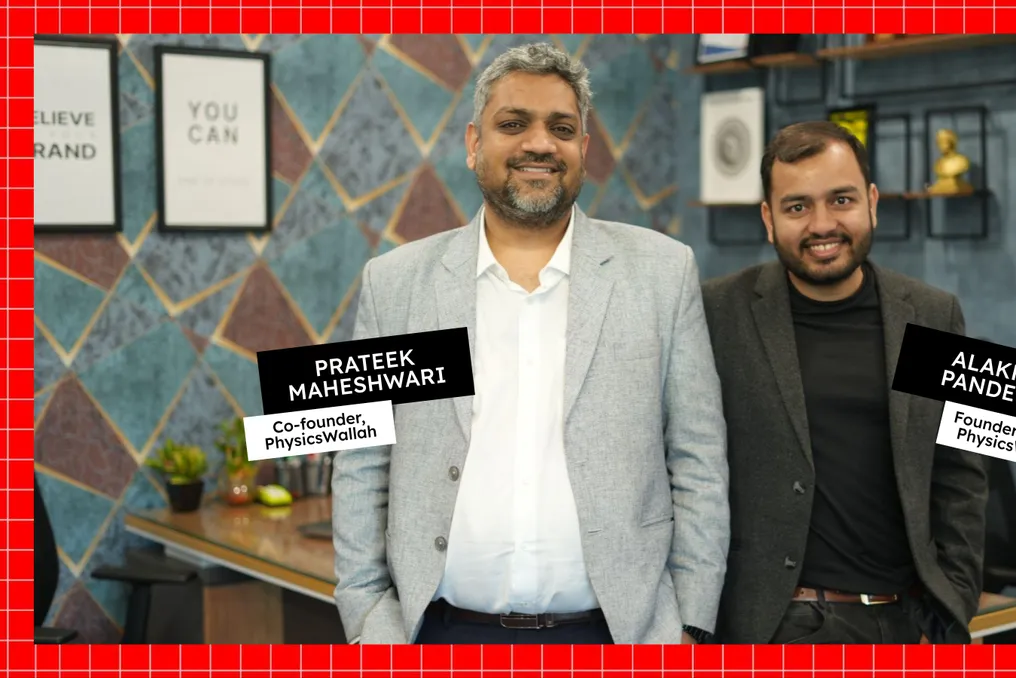
PhysicsWallah was founded in 2020 by Pandey and Pratik Maheshwari. Since its inception, the platform has educated over 40 million students across all its venues, with over 5 million paid students registered in financial year 26 alone. The PhysicsWallah education ecosystem covers 16 categories of exam preparation, and its social media community boasts over 142 million students. By financial year 26, the mobile application surpassed 89.4 million cumulative downloads.

Initially known for its Hinglish courses, PhysicsWallah now offers instruction in Hindi, English, Hinglish, as well as nine regional languages.

Similar stories

PhysicsWallah focuses on South India as part of two-year expansion plan
Read more
yourstory.com

PhysicsWallah focuses on South India as part of two-year expansion plan

The educational technology company PhysicsWallah (PW) is commencing a two-year phase of expansion, concentrating its efforts on South India. The founder and CEO, Alakh Pandey, is personally leading this initiative.

This move is significant as the company aims to adapt its model—based on affordable digital learning, physical centers, and a hybrid format—to markets where linguistic nuances, local academic preferences, and existing tutoring networks may differ.

During an event in Tirupati, Pandey stated that for the next twenty-four months, he would dedicate himself to the students of South India and be based there. He specified that the focus will cover states such as Andhra Pradesh, Telangana, Tamil Nadu, Karnataka, and Kerala.

The first step in this strategy was a five-year partnership with Mohan Babu University in Tirupati. According to the company, this collaboration will enable the provision of career-oriented, upskilling, and AI-focused courses online to approximately eighteen thousand students. Thus, PW's strategy in South India extends beyond entrance exam preparation to include university education and employability enhancement.

Pandey emphasized his goal: 'Through our platform, I want to provide them with the tools necessary to realize their potential. Since the founding of PW until today, I feel we need to create a more measurable impact in the southern part of our country.'

This ambition comes against the backdrop of the company's rapid growth. PW initially launched as a YouTube educational channel in 2014, and in 2020, it was officially established by Pandey and Pratik Maheshwari. Today, the company operates in online, offline, and hybrid formats, covering numerous segments of education.

The company reported that since its inception, it has served over forty million students, and in the financial year 2026, it had over one and a half million paid students. By the financial year 2026, the total downloads of its application reached nearly ninety million. PW was listed on the NSE and BSE in November 2025.

In the testing sector across India, service providers are gradually expanding their presence beyond traditional coaching centers, reaching second and third-tier cities. Online-focused companies are also establishing physical clusters.

In its Q2 FY26 letter to shareholders, PW indicated that it has over twenty centers in Chennai, Hyderabad, and Bangalore, and plans to open another thirteen centers in five southern states.

The broader political landscape also supports multilingual and digital delivery of educational services, although this does not guarantee commercial success. National education policy mandates the integration of educational technologies and digital content in major Indian languages, and the government's DIKSHA platform supports educational content in eighteen languages, including Tamil, Telugu, and Kannada.

Government likely to extend RoSCTL textile export scheme past September 30
Read more
business-standard.com

Government likely to extend RoSCTL textile export scheme past September 30

According to an official source familiar with the situation, the government may extend the 'Reimbursement of Central and State Taxes and Duties' scheme (RoSCTL), which serves as a stimulus for the textile industry, beyond September 30.

Although the industry sought a five-year extension of this scheme to synchronize it with the period of the Sixteenth Finance Commission, the final decision on the extension period remains with the Department of Expenditure (DoE) of the Ministry of Finance, an anonymous source reported.

The same official added that they have also requested the DoE to double the amount of funds allocated under this scheme, increasing it from the 5,000 crore rupees allocated for the current fiscal year.

Under RoSCTL, the government reimburses embedded central and state taxes on textile exports, including apparel, articles, and woven or knitted goods. The goal of this measure is to prevent tax leakage, which helps maintain product competitiveness.

According to a revised estimate presented in the Budget for the 2027 fiscal year, the government spent 10,010 crore rupees on RoSCTL in the 2025–26 fiscal year (FY26).

The final decision on the extension and funding of the scheme is expected by September 30. Stability and predictability of the RoSCTL scheme have been long-standing demands of the textile industry.

Updip Singh Chatrath, Chairman of the National Council for Textile and Technical Textiles of Assocham, noted that 'policy consistency is a key factor influencing investment decisions, and the textile sector needs sustained investment to achieve the government's goals for 2030.'

The government has set a target to increase textile exports to $100 billion by 2030 (currently around $37 billion) and grow the sector size to $350 billion by 2030 (currently around $190 billion). Industry estimates suggest that such growth will require investments of at least $60 billion, added Chatrath. He emphasized that these investments, in turn, require certainty and policy stability.

The tax exemption scheme was initially launched ten years ago as the Reimbursement of State Levies (RoSL) scheme, which returned local and state taxes. After the introduction of the Goods and Services Tax (GST) in 2017, the government replaced RoSL with RoSCTL. This transition was necessary because, although GST consolidated several major indirect taxes, some embedded central and state duties remained unrefunded, necessitating the creation of a new mechanism to sustain export competitiveness.

The government is also implementing a similar tax refund scheme for other exported goods called Reimbursement of Duties and Taxes on Exported Products (RoDTEP), which is also due to conclude on September 30. The possibility of extending this scheme for five years is currently being actively considered.

These two flagship tax exemption schemes have been extended multiple times previously, often simultaneously. In March, the government last extended both schemes by six months to support exporters amid the conflict in the Middle East.

French company LINAGORA is considering expanding development operations in Uzbekistan
Read more
uzdaily.uz

French company LINAGORA is considering expanding development operations in Uzbekistan

The French technology company LINAGORA is studying the possibility of relocating part of its development operations to Uzbekistan and establishing a regional center in the country. The goal of this center will be to provide software solutions to the markets of Central Asia and CIS countries.

Discussions on this potential took place during a meeting between Uzbek representatives and LINAGORA's founder and president, Alexander Zapolsky. The negotiations were held in Paris on the sidelines of the International Space Summit.

The meeting included the Minister of Digital Technologies Sherzod Shermatov, Bobur Khodjaev, Head of the Department of Financial Technologies, Digitalization, and Artificial Intelligence of the President of Uzbekistan's Administration, as well as a representative from IT Park Uzbekistan. One of the most important issues was the possible establishment of a regional hub in Uzbekistan for the development and distribution of LINAGORA's software.

Representatives from IT Park Uzbekistan presented information on the country's human resources potential, competitive cost structure, and the opportunities within the resident company ecosystem. The parties also discussed support mechanisms available to LINAGORA in Uzbekistan and the benefits of obtaining the status of a resident of IT Park Uzbekistan. This project could contribute to attracting the French technology company and creating new high-tech jobs.

Special attention was paid to the concept of digital sovereignty and the development of open-source solutions. Prospects for using LINAGORA's products, including Twake Workplace and LinShare, in the public and private sectors of Uzbekistan were examined. These solutions allow organizations to maintain greater control over their data and digital infrastructure.

Artificial intelligence was also a subject of discussion. Representatives from IT Park Uzbekistan and LINAGORA reviewed the company's experience within the OpenLLM Europe initiative and the potential for applying open and verifiable AI models, such as LUCIE, to develop Uzbekistan's AI ecosystem.

LINAGORA was founded in 2000 and specializes in developing open-source software and digital sovereignty technologies. The company promotes the idea of a 'third digital path,' based on the principles of openness, ethics, inclusivity, and sustainable development. LINAGORA collaborates with state and private structures and has offices in France, Tunisia, Vietnam, and Canada.

The company's portfolio includes Twake Workplace for corporate communications and collaboration, LinShare for secure file sharing, and OSSA—a technological framework supporting over 500 open-source packages. LINAGORA is also participating in the European initiative OpenLLM Europe to create open and verifiable artificial intelligence models.

Potential cooperation with LINAGORA covers several areas: from transferring part of the operational activities and establishing a regional center in Uzbekistan to implementing open-source solutions and developing open AI technologies.

Popular