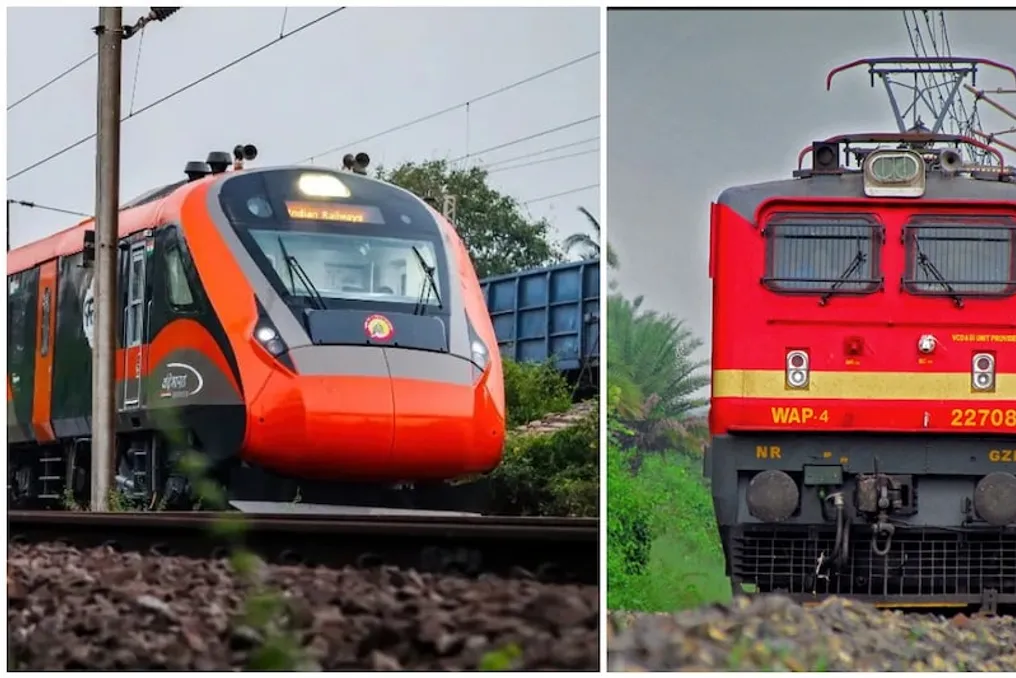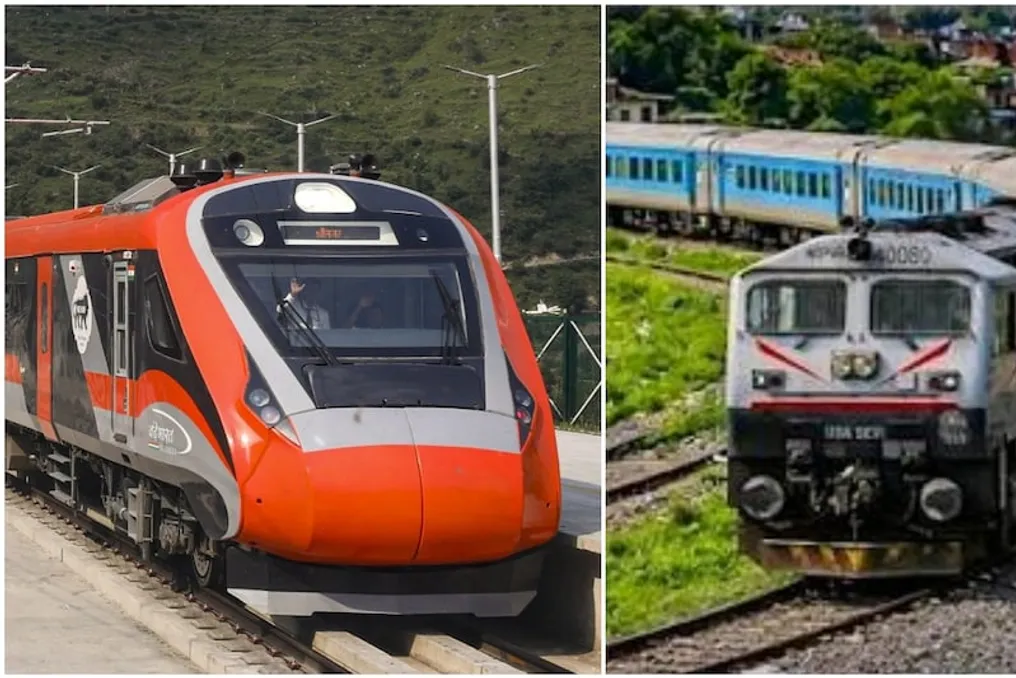
The Shatabdi Express was once considered a symbol of modernity and speed in rail travel. Today, the railway has introduced a new class of trains, such as Vande Bharat. Therefore, a direct comparison of which one is more modern may not be the most accurate approach. Both trains represent the technology of their respective eras. However, for the passenger, questions remain relevant: how long will the journey take, what will the ticket cost, and what amenities will be available?
Let's look at examples of Shatabdi Express and Vande Bharat trains on the New Delhi to Chandigarh route.
The distance between New Delhi and Chandigarh is approximately 266 kilometers. Vande Bharat covers this distance in about 2 hours and 48 minutes, while Shatabdi requires about 3 hours and 19 minutes. Thus, the difference in travel time is approximately 31 minutes. Regarding the 'Chair Car' class, the fares are almost identical: in Vande Bharat, it starts from 714 rupees, and in Shatabdi, it starts from 715 rupees, representing a difference of only 1 rupee. Nevertheless, the passenger faces two trains from different technological generations. It should be remembered that the final ticket price may vary depending on the train, travel date, and applicable charges; it should be checked on the railway's ticket booking system during purchase.
Vande Bharat is designed not as a traditional locomotive-hauled train with carriages. It is a self-propelled set because the energy generation system is located directly in the coaches, rather than in a separate locomotive pulling the train. It is thanks to this design that it is capable of achieving high speeds. According to Indian Railways, the maximum design speed of Vande Bharat is 160 km/h. Newer series of Vande Bharat have a maximum design speed of 180 km/h. These trains are equipped with features such as automatic doors, GPS-based passenger information systems, bio-vacuum toilets, and onboard entertainment systems. This does not mean, however, that the train will travel at 160 km/h on all routes; the actual speed depends on the tracks, signaling, route, and other factors.
It is incorrect to view Shatabdi simply as an old train compared to Vande Bharat. When Shatabdi Express was launched in 1988, it was a new experiment by the railway for fast travel over short distances in air-conditioned coaches. It offered services in Chair Car and Executive Class, as well as meals. Today, many Shatabdi trains use LHB coaches, so current Shatabdis should be distinguished from early period coaches. Therefore, it is more useful to compare Vande Bharat and Shatabdi based on the amenities available to the passenger today, rather than on their history. The design speed of Vande Bharat is 160 km/h, whereas the maximum speed of many Shatabdi routes reaches about 130 km/h. However, the maximum speed of the train does not determine the entire journey time; stops, track condition, signaling, and other traffic also influence this. On the New Delhi to Chandigarh route, this difference is evident: Vande Bharat has fewer stops, whereas Shatabdi makes more stops at stations, leading to a shorter overall journey time for Vande Bharat on this route.
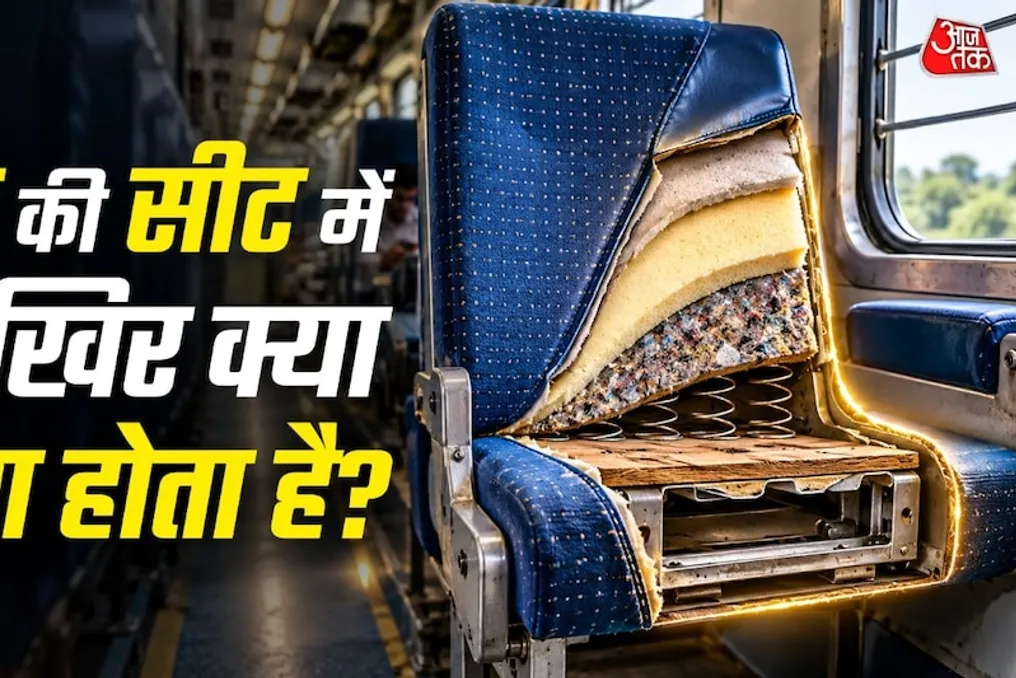
Both trains offer air-conditioned Chair Car (CC) and Executive Chair Car (EC) coaches. Chair Car is the standard seating class, while Executive Class offers more space and a more comfortable seat. Vande Bharat is equipped with reclining seats, charging points at every seat, and reading lights. In some configurations, the Executive Class allows seats to swivel 180 or 360 degrees. Shatabdi also provides comfortable air-conditioned seating. Additionally, VistaDome coaches are available on some selected routes.
If the passenger's priority is not just quick arrival at the destination, the VistaDome coach, available on some Shatabdi routes, offers a completely different experience. In this coach, large windows, a glass roof, and rotating seats allow passengers to enjoy the views during the journey differently than in a regular Chair Car coach. This service is not present in all Shatabdi trains, so when booking tickets, it is important to check the composition of the train and coach for your route.
Vande Bharat was originally designed as a modern train, including features such as automatic passenger doors, GPS-based passenger information systems, CCTV surveillance, bio-vacuum toilets, and onboard entertainment systems. Compared to this, existing Shatabdi services may vary depending on the route and train composition. Therefore, this comparison does not mean that one train has a feature and the other does not. The difference is that Vande Bharat is designed as a set taking these modern amenities into account.
In both trains, meal services such as tea, breakfast, lunch, or evening snacks may be provided depending on the travel time. Some Vande Bharat services include fruits, muffins or brownies, dry fruits, chikki, caramel popcorn, and regional snacks on the menu.