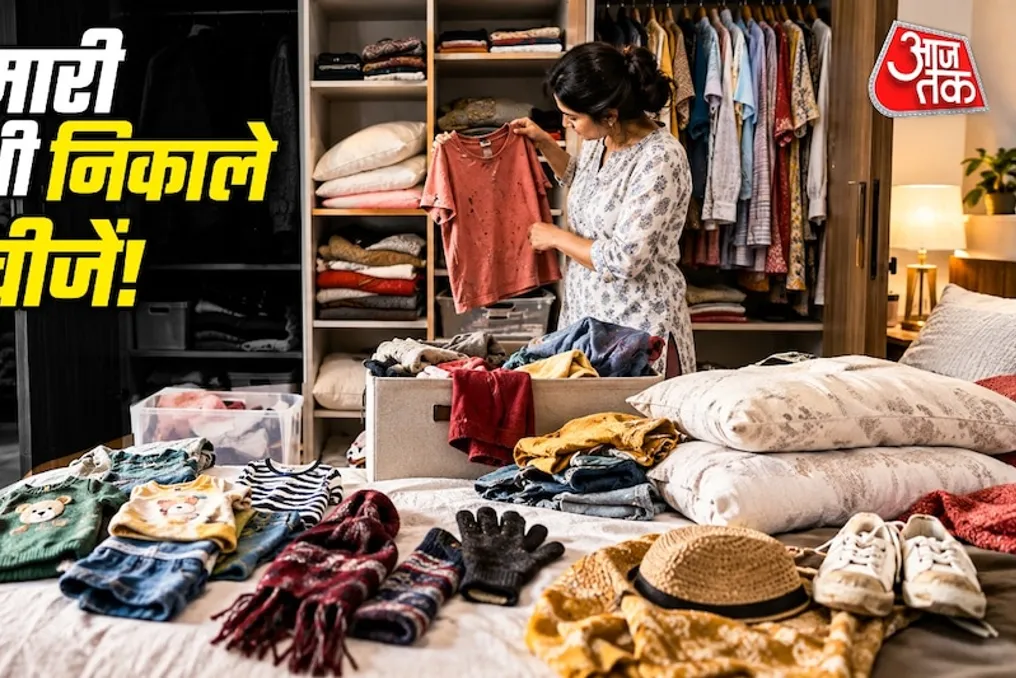
When the season changes, it is recommended to take out six categories of items from the closet and clean up
Read more
Aaj Tak
www.aajtak.in

When the season changes, it is recommended to take out six categories of items from the closet and clean up

As the summer season gradually fades, it is time for a small 'reboot' of your wardrobe. People often store clothes and other items in the closet hoping they will be needed in the future. However, after many months of storage, it turns out that there are many items that are actually not used.

If this happens to you, this time you should approach the selection of items more carefully. Cleaning the wardrobe before the change of season is useful not only for freeing up space; it also helps you understand what you have in excess, what has spoiled, and what you really need to buy for the next season.

How to care for your wardrobe:

According to space organization experts, when cleaning the closet, you should definitely take out the following six types of items:

  • Damaged summer clothes: T-shirts, shorts, swimsuits, or socks that are heavily worn, have stains that cannot be removed, or are torn should not be stored for the next year. Clothes that can be repaired should be mended, and the rest separated. If the condition of some items is good but you no longer like them, they can be donated to those in need.
  • Completely deflated pillows: Old and flattened pillows take up a lot of space. If they no longer provide proper support, it is time to get rid of them. This will free up space for thick winter blankets and other storage items.
  • Mismatched gloves and old scarves: If there is only one glove left in the closet or if there are scarves that have not been used for years, they should be removed immediately. Items in good condition can be given to those in need, which helps keep the closet tidy.
  • Children's clothes that are too small: Before the change of season, children's clothes must be checked. Anything that no longer fits should be set aside. Good clothes can be given to younger siblings or needy children.
  • Jackets and coats that are not worn: Before winter arrives, jackets and coats should also be sorted. Those that do not fit or are no longer liked should not take up space in the closet. Getting rid of them will help you understand exactly what to buy at the store next season.
  • Items not used for years: There may be items in the closet that seem useful but have not been used for many years. Such items as single gloves, old accessories, or unmatched items should be sorted.

It is important not only to take out items but also to prevent their reaccumulation. When cleaning the wardrobe during the change of season, separate damaged, too small, or long unused items. This will allow you to save space, keep the closet tidy, and avoid unnecessary purchases next season.


Similar stories

How to clean a kitchen hood from grease: a recipe using household items
Read more
www.aajtak.in

How to clean a kitchen hood from grease: a recipe using household items

In Indian cuisine, steam and oil are formed during the preparation of dishes with fried spices, frying, and fatty foods, which gradually settle on the filters and body of the hood. If cleaning is not performed in a timely manner, a thick, sticky, black layer of grease forms on the hood, reducing the appliance's ability to draw in air.

Instead of buying expensive cleaning agents or calling a specialist, you can use simple household ingredients such as baking soda, vinegar, and dish soap to restore the kitchen hood to its original appearance without extra hassle.

The following components are needed for the process: 3-4 tablespoons of baking soda, 1/2 cup of white vinegar, 2 tablespoons of dish soap or washing powder, and optionally 2-3 tablespoons of caustic soda to combat very stubborn grease. A bucket or basin with boiling water, an old toothbrush or scraper will also be required.

Before starting the cleaning, be sure to turn off the power to the hood and unplug it from the socket. Then, carefully open the fastener and remove the mesh or baffle filter installed under the hood.

Fill a large basin or sink with boiling water so that the filters are completely submerged in the water. Add baking soda, vinegar, and detergent to this water and mix thoroughly. Leave the dirty filters in this mixture for 20-30 minutes; the reaction of hot water and baking soda will help loosen ingrained grease and lubricant.

After half an hour, carefully clean the filters with an old toothbrush or a soft scraper, then rinse them with clean water and dry them. For the exterior part of the hood—the glass and steel body—spray the mixture of vinegar and dish soap, let it sit for 5 minutes, and then wipe it with a microfiber cloth or cotton pad.

If the hood has not been cleaned for a long time, you can add 2 tablespoons of caustic soda to the basin with hot water and leave the filters for 15 minutes (it is extremely important to wear gloves when working with caustic soda). After the filters have completely dried in the air or under the influence of a fan, they should be reinstalled in the hood.

Experts advise getting rid of six things you store at home so they don't spoil before the next season
Read more
www.aajtak.in

Experts advise getting rid of six things you store at home so they don't spoil before the next season

With the end of the warm season, not only clothes and weather change, but also the list of items stored at home. Items used in the summer differ from those needed in winter. Many objects left in storage with the thought that they will be needed next year can spoil or simply take up unnecessary space.

Simply put, by keeping such items, a person accumulates unnecessary clutter. To maintain cleanliness and minimalism in the home, it is recommended to discard certain items as the season changes. Experts advise checking six specific categories of items to decide what to keep, what to donate, and what to throw away.

  1. Dried potted plants: Due to strong sun and heat, many plants die. If a plant has completely yellowed, its stems have dried up, or an unpleasant smell emanates from the roots, it should be removed. Plants should also be changed when the season changes. After removing the plant, empty pots can be washed and saved for winter.
  2. Sticky and broken toys: Before putting water toys, water guns, inflatable rings, and other children's toys into storage, a check must be performed. Broken, cracked, or water-sticky toys should be discarded. Their long-term storage can lead to increased problems with dirt and insects.
  3. Clutter from the garage and pantry: The change of season requires cleaning garages, pantries, and sheds. Items that have not been used for a long time and are unlikely to be needed in the future should be disposed of. This will free up space and simplify finding necessary items.
  4. Worn-out slippers and old swimsuits: Before storing slippers, shoes, and swimsuits for the next season, they must be inspected. Excessively worn-out footwear or torn, stretched swimsuits are unsuitable for use. Even items in good condition but unused can be reduced according to needs.
  5. Wobbly folding chairs: Before storing folding chairs, it is important to check their screws, seat, and frame. If the chair does not stand steadily, the seat is loose, or the metal is rusted, it is better to get rid of it. A faulty chair can cause a fall upon subsequent use.
  6. Old chargers and electronic cables: It is wise to take out old chargers, USB cables, and wires from the drawer. Those that have not been used for a long time and are no longer needed should be separated. However, before throwing them away, one must ensure that no cable is the only working one for any important device.

Conducting this sorting of small items during the change of season allows for significant freeing up of space in the home. It is necessary to keep useful items, give good items to those in need, and properly dispose of broken electronics or other items.

Popular