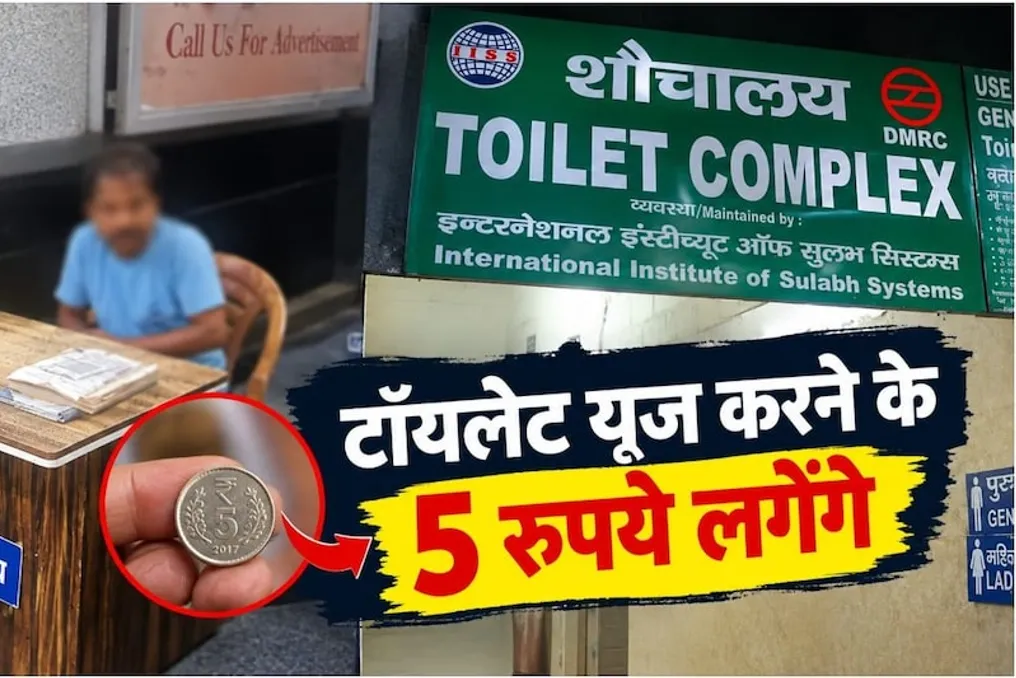
Question about paid use of toilets at metro stations: what do the rules say?
Read more
Aaj Tak
www.aajtak.in

Question about paid use of toilets at metro stations: what do the rules say?

When visiting the metro system, if there is a need to use a toilet at a station, passengers may be required to pay 5 rupees. Many consider this charge for using the toilet improper and question the legality of this practice.

This issue was previously raised in parliament. In 2023, a question was asked in the Rajya Sabha of the State regarding the amenities provided for Delhi Metro passengers. An explanation was sought as to why passengers who pay for their travel are not provided with free access to toilets at the stations.

The Ministry of Housing and Urban Affairs, in response to the query in the Rajya Sabha, clarified that the toilet services at Delhi Metro stations are provided on a payment basis through an outsourcing company. Thus, the official response from the metro confirms that there is a payment system for toilet use, and the fee for its use is not illegal.

Earlier, in 2020, the Delhi High Court also mentioned this system. DMRC informed the court that the toilets at the stations are managed by agencies such as Sulabh International, and a small amount is collected to maintain the cleanliness and upkeep of the toilets.

Despite this, some citizens continue to dispute why DMRC does not provide this service for free. Parliament clarified that there are no provisions obligating the Delhi Metro to provide toilets at stations absolutely free of charge. The government specified that the decision on providing free water and toilets falls under the jurisdiction of the relevant metro administration. According to the Consumer Protection Act of 2019, DMRC is not obligated to ensure the availability of free toilets at stations.

Although it has become clear that one will have to pay for toilet use, the question remains as to how much exactly needs to be paid according to the rules. It should be noted that DMRC has not established fixed tariffs. However, the tariffs indicated on information boards are the amounts that passengers must pay. For example, 2 rupees are charged for using urinals, and 5 rupees for a toilet. Recently, DMRC announced on its X account that the same amounts listed on the boards apply, with various tariffs.

It is also important to know that if a person suddenly feels very unwell and has no money, they can use the station staff's toilet for free.
Similar stories

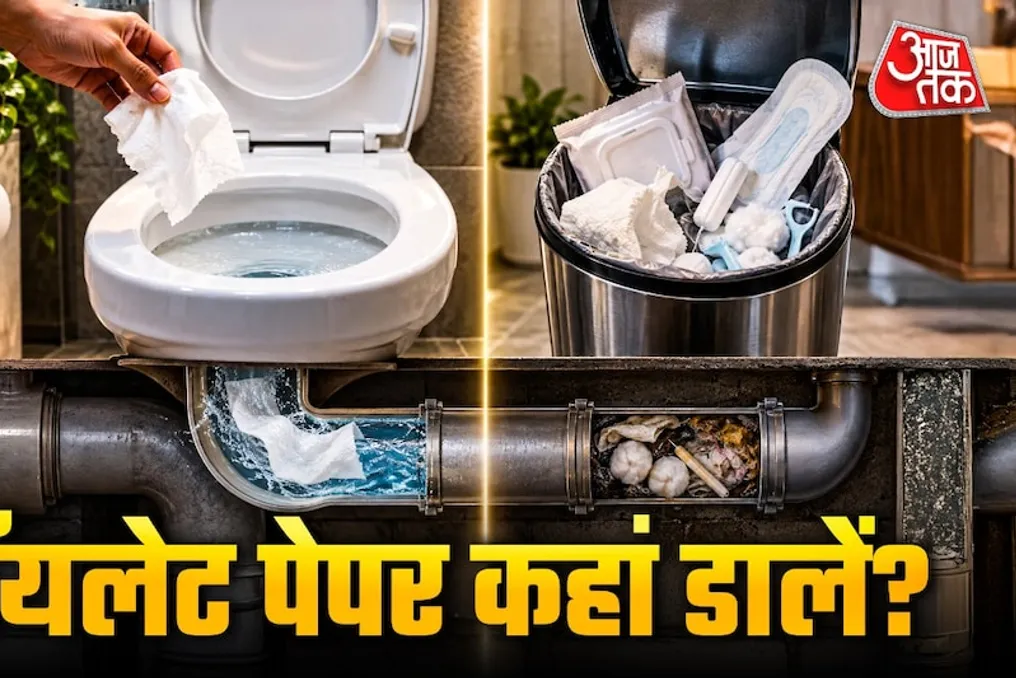
How to properly dispose of toilet paper: flush it down the toilet or throw it in the bin?
Read more
www.aajtak.in

How to properly dispose of toilet paper: flush it down the toilet or throw it in the bin?

In modern homes, similar to hotels and restaurants, toilet paper is often found near the toilet, mirror, and sink. However, the question arises: should used toilet paper be flushed down the toilet or thrown in the trash can? Knowing this simple rule is crucial because improper disposal can cause problems with the sewage system and may be considered a hygiene violation.

Some people are accustomed to flushing paper without thinking, while others prefer to put it in the bin. The answer to the correct method depends not on a universal rule, but on the condition of your plumbing, the sewage system, and the quality of the paper itself.

If your home is connected to a modern sewage system and the pipes are in good condition, toilet paper can be flushed. Toilet paper is manufactured in such a way that it quickly disintegrates upon contact with water compared to other paper products.

Flushing used paper instead of leaving it in the trash can helps reduce the risk of odors, contact with dirt, and attracting insects.

If the piping in the house is old, the toilet frequently clogs, or the drainage system could be affected by toilet paper, constant flushing is not the best solution. Similarly, in homes with septic tanks or small drainage systems, the decision must be made considering their capacity and maintenance level.

If the water starts rising or the pipes clog when flushing, it is better to refrain from forced flushing and use a closed trash can.

If used toilet paper lies in an open trash can for a long time, it can lead to unpleasant odors in the bathroom. In hot and humid conditions, dirty paper promotes bacterial growth and increases insect populations.

Therefore, in homes where flushing paper does not cause problems in the sewage system, flushing used paper is considered a cleaner option than accumulating it in the trash can.

Many people mistakenly flush not only toilet paper but also other paper products. It is important to understand that toilet paper and various wipes or paper products cannot be considered homogenous. Specifically, wet wipes, diapers, sanitary pads, tampons, panty liners, cotton wool, dental floss, thick napkins, and paper towels must not be flushed down the toilet because they do not dissolve in water as quickly as toilet paper and can cause pipe blockages.

Even with a functioning sewage system, flushing excessive amounts of toilet paper at once is not recommended. A large amount of paper can accumulate in the pipes and trigger a blockage. If the water rises above normal after flushing, drains slowly, a gurgling sound is heard from the pipes, or there is a constant smell in the bathroom, this is a sign of a drainage problem. In such cases, it is better to flush the paper in portions rather than a large amount all at once.

Thus, if your sewage system functions correctly, the pipes are fine, and regular toilet paper dissolves easily, flushing is usually an acceptable option. However, if the house has old pipes, a small septic tank, a toilet that frequently clogs, or a weak drainage system, you need to assess the condition of your system before flushing toilet paper.

Popular