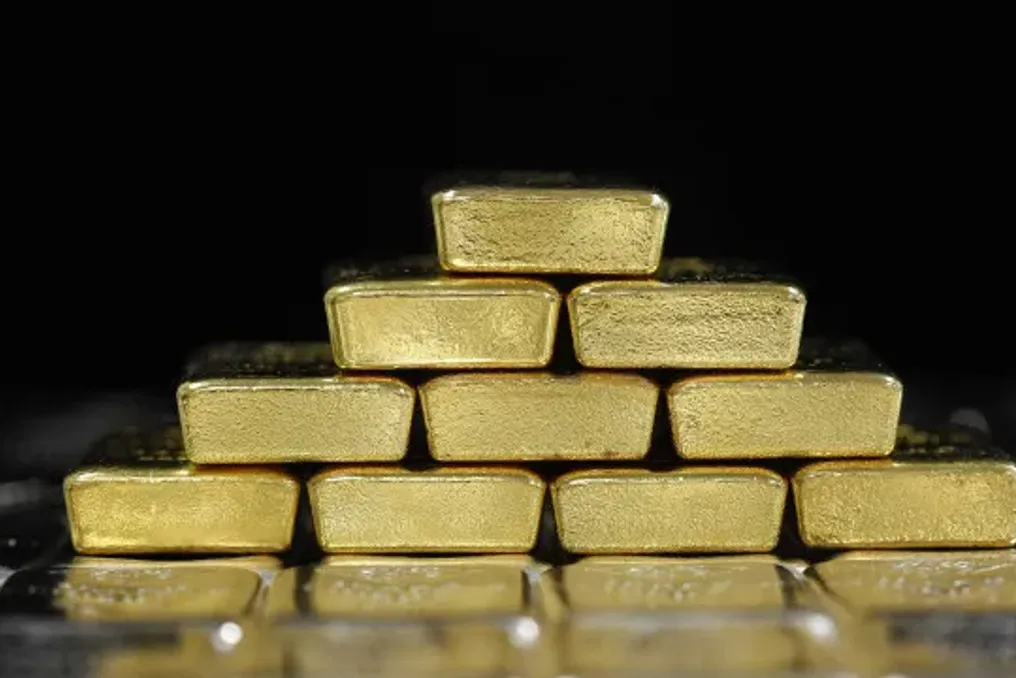
According to information released by the Financial Times, China imported more than a thousand tons of gold between January and August. This volume exceeded the 886 tons purchased during the entire year of 2025, totaling 96.5 billion dollars (equivalent to 84.45 billion euros).
This increase in acquisitions comes after China reduced its purchases in the previous year, a period marked by a sharp appreciation of the precious metal. The price of gold rose from approximately 2,625 dollars (2,297 euros) per troy ounce at the beginning of 2025 to a peak of 5,595 dollars (4,896 euros) in January.
Additionally, China is recognized as the world's largest gold producer, having extracted 384 tons last year, according to data provided by the World Gold Council.
The increase in imports is linked to the growing search by Chinese investors for alternatives to diversify their economies. This demand is driven by the persistent crisis in the real estate sector, the poor performance of the stock market, and the low returns offered by public debt.
The CSI 300 index, which groups large companies listed on the Shanghai and Shenzhen stock exchanges, has fallen by 1.8% since the beginning of the year and remains more than 20% below its recorded high at the beginning of 2021. Simultaneously, yields on Chinese sovereign bonds are close to historically low levels.
China's positions in US Treasury bonds fell to 618 billion dollars (540 billion euros) in July, reaching the lowest level since August 2008.
Lisa Liu, CEO of Gold Mountains Asset Management, which is part of the Zijin Mining group—China's largest gold producer—told the FT that both the central bank and private investors are diversifying their reserves and savings towards an asset that does not carry counterparty risk. This is part of a broader strategy focused on long-term wealth preservation.
Liu emphasized that this movement should not be seen as a very short-term action, but rather as a 'multi-year repositioning of family and institutional assets'. She added that 'the scale and persistence of Chinese purchases are now a central factor in global gold prices, and we expect them to remain as long as uncertainty persists regarding growth and geopolitics.'
Gold has also gained relevance in the diversification of portfolios for investors globally, at a time when the traditional relationship between stocks and financial bonds is transforming.
Christopher Hamilton, head of Invesco's asset management for the Asia-Pacific region (excluding Japan), informed the FT that the price of gold has stopped reacting to increases in real interest rates in the same way as before. He stressed that 'we are in an environment where people want to hold real assets', adding that institutional acquisitions continue to be the main support for the precious metal's price.
Analysts at Goldman Sachs, based in the United States, estimate that gold purchases made by the People's Bank of China (central bank) may be higher than officially disclosed. In a note published this month, they calculated that the Chinese central bank bought 35 tons in July, compared to the 20 tons reported in official data.
Chinese acquisitions also occur against a backdrop of growing demand from governments seeking to keep their gold reserves closer to their own territories. The previous month, the Government of the Netherlands transferred part of the gold reserves it held in New York to London.