Brahma AI raises $150 million led by Multiples Alternate Asset Management
Read more
YourStory [india, en]
yourstory.com

Brahma AI raises $150 million led by Multiples Alternate Asset Management

Brahma AI, a company specializing in enterprise artificial intelligence, has successfully closed a funding round, raising $150 million. The round was led by Multiples Alternate Asset Management. The funds will be used to expand the company's AI platform in areas such as media and entertainment, sports, healthcare, and advertising.

The investment structure of the deal stipulates that Multiples contributed $100 million through the issuance of preferred shares, while Brahma AI secured an additional $100 million in investor interest.

The company collaborates with major global clients, including Warner Bros, NBA, and Mayo Clinic. Its strategic distribution partners include Google, Hakuhodo, and DNEG.

Brahma AI was founded and is led by Prabhu Narasimhan. The company integrates technologies and capabilities developed at DNEG, Metaphysic, and Prime Focus Technologies. Narasimhan serves as Founder and CEO, while Joe Platte, co-founder and CTO, oversees the technology and R&D division.

The native AI platform of Brahma AI includes Brahma AI Core and Brahma AI Studio. Its technology combines the management and intelligence of enterprise content with AI-powered content creation capabilities, covering visual AI, digital humans, voice, and multilingual performance.

Renuka Ramnath, Founder, Managing Director, and CEO of Multiples, noted: 'Brahma AI is reimagining the content supply chain in the age of AI. Our investment is based on the belief that every enterprise is becoming a content enterprise. Multiples Private Equity will be an active partner as the company goes through its next stage of growth through R&D investments, global market expansion, and talent and process building.'

Brahma AI plans to implement its technologies in new use cases and is working on creating interactive digital humans. Furthermore, the company is developing its platform to be model-agnostic, placing a strong emphasis on content security, authenticity, and provenance.

Prabhu Narasimhan, Founder and CEO of Brahma AI, stated: 'We are close to launching interactive digital humans; we are building Brahma AI to be model-agnostic, and we are taking our technology into entirely new applications. And security, authenticity, and provenance are such an important part of what we are creating.'


Similar stories

Ande raises $52 million to scale its AI-powered corporate entertainment network
Read more
ventureburn.com

Ande raises $52 million to scale its AI-powered corporate entertainment network

Ande, which has emerged from stealth mode, announced the raising of over $52 million in funding, combining seed and Series A rounds. Leaders of this round included Lightspeed Venture Partners, Redpoint Ventures, Duration Ventures, and Sierra Ventures; Bain Capital Ventures also participated in the financing.

The company's main goal is to service large enterprises' expenses for corporate events. These expenses include client dinners, team outings, sporting events, catering, and corporate gifts. Enterprises are estimated to spend around $325 billion annually on such activities.

Despite significant spending, the booking process remains fragmented across various systems. Ande solves this problem by integrating all these activities into a single corporate platform. Employees can book experiences while finance and legal departments maintain control over expenditures. The company spent two and a half years digitizing venue data.

The platform uses agent workflows to automate administrative tasks. These workflows can identify suitable venues, route requests for approval, and manage contracts. Furthermore, they support payments and expense reconciliation, significantly reducing manual work for teams managing corporate entertainment programs.

Ande provides a shared workspace for employees involved in corporate entertainment. Executive assistants and office managers can handle requests alongside marketing teams. Managers can also participate in approval processes through the same platform. Then, AI agents advance requests through stages of approval, signing, and payment.

Currently, the platform is used by over 60 enterprises. Among Ande's clients are Cloudflare, Salesforce, McGraw Hill, and Netskope. Other clients include Navan, Sigma Computing, Monday.com, Workato, and Semgrep. These clients account for over $400 million in annual entertainment spending through Ande, with clients reporting savings of 12% to 15%.

The platform also provides teams with better transparency regarding their entertainment programs. Ande's model addresses both sides of each transaction: companies gain procurement infrastructure, and venues gain access to corporate buyers. The company has also trained its AI model for enterprise-specific entertainment workflows.

Ande's network includes over 93,000 entertainment venues, and currently, more than 1,600 hotel properties are direct partners of the platform. Partners include Altamarea Group, Che Fico, and Gracious Hospitality. Other partners include JKS and The Mina Group. Tao Group Hospitality and Wolfgang Puck are also among its hospitality sector partners. Ande provides these companies access to corporate clients through a single distribution channel, as venues traditionally lacked specialized corporate sales networks.

Ande aims to fill this gap through its marketplace. The platform allows venues to offer their services to corporate buyers and interact with companies and manage transactions through the network. This forms a two-sided model for Ande.

Enterprises gain easier access to venues, and the hospitality industry gains corporate demand. Ande's new funding will be directed towards further developing its native AI platform, as well as expanding its network among corporate buyers and venues.

CEO Lohit Sarma emphasized that entertainment plays an important role in business relationships, highlighting its significance for culture, sales, and client interaction. Venture investors also see opportunities in this fragmented market.

Arif Janmohamed from Lightspeed Venture Partners described Ande as a bridge between companies and venues. Alex Bard, Managing Director at Redpoint Ventures, noted Sarma's experience in the enterprise space and the founder's ambition. Ande positions itself as the infrastructure for corporate entertainment, and its AI agents are designed to reduce the administrative burden across the entire booking process. The company's growth will depend on expanding both sides of its network.

}))
Factory raises $200 million at $5 billion valuation to scale AI software development
Read more
ventureburn.com

Factory raises $200 million at $5 billion valuation to scale AI software development

Factory has successfully raised $200 million in a new funding round, achieving a valuation of $5 billion. Investors in this round include Blackstone, Khosla Ventures, and Sequoia Capital. Insight Partners, Evantic Capital, and Sound Ventures also participated.

Factory was founded in 2023 by Matan Greenberg and Eno Reyes. Other investors included NEA, Mantis VC, and Clearlake. The round also attracted angel investors, including Nico Rosberg, Brad Gerstner, and Mark Benioff.

The new funding increases the company's total capital raised to over $400 million. This represents significant growth compared to the $1.5 billion valuation set in April. Thus, in five months, Factory's valuation has more than tripled; previously, the company had raised $150 million at that same valuation.

The latest capital raise reflects growing enterprise demand for autonomous software development tools. The San Francisco-based company aims to increase the degree of autonomy in software development. Its platform enables large enterprises to create, test, and maintain software using artificial intelligence agents throughout the entire development lifecycle.

Factory differs from platforms focused on individual coding agents because it provides enterprises with a unified system for managing software development. The platform allows companies to control the training process of their 'software factory,' as well as manage models and system deployment. Factory can operate through its managed cloud infrastructure, or clients can deploy it on-premises or in fully isolated environments, giving enterprises greater control over AI-driven development.

The company reports that its platform is used by hundreds of thousands of developers. Factory's clients include Nvidia, Blackstone, Royal Bank of Canada, Palo Alto Networks, and Adobe. This growing client portfolio underscores the increased interest from the corporate sector in AI-powered software development.

Enterprises are increasingly using AI to boost engineering productivity. Factory believes that companies are moving from using individual coding assistants to building broader software factories around autonomous systems. Matan Greenberg noted: 'Major enterprises worldwide are transitioning from individual coding agents to software factories,' adding that clients confirm the potential for rearchitecting software development systems, although the company is still in the early stages of this transition.

Factory's strategy is focused on creating autonomous software factories that operate continuously under human supervision. Enterprises can regulate measurable outcomes while AI performs development tasks. The company competes in the rapidly growing AI coding market. Factory plans to use the new capital to support further growth, focusing particularly on platform expansion and adoption within the corporate sector.

TAR raises $120 million to scale autonomous power systems for AI
Read more
ventureburn.com

TAR raises $120 million to scale autonomous power systems for AI

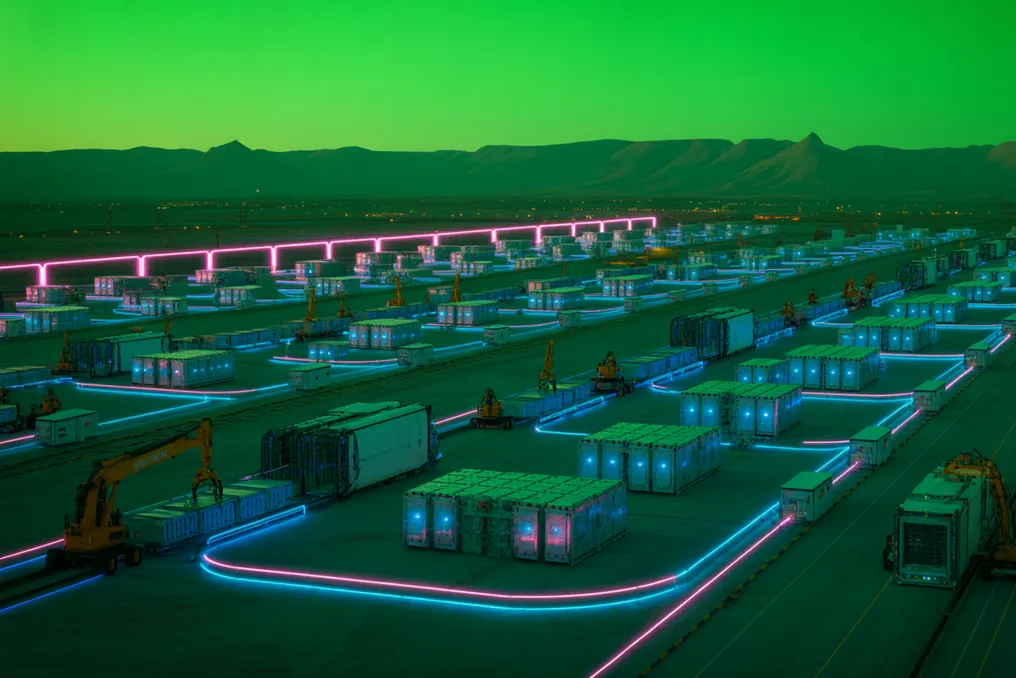
TAR has successfully raised $120 million in a Series A funding round to expand its autonomous power supply systems for data centers utilizing artificial intelligence. The funding was led by Spark Capital at a post-money valuation of $1 billion. The Austin-based company plans to increase both its headquarters and engineering office in San Francisco, as well as boost manufacturing and logistics capacity in West Texas.

TAR was founded in 2026 by Pat Becker and Leonhard Zonk. The company targets one of the most significant problems in AI infrastructure—limited power availability, which is becoming a serious obstacle to expanding AI computing power. Existing queues for grid connection can take years, and transmission limitations and local opposition create additional barriers for large energy projects.

TAR offers an alternative approach by developing modular systems that combine renewable energy generation with energy storage systems. These systems are specifically designed for large-scale AI computing facilities. The company builds the infrastructure in West Texas, allowing it to provide dedicated power without competing for local grid resources.

The company controls the entire energy deployment process: from site selection and design to procurement, logistics, construction, commissioning, and subsequent operation. This vertically integrated approach reduces reliance on numerous external contractors. TAR claims that its deployment automation stack can accelerate the construction of energy facilities, reducing the need for field labor as deployment scales up.

The TAR team combines expertise in the energy sector with robotics expertise; employees previously worked at companies such as Hut 8, AES, Vistra, and Lucid Motors, while other team members have experience at Zipline and GrayMatter Robotics. The company is currently executing a large-scale deployment for a major cloud service provider and developing a specialized project campus for future needs. In West Texas, TAR is completing the TAR Terminal One facility, which will function as a logistics and manufacturing hub.

The new funding will allow these projects to accelerate and expand TAR's operational capabilities. The company aims to deploy energy infrastructure in parallel with the growing demand for AI computing power. Co-founder Pat Becker stated that the energy industry needs a different deployment model, as gigawatt-scale projects require more control throughout the development chain. Co-founder Lenny Zonk also highlighted the growing customer demand, and the company intends to increase its supply to alleviate the energy shortage limiting computing expansion.

TAR plans to allocate the raised funds to develop several areas, including engineering, robotics, energy systems, and supply chain operations. Additionally, the company is hiring staff in Austin and San Francisco for roles such as project manager, operations specialist, and technical engineer.

Spark Capital views energy availability as a critical constraint on AI growth, believing that faster energy deployment can unlock additional computing power. TAR's approach could potentially shorten one of the longest lead times in data center development. Unlike traditional projects dependent on available generation and utility capacity, autonomous systems place generation and storage closer to the computing facility, giving AI operators greater control over how the energy infrastructure is deployed.

The company has not yet disclosed information about additional investors participating in the Series A round. The $1 billion valuation reflects growing investor interest in AI infrastructure as computing demand rises and access to reliable electricity remains limited.

Popular